
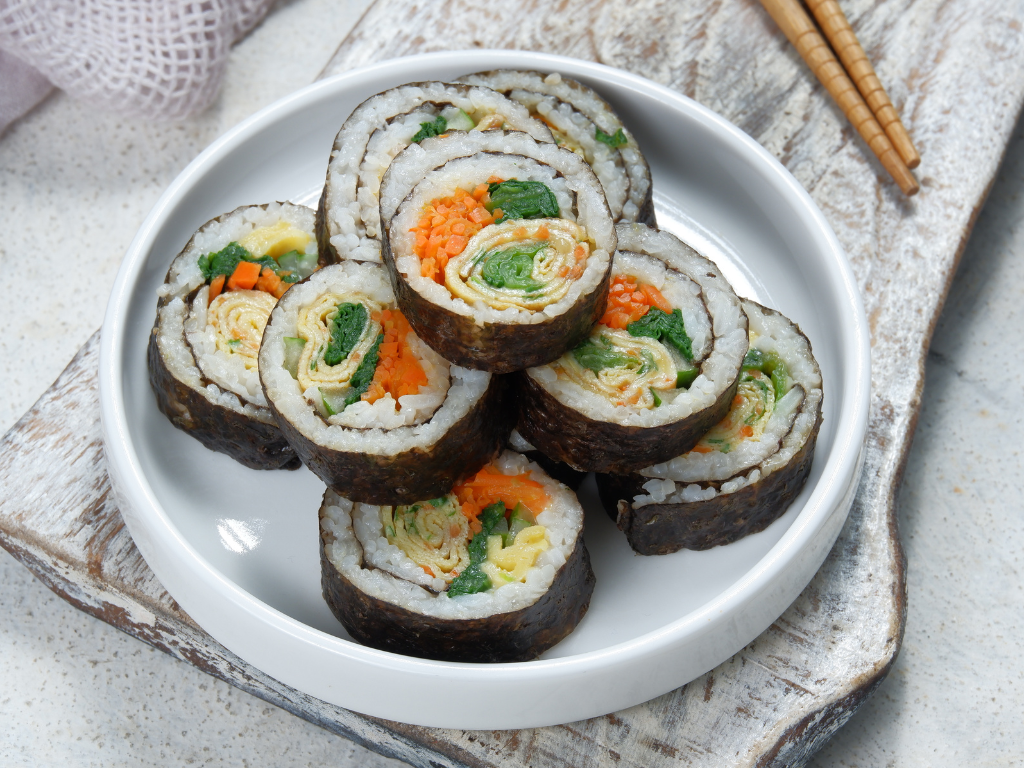
Seaweed for gimbap is gimbap gim, an unseasoned, thicker sheet
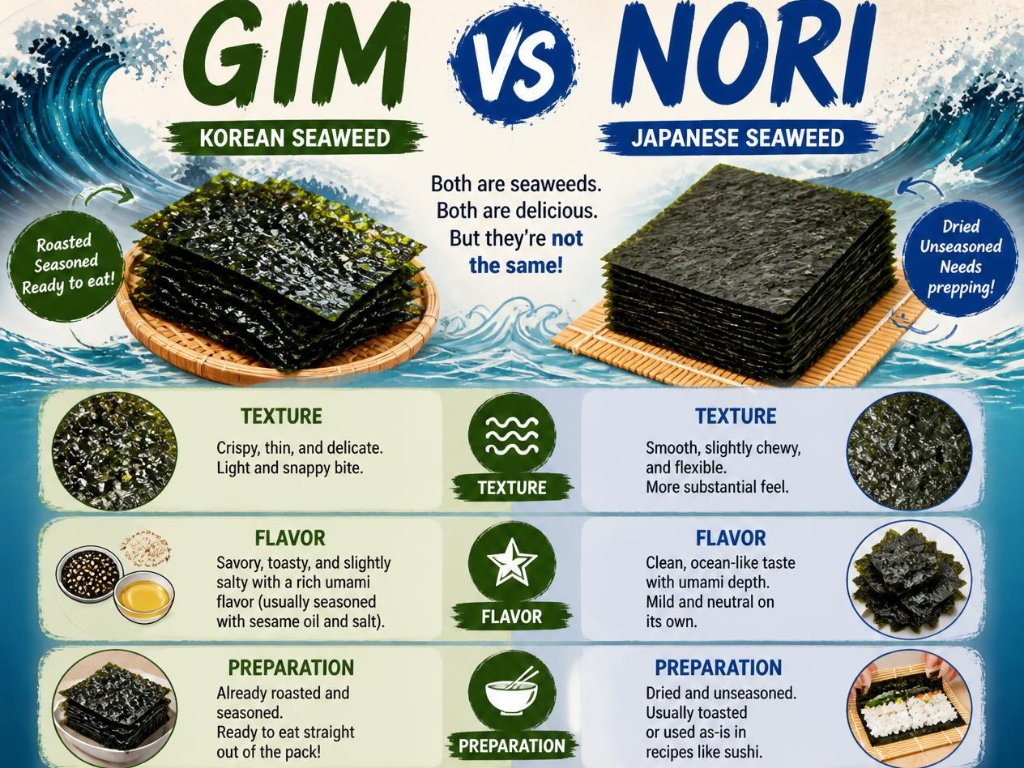
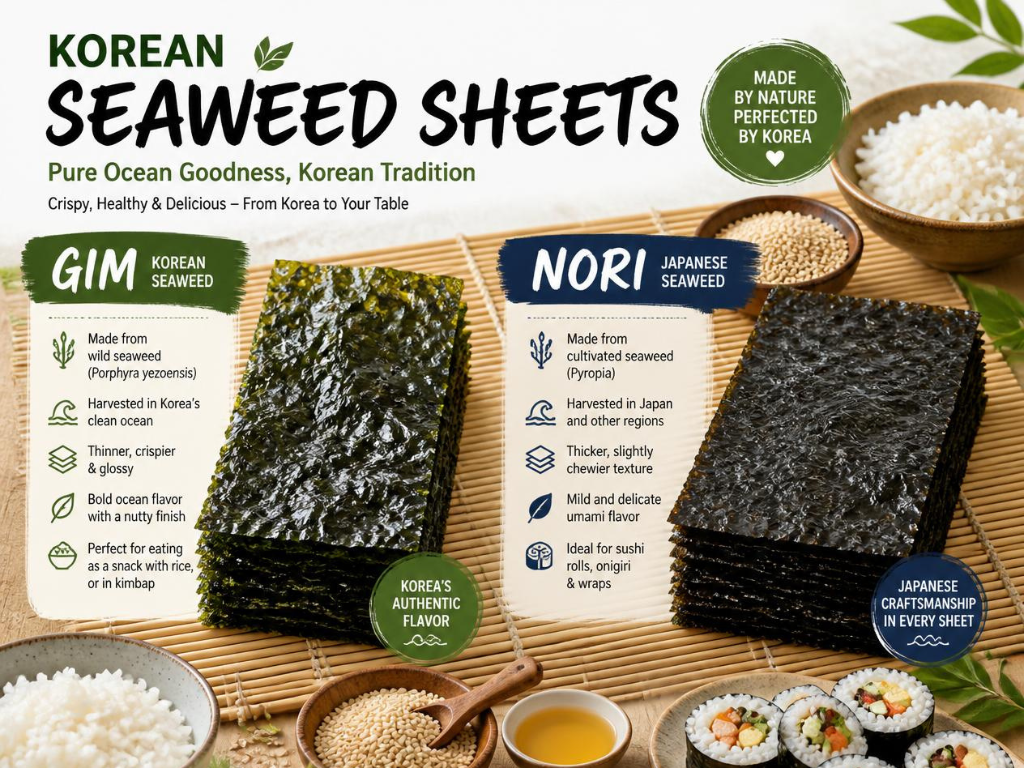
Gim vs nori is one seaweed: dried sheets of the same red algae (genus Pyropia), finished differently by Korea and Japan. Korean gim is roasted with sesame or perilla oil and salt; Japanese nori is roasted plain for sushi. Korea now supplies over 70 percent of the world’s seaweed. This blog walks you through how gim and nori differ. For the lineup, see our Korean seaweed range.
Are gim and nori the same thing?
Gim and nori are the same seaweed, made from the same red algae genus, Pyropia, chiefly Pyropia yezoensis and Pyropia tenera. Both are washed, pressed into thin sheets, and dried in a process close to papermaking. The difference lives entirely in how each country finishes the sheet and what it is built to do. Gim is a Korean product; nori is Japanese; the plant underneath is one and the same, a point the 2011 Bangiales reclassification that moved these species into Pyropia makes clear.
The cleanest way to read the split is by design intent. Korean gim is built to be eaten on its own, brushed with oil and salt so it delivers flavour straight from the pack. Japanese nori is built to complement, kept neutral so the rice and fish inside a roll carry the dish. Every downstream difference, the oil, the texture, the taste, the use, follows from that one choice. Nori cultivation dates to Japan’s Edo period in the 1600s, while gim has been eaten in Korea for at least 400 years, so both traditions are old and both start from the same algae. Korea now farms most of the world’s supply, with Wando, Goheung, and Seocheon as its main gim hubs, while Japan’s prized nori still comes from bays like Ariake off Kyushu, which is why most organic nori and gim on Western shelves is Korean-grown.
How is gim seasoned differently from nori?
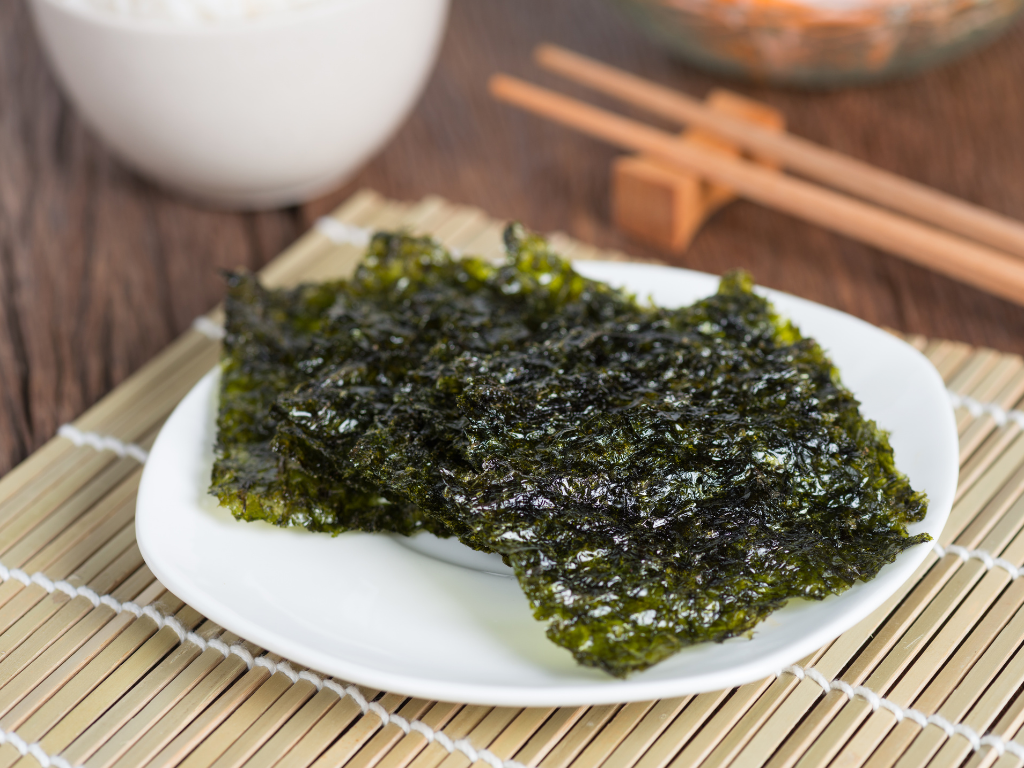
Gim is seasoned; standard nori is not. Korean gim is brushed with sesame or perilla oil and sprinkled with salt before a brief roast, giving it a savoury, nutty, ready-to-eat character. Japanese nori for sushi is roasted plain, with no oil or salt, so it stays neutral against vinegared rice. The oil is the single biggest flavour divider between the two.
The snack aisles show two different seasoning traditions, not just seasoned versus plain. Korea’s snack gim, whether the thicker jaerae style or the thin crisp jaban style, leans on sesame or perilla oil and salt. Japan’s seasoned snack sheet, ajitsuke nori, uses soy sauce and mirin instead, a sweeter, soy-driven finish. Perilla oil, deulgireum, gives gim a nuttier, grassier note, while sesame oil reads cleaner and holds up better on a long shelf life, which is why export-grade gim usually relies on it. For the full production side, our explainer on how gim is made covers the oils and cultivation, and the Korean seaweed snack formats guide breaks down the seasoned packs.
How do gim and nori differ in texture and thickness?
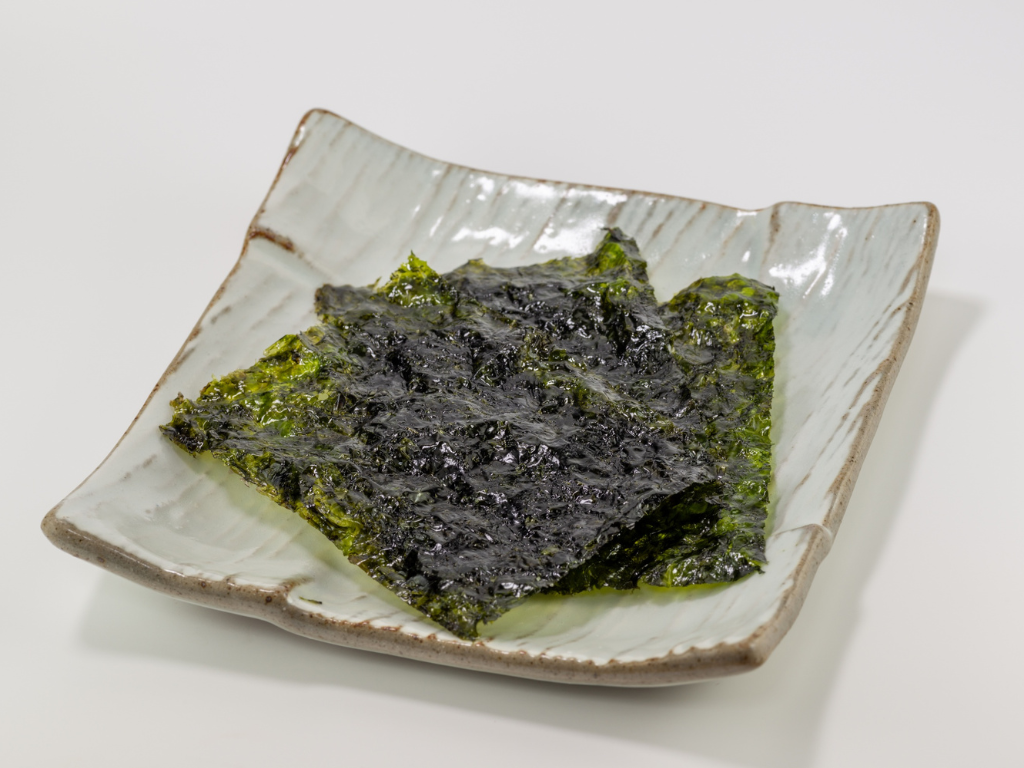
Snack gim is usually thinner and glossier than nori, yet the gim used for rolling is thicker, so the answer depends on the form. A seasoned snack sheet of gim tends to be light, crisp, and a little uneven, with jagged edges and small holes. Nori is pressed to a more uniform, ultra-thin sheet that dissolves cleanly on the tongue. The flat claim that gim is thinner than nori is only half right.
Rolling changes the picture. Gimbap gim, the sheet made for Korean rice rolls, is thicker and tougher than sushi nori, with smaller holes, so it holds a fuller roll without splitting. A thin sushi sheet is built for a delicate maki where the nori almost disappears; a gimbap sheet is built for structure under heavier fillings. Korea also sorts gim into named styles, from rough, fragrant dol gim harvested wild to the everyday jaerae gim, where Japan sorts nori by formal auction grade. Parae gim, a blend of laver and green algae, and jaban gim, a thin crisp snack sheet, round out a Korean family of styles that has no exact match on the Japanese side. Texture, in other words, is a product of both seasoning and the job the sheet is cut for.
How do gim and nori taste, and how are they graded?
Gim tastes bold, nutty, and savoury from its oil and salt; nori tastes delicate, clean, and faintly sweet, letting the sea flavour sit back. Unseasoned, the two are closer than most people expect, both carrying a savoury, slightly mineral ocean note. The gap most tasters register is the sesame oil on gim and the cleaner finish on plain nori, not a deep difference in the seaweed itself. Harris Salat, writing in Saveur, calls nori “the workhorse of the sushi bar,” a wrapper meant to serve the dish rather than star in it.
Grading is where the two production cultures split hardest. Japan runs nori through formal auction markets that score color, luster, texture, and taste, with top tiers labelled gold or platinum, kin and hakkin, reserved for high-end sushi. Korea leans less on a single formal ladder and more on named styles and origin, and it dominates the supply side, holding over 70 percent of the global seaweed market and posting record dried-seaweed exports near 1.13 billion US dollars in 2025. Two grading cultures, one genus.
When should you use gim versus nori?
Use nori when the seaweed should support the dish and gim when it should carry flavour on its own. Plain nori is the sheet for sushi rolls and onigiri, where a neutral wrapper lets the rice and fish lead. Seasoned gim is the sheet for eating straight as a snack or banchan, torn over rice, or crumbled into soup, where its oil and salt are the point. For a Korean rice roll, reach for unseasoned gimbap gim, not the oiled snack sheet.
The substitution that genuinely fails is putting seasoned snack gim into sushi or onigiri. The sesame oil changes the flavour of every bite and softens the sheet faster, so the roll loses structure and the fish gets buried. An unseasoned Korean sheet, by contrast, rolls sushi perfectly well, since it is the same Pyropia base as nori. Yoroshii supplies both sides of this shelf, from plain rolling sheets to sesame-oil seasoned gim, manufactured through its Malaysian subsidiary Front Option under ISO 22000, HACCP, GMP, and JAKIM halal certification. Match the sheet to the job, and the choice between gim and nori answers itself.
Conclusion
Gim and nori are one seaweed wearing two culinary identities. Korea finishes its sheet with sesame oil and salt to eat on its own; Japan keeps its sheet plain to serve the rice and fish. Texture, taste, and grading all follow from that single choice, and unseasoned, the two are nearly the same. Read the finish and the intended job, and the gim-or-nori decision stops being a puzzle.
Sourcing Korean or Japanese seaweed for retail or foodservice? Browse Yoroshii’s Korean seaweed sheets or contact the team for a wholesale quote matched to the sheet and volume your kitchen needs.
FAQs About Gim vs Nori
Is gim just Korean nori?
Gim and nori come from the same red algae, genus Pyropia, so gim is essentially the Korean take on the same seaweed. The difference is finishing: Korean gim is roasted with sesame or perilla oil and salt, while Japanese nori is usually roasted plain for sushi. Same plant, two cuisines.
Which is healthier, gim or nori?
Plain gim and plain nori are nutritionally close, both low-calorie red seaweeds rich in iodine, minerals, and fibre, the profile a peer-reviewed seaweed assessment records for the group. Seasoned gim adds sesame oil and salt, so snack versions carry more calories and sodium. For the leanest option, choose an unseasoned sheet of either.
Can I use gim instead of nori for sushi?
Use unseasoned gim for sushi and it works fine, since it is the same Pyropia seaweed as nori. Do not use seasoned snack gim, because its sesame oil and salt clash with vinegared rice and soften the sheet. For clean sushi rolls, plain nori or an unseasoned Korean sheet is the right pick.
Why does Korean seaweed taste like sesame?
Korean gim is brushed with sesame or perilla oil and salt before a short roast, which gives it that nutty, savoury, ready-to-eat flavour. Japanese nori skips the oil in its standard sushi form. The sesame note is a deliberate Korean finishing step, not a property of the seaweed itself.
Is nori always Japanese and gim always Korean?
Nori is the Japanese name and gim the Korean name for dried sheets of the same Pyropia seaweed, so the label signals the cuisine, not a different plant. Much of the world’s nori and gim is actually farmed in Korea, which holds over 70 percent of the global seaweed market. The names track tradition, not origin of farming.
Korean seaweed sheets are gim, dried sheets of red algae
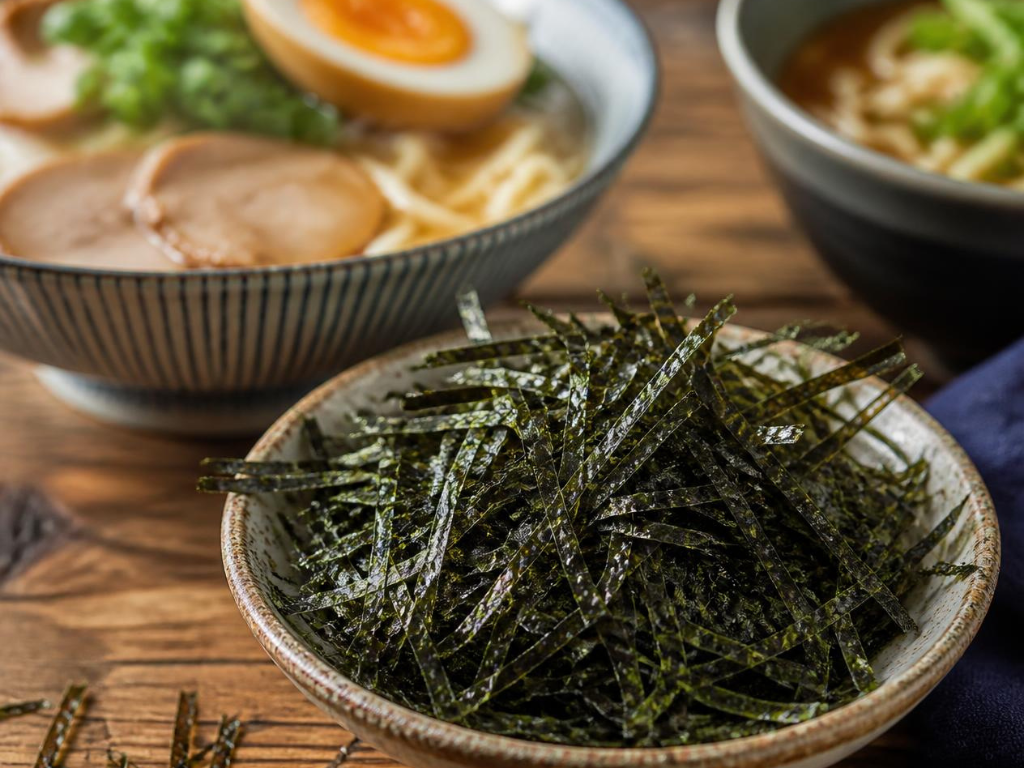
Kizami nori is roasted nori cut into fine strips, 0.5