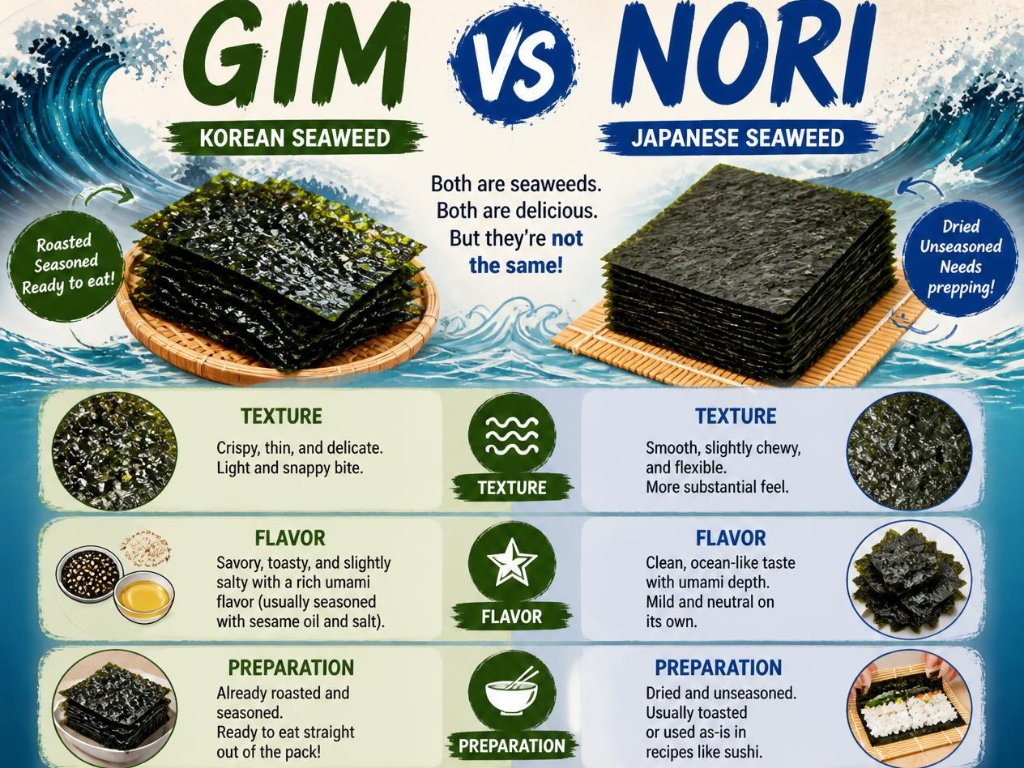
Gim vs nori is one seaweed: dried sheets of the
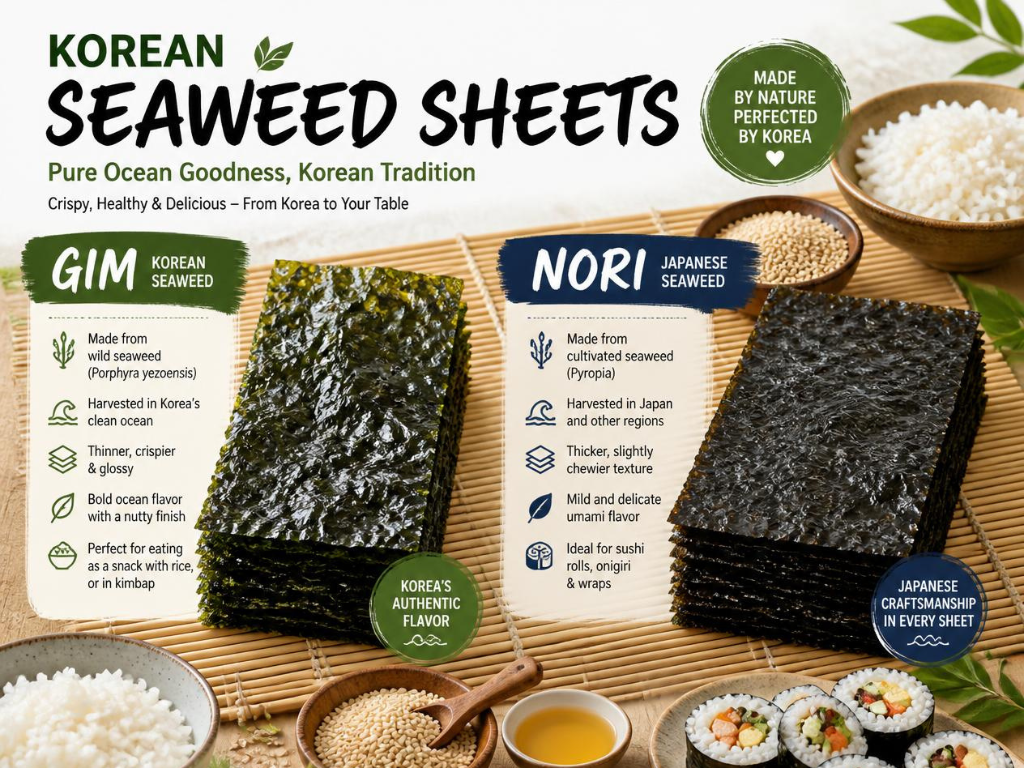
Korean seaweed sheets are gim, dried sheets of red algae (genus Pyropia) that Korea roasts with sesame or perilla oil and salt into a crisp, ready-to-eat sheet. Korea’s gim exports hit a record 1.13 billion US dollars in 2025. This blog walks you through how gim differs from nori and how buyers use it. For the range, see our Korean seaweed sheets and snacks.
What are Korean seaweed sheets, or gim?
Korean seaweed sheets are gim, the Korean word for laver, a dried edible red seaweed in the genus Pyropia. The species is the same one behind Japanese nori, chiefly Pyropia yezoensis and Pyropia tenera, farmed along Korea’s southern coast. What makes it Korean is the finish: gim is roasted with sesame or perilla oil and a sprinkle of salt, which gives it a savoury, nutty, ready-to-eat character straight from the pack. As a red seaweed, gim is naturally rich in protein, minerals, and dietary fibre, the nutrient profile a peer-reviewed assessment of red and brown seaweeds records for the group.
Gim reaches a buyer in three forms, and the difference decides the use. Plain unseasoned sheets are the neutral base. Seasoned gim, brushed with oil and salt, is the crispy snack and side-dish sheet. Thicker, sturdier gimbap gim is made unseasoned for rolling. Korea has eaten gim since ancient times, with records of it in Shilla-era use, and it now leads the world in Pyropia exports. For the full production side, oil choices and cultivation, see our explainer on how gim is made.
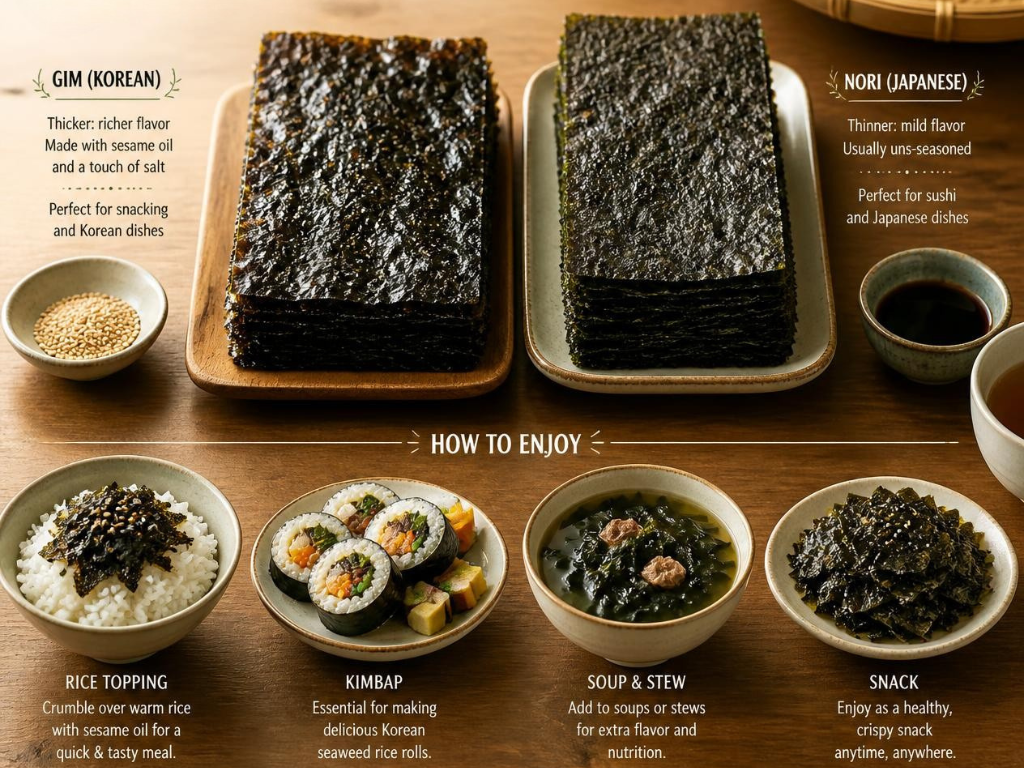
How does gim differ from nori?
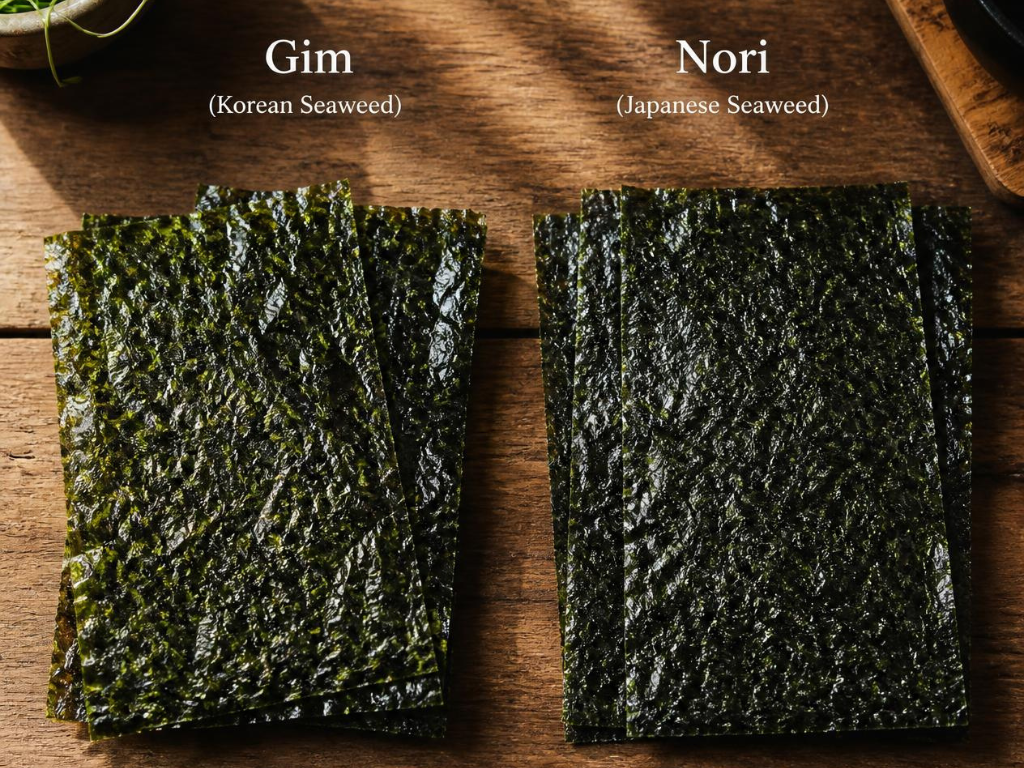
Gim and nori start from the same red algae and split at processing. Japanese nori is roasted plain for sushi, keeping a sturdy, even sheet that rolls tight. Korean gim is brushed with sesame or perilla oil and salted before roasting, which makes it thinner, crispier, and savoury enough to eat on its own. The seasoned sheet carries a shiny oil coat and flecks of salt that plain nori never has.
The texture gap shows on the sheet. Gim tends to be lighter and more uneven, with jagged edges and small holes, while nori is pressed to a more uniform sheet built to survive a tight maki roll. Korean seaweed sheets serve a different purpose from nori: they are a seasoned, eat-from-the-pack product, where nori is a plain wrapper, so a buyer treating gim as a cheaper nori swap orders the wrong thing. A visitor from Japan interviewed by the BBC put the split plainly, noting gim is lighter and crispier and grilled with sesame oil and salt, where nori leans on soy sauce. The oil choice matters too: perilla oil, deulgireum, gives the nuttier, grassier taste favoured at home in Korea, while sesame oil is cleaner and more shelf-stable, which is why export-grade seasoned gim usually relies on it.
How do buyers use Korean seaweed sheets?
Buyers use gim four ways, and each maps to a different sheet. As banchan, seasoned gim is toasted with oil, salted, cut into squares, and served beside rice at nearly every Korean meal. As a snack, the same seasoned sheet is sold in small crisp packs eaten straight from the bag, a format that often stands in for potato chips. As a garnish, torn or shredded gim adds umami and texture to soups, stews, and rice bowls. Fried into bugak, a battered and crisped sheet, gim even becomes a crunchy side in its own right, which shows how far one seaweed stretches across a Korean table.
Gimbap is the use that trips buyers up. Korean rice rolls are wrapped in unseasoned gimbap gim, a larger, sturdier sheet, not the oiled snack gim. The oiled, salted version that tops a soup will not roll a clean gimbap, because the oil stops the sheet from gripping the rice and the thinner snack sheet tears. Yoroshii’s Korean seasoned seaweed sits in the snack and banchan lane, ready to eat, while rolling stock is a separate, unseasoned sheet. Match the sheet to the dish before you match it to a price.
Which type of gim should you buy for gimbap versus snacks?
Buy unseasoned gimbap gim for rolling and seasoned gim for snacking; they are not interchangeable. Gimbap gim is thicker and sturdier, cut larger, and left unseasoned so it grips seasoned rice and holds a tight roll without splitting. Seasoned gim is thin, oiled, and salted, engineered to be crisp and flavour-forward for eating on its own, which is exactly why it fails as a wrapper.
The buying error is treating “Korean seaweed” as one product. A retailer stocking grab-and-go snacks wants seasoned gim in single-serve packs, like Yoroshii’s spicy seasoned snack in a 12 g format. A caterer rolling gimbap by the tray wants bulk unseasoned sheets. Ordering the snack sheet for a gimbap line, or the reverse, wastes a case. For the snack side specifically, our guide to Korean snack formats and wholesale breaks down the pack sizes buyers stock. The type is the first decision, and the oil and grade come second.
What should retail and foodservice buyers know about sourcing gim?
Sourcing gim means buying into a tight, rising market, so lock the spec early. Korea is the world’s top exporter of Pyropia products, and its dried seaweed exports hit a record 1.13 billion US dollars in 2025, according to the Korea Maritime Institute. First-quarter 2025 exports alone reached 281 million dollars, up more than 20 percent year on year, per Korea’s Agro-Fisheries and Food Trade Corporation. Demand from the United States and China is driving it, and the sheet has earned the nickname Korea’s “black semiconductor.”
Rising demand has pushed prices up, with a single sheet climbing from about 100 won in 2024 to above 150 won. Premium sheets now reach 350 won each, and most supply traces to the southern coast around Wando and Jeonnam Province, where Korea concentrates its Pyropia farming. That concentration is part of why a poor harvest in one region moves the global price. Lee Eunhee, a consumer studies professor at Inha University, told the BBC that “more people are becoming familiar with gim, increasing global demand.” For a buyer, that means specifying the type, the oil, and the certification rather than chasing the lowest quote on “Korean seaweed.” Yoroshii supplies Korean seasoned seaweed to retail and foodservice buyers, manufactured through its Malaysian subsidiary Front Option under ISO 22000 food safety management, plus HACCP, GMP, and JAKIM halal certification, which opens Muslim-market retail that unbranded imports cannot serve. Yoroshii has supplied roasted seaweed across Singapore and export markets since 1993.
Conclusion
Korean seaweed sheets are gim, the same Pyropia red algae as nori, finished with oil and salt into a crisp, savoury sheet that Korea now exports by the billion. For a buyer, the split that matters is not gim versus nori but which gim: seasoned sheets for snacks and banchan, unseasoned gimbap gim for rolling. Specify the type, the oil, and the certification, and the order fills the dish it was meant for.
Stocking Korean seaweed for retail or foodservice? Browse Yoroshii’s Korean seaweed range or contact the team for a wholesale quote matched to your format and volume.
FAQs About Korean Seaweed Sheets
Is gim the same as nori?
Gim and nori come from the same red algae, genus Pyropia, but they are processed differently. Korean gim is roasted with sesame or perilla oil and salt into a crisp, savoury sheet, while Japanese nori is usually roasted plain for sushi. Same plant, different finish and use.
Is Korean seaweed the one with sesame oil?
The seasoned gim sold as a snack or banchan is brushed with sesame or perilla oil and salt, which gives Korean seaweed its signature savoury, nutty taste. Gimbap gim, used to roll Korean rice rolls, is left unseasoned. So Korean seaweed comes both oiled and plain, depending on the use.
Can you use Korean seaweed for sushi?
Unseasoned gimbap gim can roll sushi-style rolls, since it is a sturdy Pyropia sheet like nori. Seasoned snack gim cannot, because its sesame oil and salt stop the sheet from gripping rice and overpower the fish. For clean sushi, buy an unseasoned sheet, not the oiled snack version.
Why is Korean seaweed so popular now?
Korean seaweed rode the global wave of Korean food and media, and demand from the United States and China pushed exports to a record 1.13 billion US dollars in 2025. Locals call gim Korea’s “black semiconductor” for its export value. Rising global demand has also lifted domestic sheet prices to record highs.
Is Korean seaweed healthy and halal?
Pure gim is low in calories and rich in iodine, calcium, and minerals, and it is naturally vegan and gluten-free. Seasoned snack versions add oil and salt, so they carry more sodium. Yoroshii’s Korean seasoned seaweed is manufactured under JAKIM halal certification, verified for Muslim-market retail.
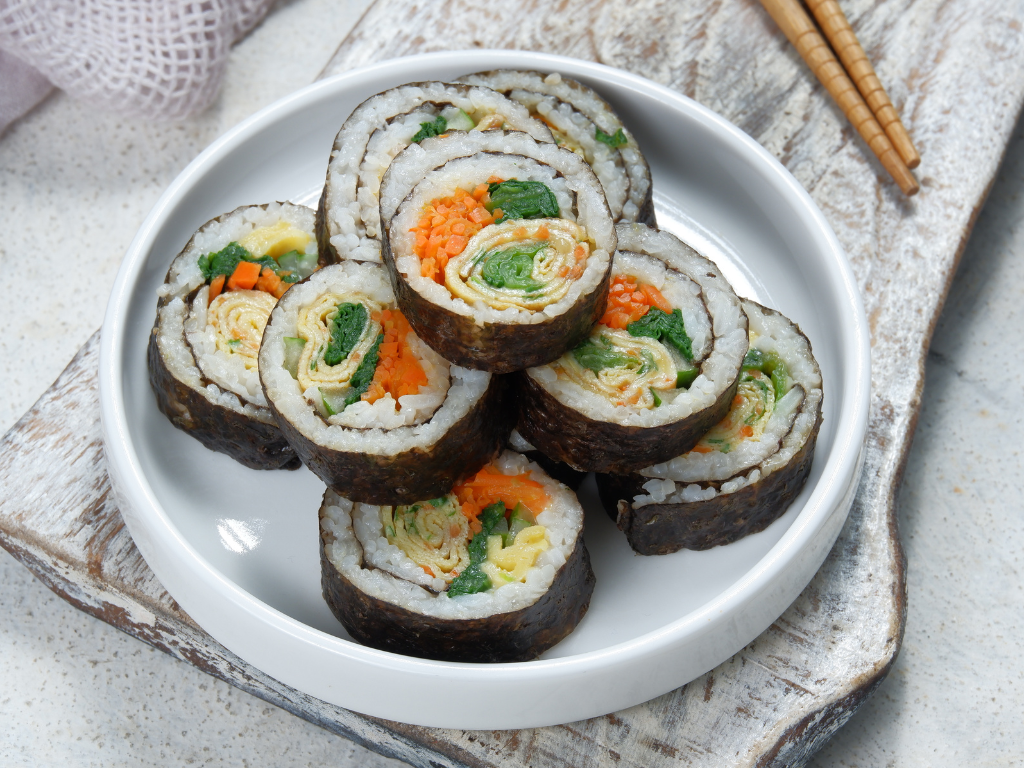
Seaweed for gimbap is gimbap gim, an unseasoned, thicker sheet
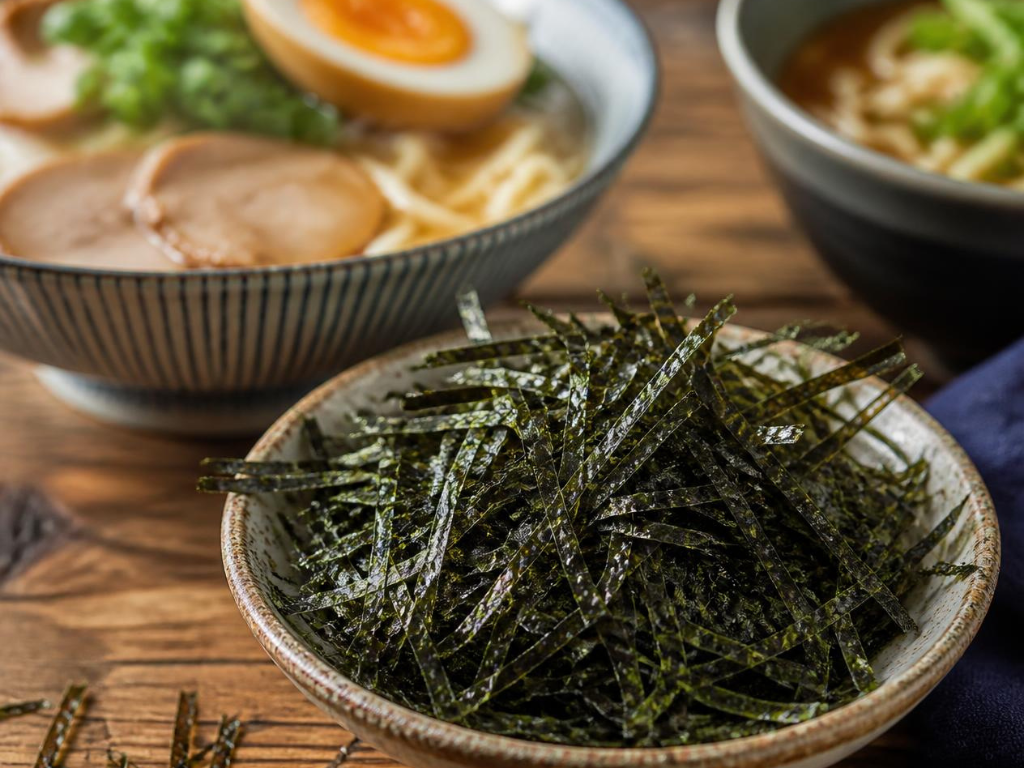
Kizami nori is roasted nori cut into fine strips, 0.5