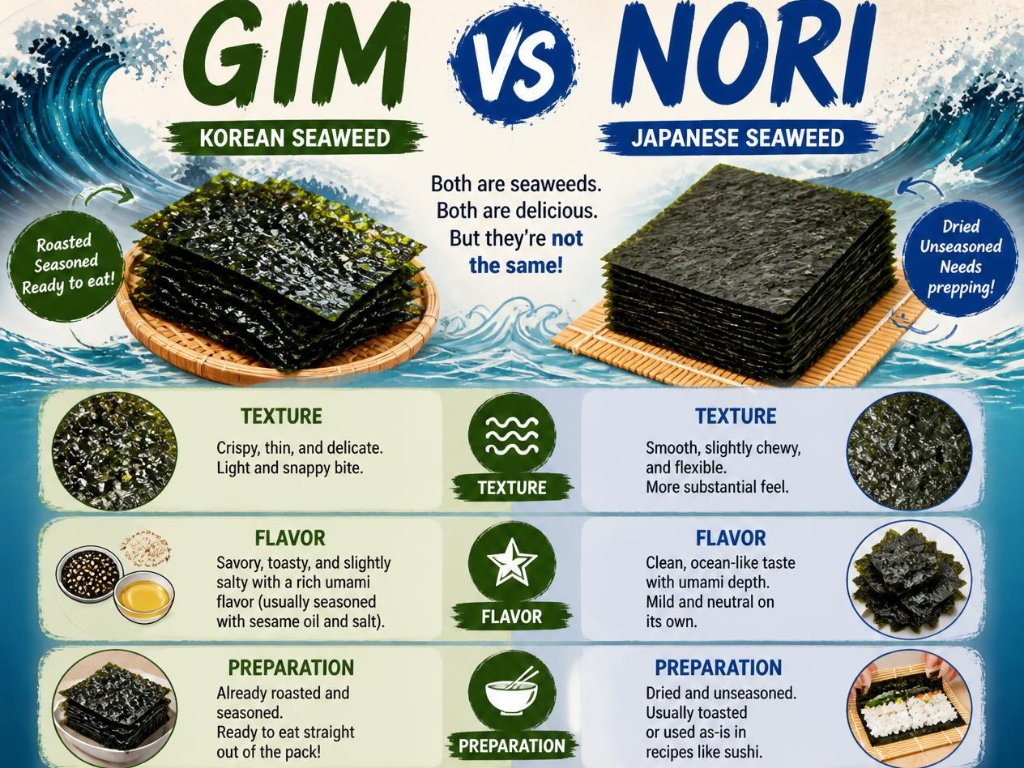
Gim vs nori is one seaweed: dried sheets of the
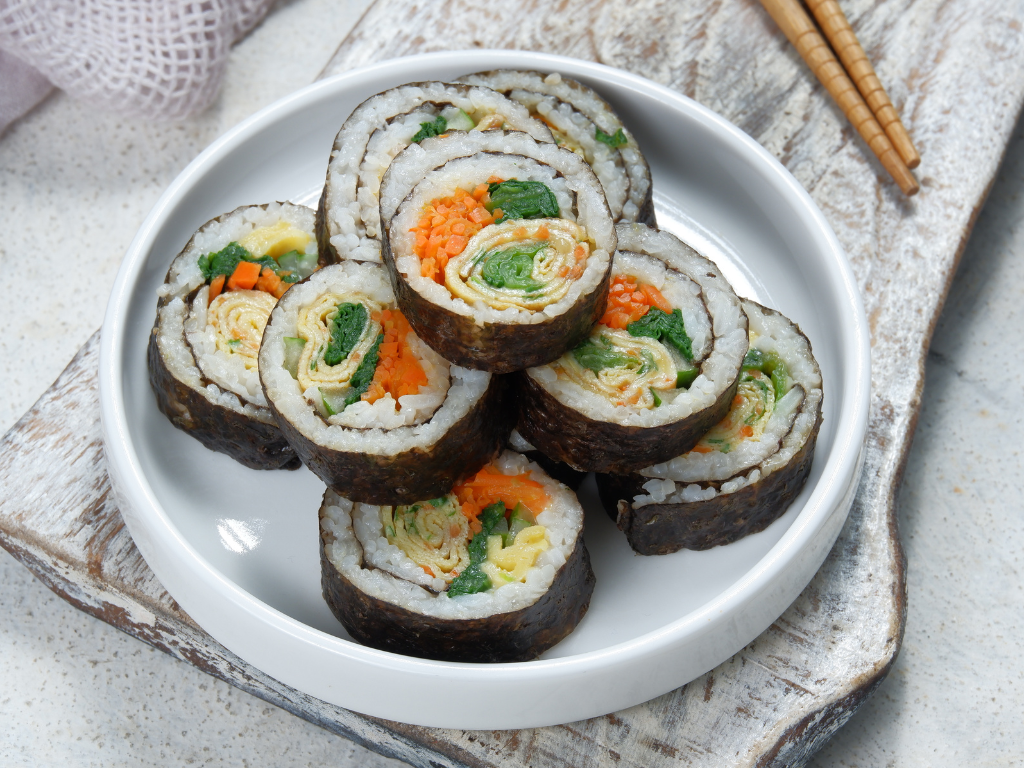
Seaweed for gimbap is gimbap gim, an unseasoned, thicker sheet of roasted laver (genus Pyropia) built to roll a fuller Korean rice roll without tearing. The oiled snack gim is a different sheet. Korea’s frozen gimbap boom pushed processed rice food exports to a record in 2024. This blog walks you through choosing the right sheet for gimbap. For the lineup, see our Korean seaweed range.
What seaweed is used for gimbap?
Gimbap uses gimbap gim, a thicker, sturdier, unseasoned sheet of roasted laver made specifically for rolling. It comes from the same red algae genus, Pyropia, as both sushi nori and Korean snack gim, but it is graded and cut for structure rather than for snacking. The sheet is left plain, since the flavour in gimbap comes from the rice and fillings, not from the wrapper.
Two traits define the sheet. It is unseasoned, so it grips the rice instead of sliding on a coat of oil, and it is sturdier than a thin sushi sheet so it survives a fuller roll. Yoroshii’s own guide notes that how gim is made splits the product into snack sheets and rolling sheets for exactly this reason. As a red seaweed, gim carries protein, minerals, and fibre, the nutrient profile a peer-reviewed assessment of red and brown seaweeds records for the group. The rolling sheet is the one a gimbap operation orders by the case.
Why is the seaweed for gimbap unseasoned, not the sesame-oil snack gim?
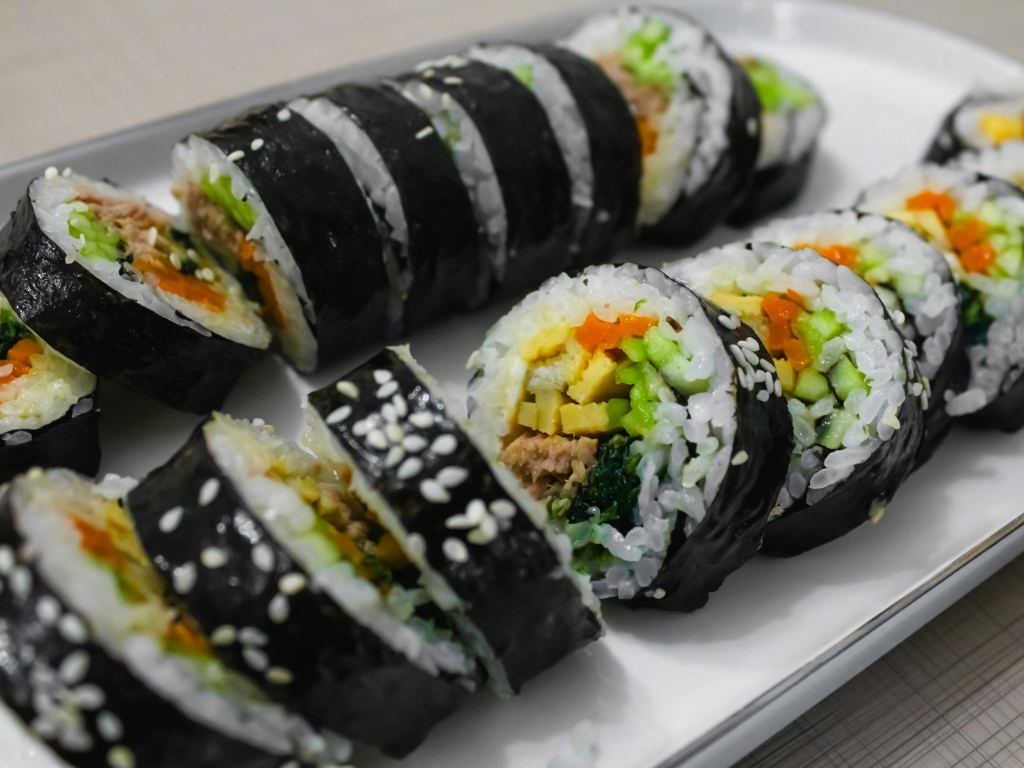
Gimbap seaweed is unseasoned because the oil and salt on snack gim stop the sheet from doing its job. Gimbap rice is already flavoured with sesame oil and salt, and a sesame sheen often goes on the outside of the finished roll, so a pre-oiled sheet would double the oil and leave the wrapper too slick to grip the rice. The snack sheet is also thinner and more brittle, built to shatter pleasantly in the mouth rather than hold a roll.
The mistake shows up at the roll. An oiled, salted snack sheet slides against the rice, splits under filling, and turns soggy fast, which is why the seasoned snack gim in Yoroshii’s snack range and its ready-to-eat Korean seasoned seaweed sit in a different lane from a rolling sheet. Order the unseasoned sheet for gimbap and keep the oiled sheet for eating straight from the pack. The seasoning belongs on the rice and the roll, not on the sheet.
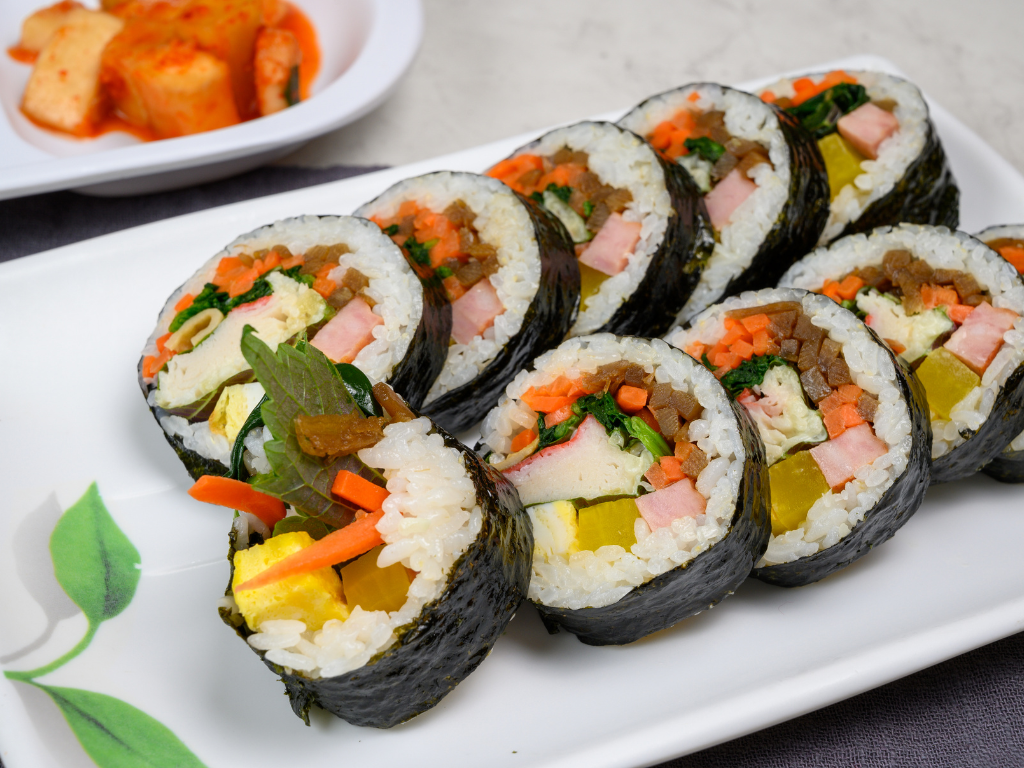
How does gimbap seaweed differ from sushi nori?
Gimbap seaweed is thicker, often larger, and chewier than the thin, crisp nori used for sushi. Sushi leans on a thin hoshi-style nori sheet that dissolves quickly and wraps a delicate roll; gimbap uses a sturdier laver sheet with more structural integrity, because the Korean roll is generally larger and packed with more filling. The mouthfeel differs too, with gimbap’s wrapper reading chewier and sushi’s crisper.
The roll drives the difference. Gimbap rice is seasoned with sesame oil and salt rather than the vinegar, sugar, and salt of sushi rice, and the fillings run to cooked and pickled ingredients like bulgogi, egg, spinach, carrot, and danmuji radish rather than raw fish. A gimbap roll therefore carries more weight and bulk than a slim hosomaki, so its sheet has to resist tearing where a thin sushi sheet would split. A home cook can substitute plain roasted sushi nori in a pinch, but a gimbap line running volume wants the sturdier, purpose-graded sheet. Kimbap and gimbap are the same roll under two romanisations, and the seaweed is the same sturdy laver either way.
Why does the sheet need to be tear-resistant for gimbap?
Tear resistance matters because a gimbap roll is fuller, tighter, and heavier than a typical sushi roll, and the sheet is the only thing holding it together. Pack five or six fillings against sesame-oiled rice, roll it firm on a bamboo mat, and a weak sheet splits at the seam or where a hard filling like pickled radish presses out. A torn sheet means a failed roll and a wasted set of ingredients, which on a busy line is lost time and lost food cost. Hard fillings are the usual culprit. A baton of pickled radish or a firm carrot stick presses outward as the roll tightens, and a thin sheet gives way exactly there.
Roasted sheets beat raw dried sheets here. A roasted, or yaki, sheet is crisp and firm enough to give structure and resist tearing during rolling, while an unroasted dried sheet is soft and usually needs light toasting first. Sheet integrity is the one attribute a gimbap buyer should refuse to compromise on, because a holed or thin sheet fails mid-roll no matter how good the fillings are. The cleaner approach is to spec the sheet on thickness and tear resistance first, then look at price.
What should a foodservice or retail buyer look for in gimbap sheets?
A gimbap buyer should specify five things: an unseasoned sheet, a roasted finish, a thickness graded for rolling, a full sheet size, and consistent tear resistance across the case. Those specs decide whether a roll holds, and they matter more than a marginal price gap, because a case that tears on the line costs more than it saves. Demand for this sheet is climbing, so locking a reliable spec is worth doing now. Consistency across the case is the quiet spec. A sheet that varies in thickness or carries holes shows up as a torn roll somewhere in a shift, so a buyer wants the same sheet performing the same way from the first case to the last.
The pull is real and current. Korea’s exports of processed rice foods, led by frozen gimbap and instant rice, hit a record 217 million US dollars in 2023 and reached 440 billion won in 2024, up 38.4 percent, according to Korea’s Ministry of Agriculture, Food and Rural Affairs, with the United States the fastest-growing market. Korea already holds over 70 percent of the global seaweed market. When a small Korean firm, Allgot, placed 250 tons of frozen gimbap in Trader Joe’s in 2023, it sold out nationwide within weeks; its chief executive told KED Global that “the overwhelming response from overseas consumers has been much greater than we expected.” Yoroshii supplies roasted seaweed to sushi bars, supermarkets, and foodservice distributors, manufactured through its Malaysian subsidiary Front Option under ISO 22000 food safety management, plus HACCP, GMP, and JAKIM halal certification, which opens Muslim-market retail that unbranded imports cannot serve. Yoroshii has supplied roasted seaweed across Singapore and export markets since 1993.
Conclusion
The seaweed for gimbap is a purpose-built sheet: unseasoned so it grips the rice, roasted so it stays firm, and thicker than sushi nori so it holds a fuller roll without tearing. The oiled snack gim belongs in a snack pack, not on a rolling mat. With frozen gimbap driving record Korean food exports, a buyer who specs the sheet on integrity and size, not just price, keeps a rice-roll line running clean.
Setting up a gimbap or rice-roll line? Browse Yoroshii’s Korean seaweed sheets or contact the team for a wholesale quote on rolling-grade sheets matched to your roll size and volume.
FAQs About Seaweed For Gimbap
Can you use sushi nori for gimbap?
Yes, plain roasted sushi nori works for gimbap in a pinch, since both come from the same Pyropia red algae. A dedicated gimbap sheet is thicker and sturdier, so it holds a fuller roll better and tears less. Use unseasoned, roasted sushi nori if a gimbap sheet is unavailable, never the oiled snack version.
Is gimbap seaweed the same as the Korean snack seaweed?
No. Gimbap seaweed is an unseasoned, sturdy rolling sheet, while Korean snack gim is thin and brushed with sesame or perilla oil and salt to eat on its own. The snack sheet is too oily and brittle to roll cleanly. Yoroshii sells the seasoned snack gim separately from rolling stock.
Do you toast the seaweed before making gimbap?
Roasted gimbap sheets need no toasting and are ready to roll. Raw dried laver, which is softer, usually needs a light toast first to firm it up and prevent tearing. Most foodservice buyers choose a pre-roasted sheet to skip that step and keep the line moving during a rush.
What size sheet do you use for gimbap?
Gimbap uses a full sheet, typically larger and sturdier than a standard sushi nori sheet of about 21 by 19 cm, to wrap the bigger Korean roll. Half sheets suit thinner mini gimbap (mayak gimbap). Match the sheet size to the roll diameter and the number of fillings you pack.
Why is gimbap so popular now?
Gimbap rode the global K-food wave, boosted by viral moments like the 2023 Trader Joe’s frozen-gimbap sellout and a Washington Post feature in 2025. Korea’s rice-food exports hit record highs on that demand, and the United States is the fastest-growing market, which is pushing more retail and foodservice buyers to stock gimbap.
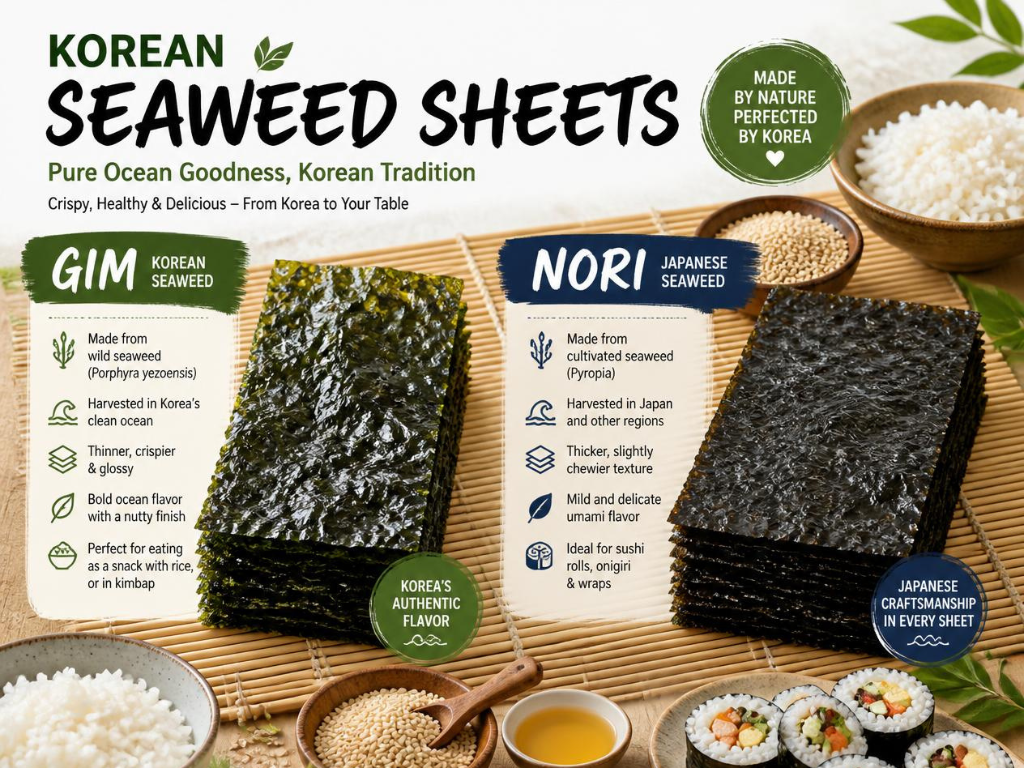
Korean seaweed sheets are gim, dried sheets of red algae
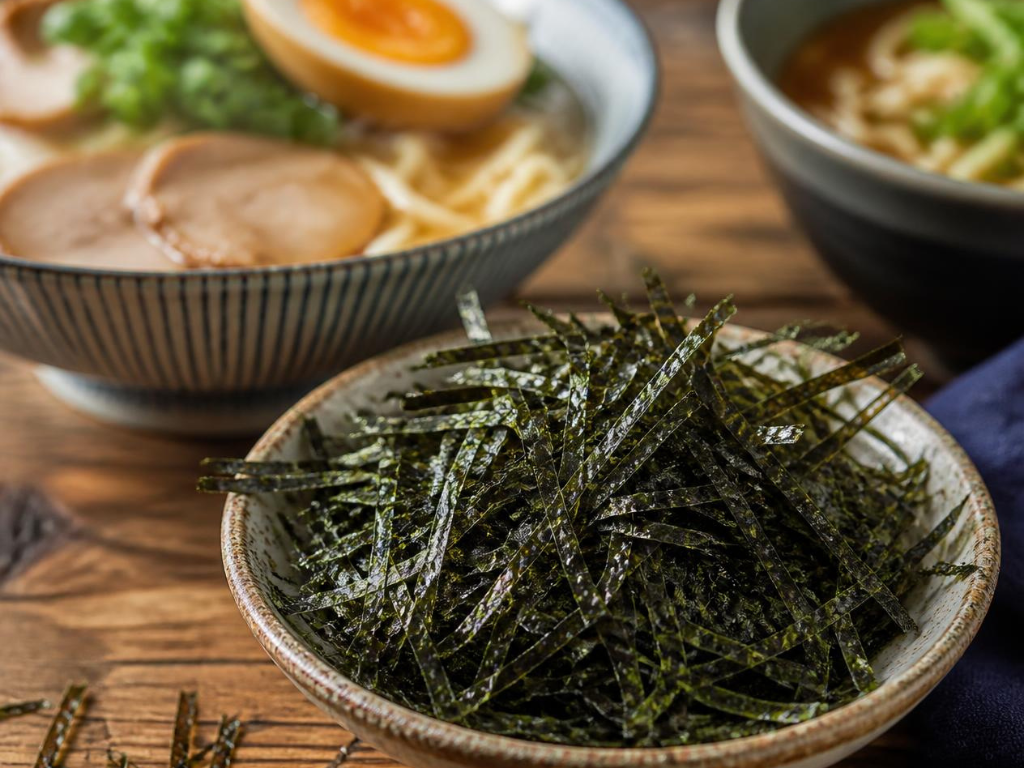
Kizami nori is roasted nori cut into fine strips, 0.5