
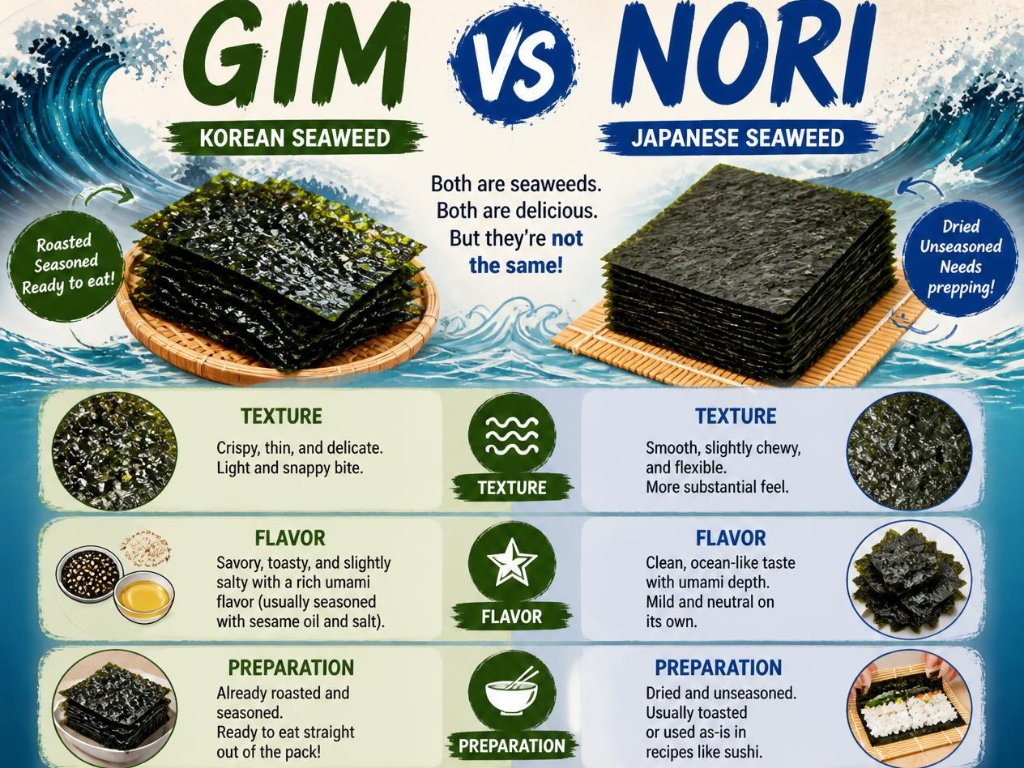
Gim vs nori is one seaweed: dried sheets of the
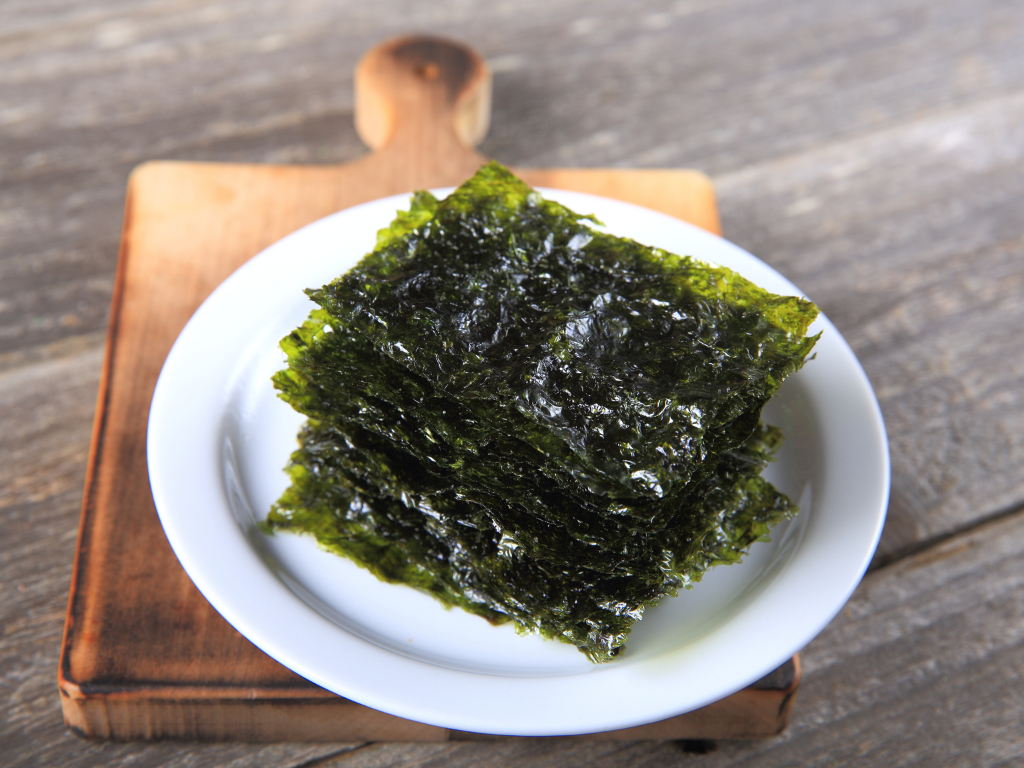
Korean seaweed, known as gim, is the thin roasted laver that wraps gimbap, sits on the table as banchan, and fills the snack aisle as crispy seasoned sheets. This blog will walk you through the main types of Korean seaweed, how each is used in real Korean cooking, and how it is made from sea farm to finished sheet.
What Korean seaweed is
Korean seaweed is most often gim (김), the Korean name for laver that has been washed, pressed into thin sheets, and dried. It comes from red algae in the Pyropia and Porphyra families, the same plant the Japanese turn into nori. The difference is in the finishing. Japanese nori is usually toasted plain for sushi, while Korean gim is frequently brushed with oil and salt before roasting, which is why a sheet of Korean roasted seaweed tastes savory straight from the pack. If you want to see how this plays out across formats, the Korean seaweed sheets Yoroshii supplies sit firmly in the seasoned, ready-to-eat tradition. Calling it all “seaweed” flattens a pantry that Koreans treat as several distinct ingredients. Gim is one. Miyeok and dasima are others, and they behave nothing alike in a kitchen. Getting the names right is the first step to using each one well.
The main types of Korean seaweed
| Type | What it is | Main use |
| Gim (dried laver) | Thin sheet of dried, lightly roasted laver | Gimbap, rice wraps, table ssam |
| Seasoned gim (jomi-gim) | Sheet brushed with oil and salt, then roasted | Banchan side dish, snacking |
| Gimbap gim | Larger, sturdier roasted sheet | Rolling gimbap |
| Miyeok (wakame) | Brown seaweed sold dried in strips | Miyeok-guk soup, cold salads |
| Dasima (kelp) | Thick brown kelp | Stock and broth base |
Gim, the everyday laver sheet
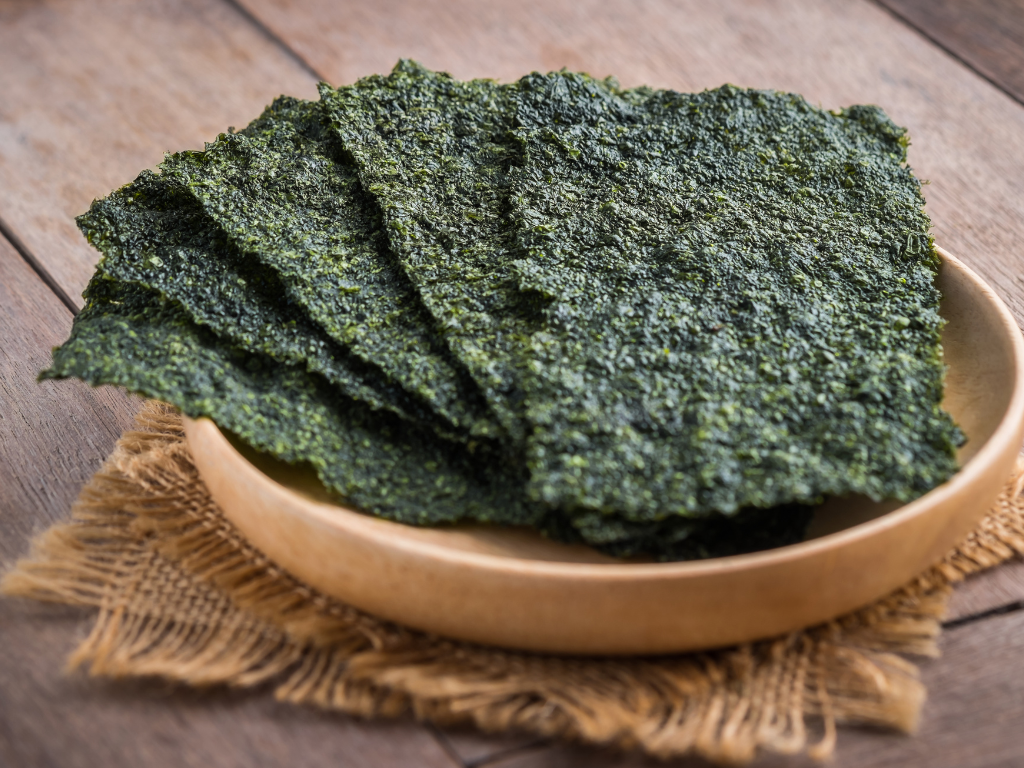
Gim is the sheet most people picture. Plain roasted gim, called gui-gim, has a clean toasted flavor and a brittle snap. Koreans tear it over rice or fold a piece around a spoonful of rice and a dab of soybean paste at the table. It is the most flexible form, which is why it anchors the wider Korean seaweed category.Seasoned roasted gim, the banchan and the snack
Seasoned gim, known as jomi-gim or jaban gim, is where Korean seaweed earns its reputation abroad. The sheet is coated with oil and a fine layer of salt, roasted hot, then cut into small rectangles. It shows up two ways: as a banchan eaten with rice, and as the crispy snack packs now common on supermarket shelves worldwide. This format overlaps directly with the roasted seaweed snack range buyers stock for retail, because a finished, seasoned product needs no preparation and travels well. The oil choice matters more than people expect. Perilla oil, deulgireum in Korean, is the traditional pick and gives a nuttier, grassier finish. Sesame oil reads cleaner and holds up better over a long shelf life, which is why most export-grade seasoned gim leans on it. A few premium lines blend both. If you taste a Korean seaweed snack and notice a deeper, almost herbal note, that is usually perilla doing the work.Gimbap gim, built for rolling
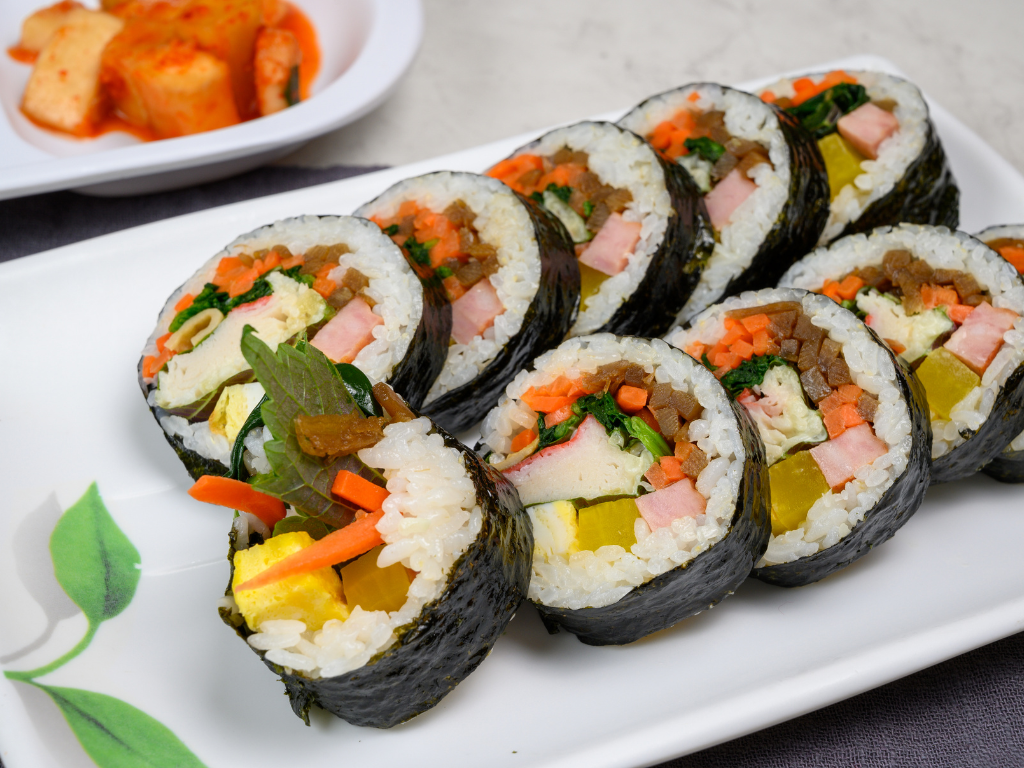
Gimbap gim is a thicker, sturdier sheet sold specifically for rolling rice and fillings. It is usually unseasoned or only lightly toasted, because seasoning would clash with the vinegar-free seasoned rice and the fillings inside a gimbap. Using a thin snack sheet to roll gimbap is a common mistake, and it tears the moment you apply pressure.Miyeok and dasima, the soup-and-stock seaweeds
Miyeok is Korean wakame, a brown seaweed sold dried in ribbons. It rehydrates into the silky strands of miyeok-guk, the seaweed soup traditionally eaten on birthdays and after childbirth. Dasima is kelp, the backbone of Korean stock, simmered briefly with anchovies to build the base for soups and stews. Neither is a sheet, and neither is interchangeable with gim, which is exactly why “Korean seaweed” deserves a clearer vocabulary than the single word allows.
How Korean seaweed is made
The process that turns living laver into a crisp sheet is closer to papermaking than cooking. Farming and harvest come first. Laver grows on nets suspended in shallow coastal water, and the prime crop comes through the cold months, roughly late autumn into spring. Wando County in South Jeolla Province is the heart of Korea’s seaweed farming, and regions like Gwangcheon are known for the quality of their finished gim. Once harvested, the laver is rinsed, then chopped into a fine slurry. That slurry is poured thin over framed screens and pressed to drain, much like forming a sheet of handmade paper. The sheets dry into raw gim, the pale, unroasted base that every other product starts from. From there the path splits. Plain roasted gim goes through a quick high-heat toast that turns it deep green and brittle. Seasoned gim takes an extra step: a thin coat of oil and salt, then roasting, then cutting and packing. For wholesale and export, that final stretch is where food safety systems decide whether the product is consistent batch after batch, which is why the wider premium seaweed range built for foodservice is processed under documented quality controls rather than guesswork.How Koreans actually use Korean seaweed
Gim earns its place because it fits almost any meal. The clearest examples are worth knowing if you sell or cook with it. Gimbap is the headline use. A sheet of gimbap gim wraps seasoned rice with fillings like egg, pickled radish, carrot, and beef, rolled tight and sliced. Seasoned gim plays a quieter role as banchan, the small dishes that crowd a Korean table, where a stack of oiled, salted sheets sits ready to wrap each bite of rice. Crumbled gim also works as a fast topping, the same logic behind this warm rice bowl with a seaweed topping, where torn sheets add savor and texture in seconds. For more ways to put sheets to work, the seaweed recipe collection covers rice bowls, rolls, and snacks. The snack format deserves its own mention. Single-serving packs of seasoned gim turned a traditional banchan into a global product, and they now sell as a low-calorie, plant-based alternative to chips. That shift is a big reason Korean seaweed moved from specialty aisles into mainstream retail.Why sourcing and certification matter for buyers
The demand behind Korean seaweed is real, not hype. South Korea’s dried seaweed exports passed the one billion US dollar mark for the first time in 2025, with the United States, Japan, and China leading the buying, and the country supplies roughly 70 percent of the world’s seaweed. For any retailer or distributor, that means competing for a product whose quality varies widely between suppliers. Nutrition is part of the appeal. Seaweed is one of the richest natural sources of iodine, along with calcium and other minerals, which the NIH Office of Dietary Supplements lists among its standout food sources. Pure gim is also vegan and gluten-free, which suits the clean-label positioning most buyers want. This is where supplier standards separate a reliable partner from a gamble. Yoroshii, the flagship brand of Singapore’s VGE Pte Limited, has supplied seaweed to retail and foodservice since 1993 and manufactures through its Malaysian subsidiary Front Option under ISO 22000, HACCP, GMP, and JAKIM Halal certification. For Halal-conscious markets across Southeast Asia, that last point is decisive, and the Gwangcheon-style seasoned gim in the Korean range is built for exactly that kind of buyer.Conclusion
Korean seaweed is not one thing. Gim, seasoned gim, gimbap sheets, miyeok, and dasima each do a different job, from rolling rice to building broth, and the seasoned roasted sheet is the form carrying gim into snack aisles around the world. Understanding the type, the oil, and the processing behind it is what turns a generic order into a product your customers come back for. If you are sourcing Korean seaweed for a retail line, a restaurant, or a private label, talk to Yoroshii about samples and wholesale formats matched to your market. Browse the Korean seaweed range and start the conversation today.Frequently asked questions
What is Korean seaweed called?
The most common type is gim, the Korean word for dried laver sheets. Seasoned, oiled, and roasted versions are called jomi-gim or jaban gim. Koreans also use miyeok, which is wakame for soup, and dasima, a kelp used to make stock. Each name points to a different ingredient.What is the difference between gim and nori?
Both come from the same laver plant. Japanese nori is usually roasted plain for sushi, while Korean gim is often brushed with sesame or perilla oil and salt before roasting. That oil-and-salt step gives Korean roasted seaweed its savory, ready-to-eat flavor straight from the pack.Is Korean seaweed healthy?
Pure gim is low in calories and naturally rich in iodine, calcium, and other minerals, and it is vegan and gluten-free. Seasoned gim adds oil and salt, so snack versions carry more sodium. As a banchan or snack in normal portions, Korean seaweed fits most balanced diets.Why is Korean seaweed seasoned with oil?
The oil, traditionally perilla or sesame, carries flavor and helps the salt cling while the sheet roasts. Perilla oil gives a nuttier, grassier taste favored in Korea, while sesame oil is cleaner and more shelf-stable, which is why export-grade seasoned gim usually relies on it.What seaweed is used for gimbap?
Gimbap uses gimbap gim, a larger and sturdier sheet made for rolling. It holds seasoned rice and fillings without tearing. Thin seasoned snack sheets are too fragile for rolling, so they are eaten as banchan or on their own instead.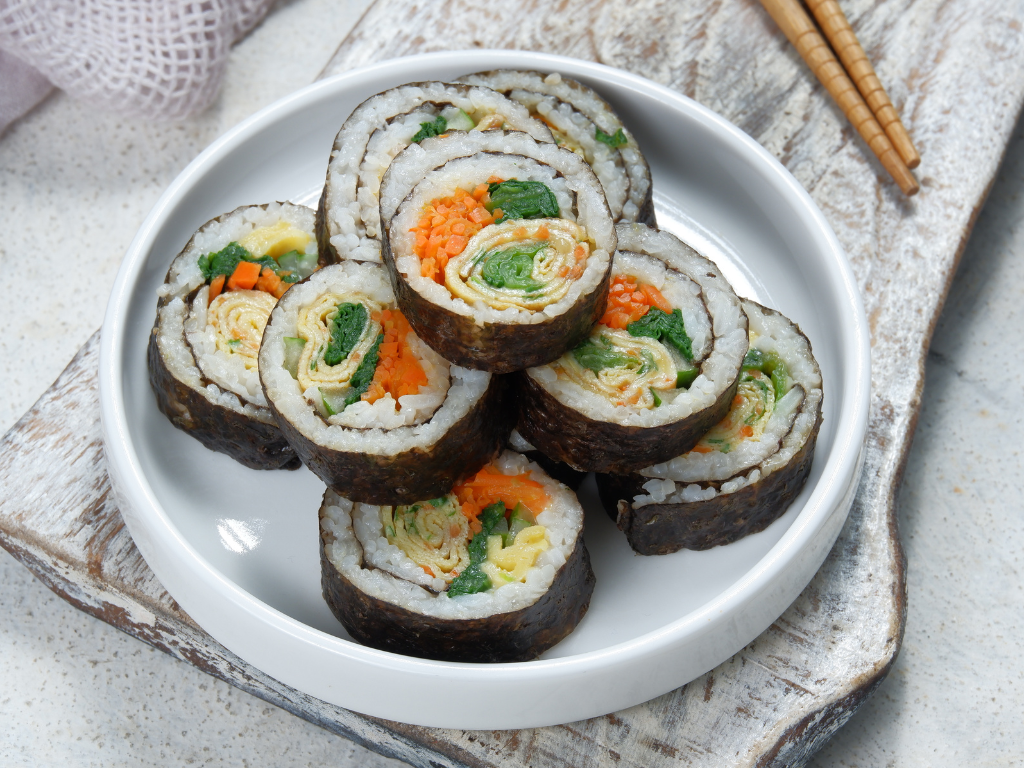
Seaweed for gimbap is gimbap gim, an unseasoned, thicker sheet
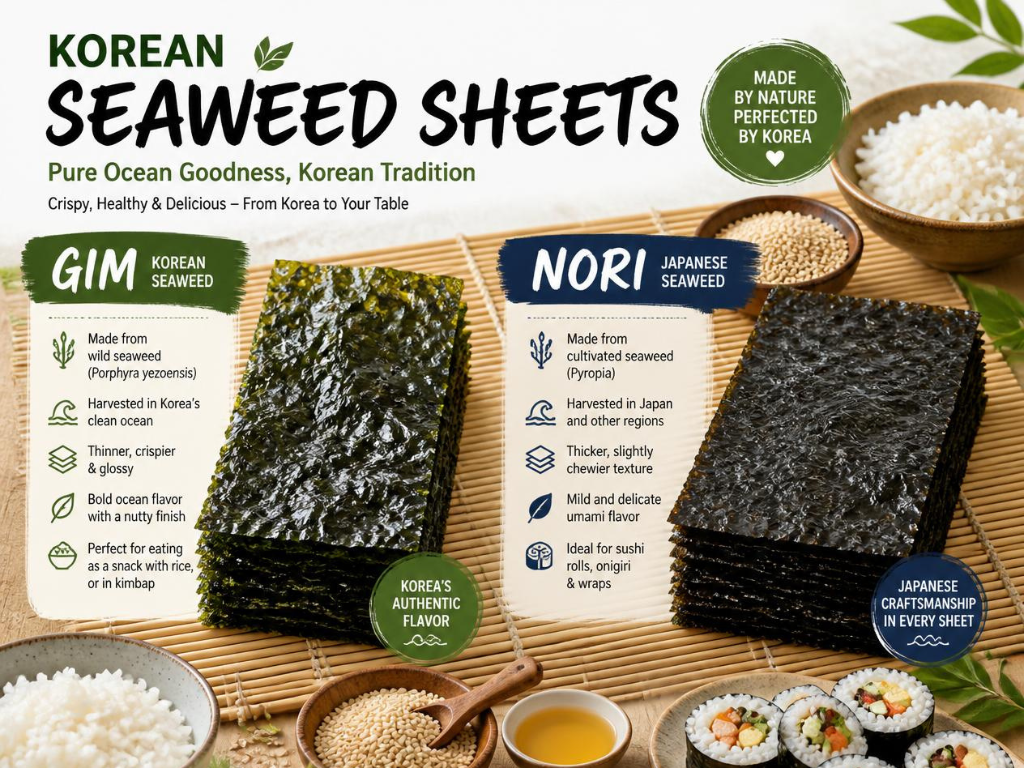
Korean seaweed sheets are gim, dried sheets of red algae