
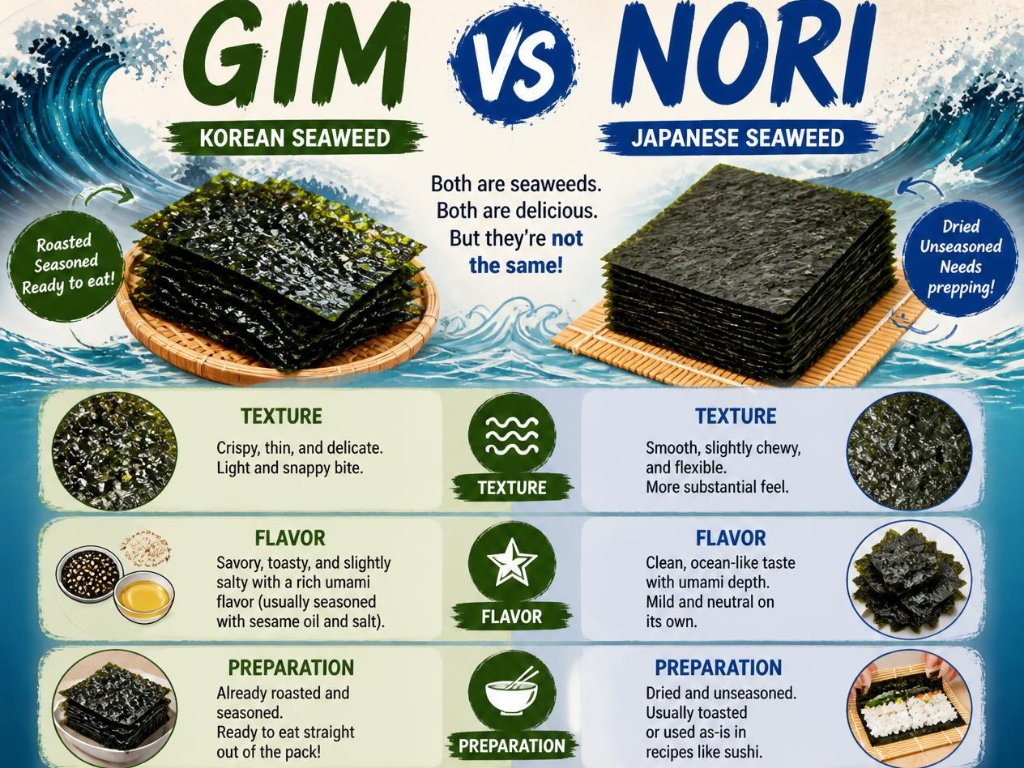
Gim vs nori is one seaweed: dried sheets of the
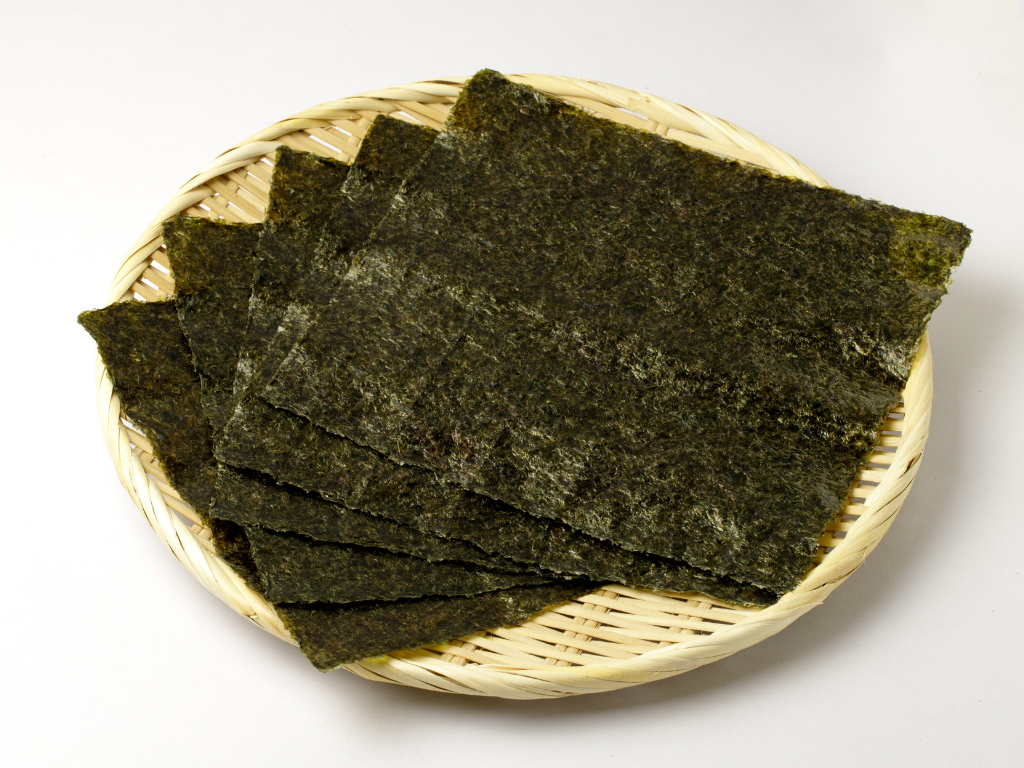
Dried seaweed is a foodservice staple. It stores for months, needs little prep, and adds savory depth fast. For kitchens buying at volume, form and storage matter as much as price. This blog will walk you through the forms of dried seaweed worth stocking, how to store them, and what to know before buying in bulk.
What dried seaweed means in a professional kitchen
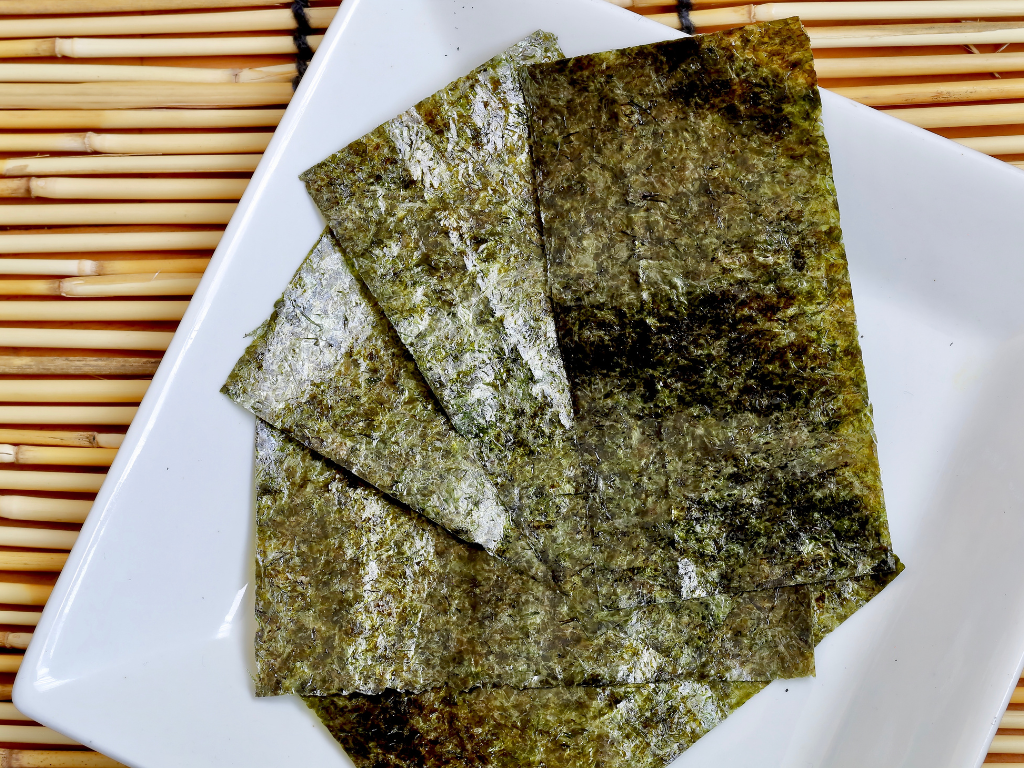
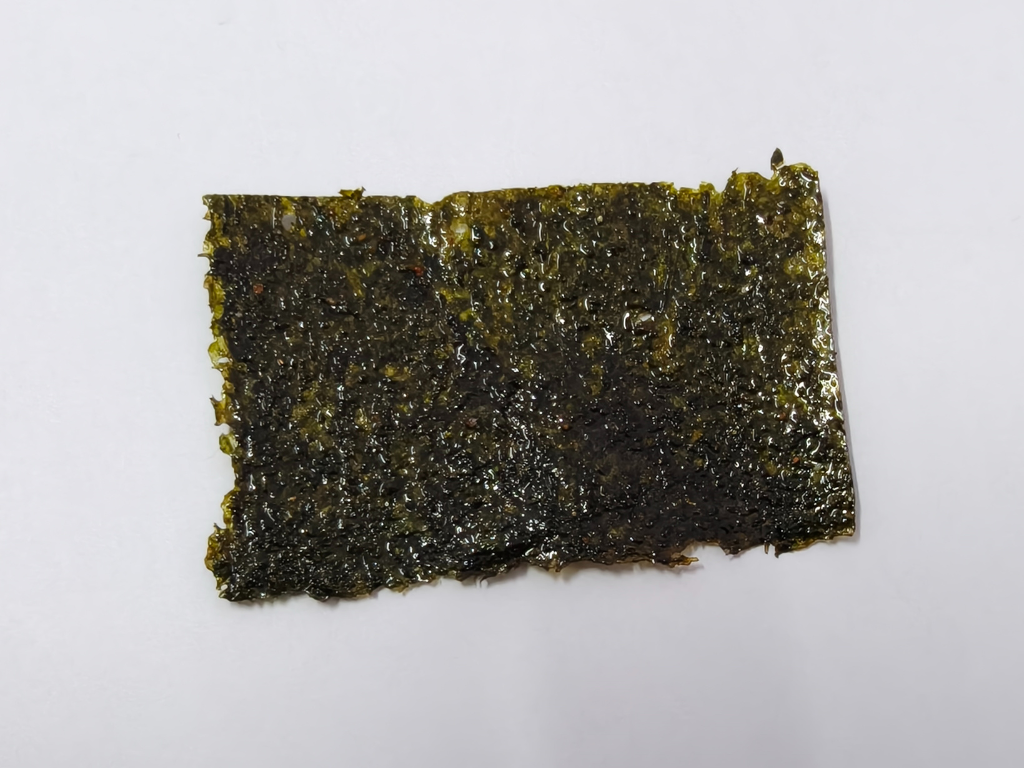
Dried seaweed is marine algae that has been cleaned, processed, and dried for shelf stability. In a commercial kitchen it falls into two broad camps, and confusing them costs time. The first is the ready-to-use roasted forms, mainly nori and gim, which arrive crisp and go straight onto a plate. The second is the rehydrating forms, such as wakame and kombu, which need soaking or simmering before they do anything useful. That split matters because “raw seaweed” gets used loosely. A raw, unroasted laver sheet is the pale base that becomes roasted nori after toasting. Fresh, never-dried seaweed is something else again and rarely shows up in a standard kitchen. For most operators, dried seaweed means the processed sheet, flake, shredded, and powder products that store well and need no soaking. The dried seaweed range built for the food trade sits squarely in that ready-to-use category, which is the part of the market this guide focuses on.
The forms of dried seaweed worth stocking
Form decides prep time, plate cost, and waste. Here is how the common ones compare.| Form | Prep needed | Best foodservice use | Stores best when |
| Roasted sheets and nori cuts | None | Sushi, maki, temaki, wraps | Sealed and dry, away from steam |
| Kizami (shredded) | None | Garnish, rice bowls, noodles | Airtight, resealed after use |
| Ao nori (green flakes) | None | Okonomiyaki, takoyaki, soup garnish | Airtight container |
| Roasted seaweed powder | None | Seasoning, furikake, soup and stock depth | Cool, dry, sealed |
| Wakame and kombu | Soak or simmer | Soups, salads, dashi | Dry pantry, long shelf life |
Roasted sheets and pre-cut nori
The roasted sheet is the backbone of any sushi operation. Where it earns or loses money is the cut. A kitchen rolling hundreds of pieces a night cannot afford to trim sheets by hand, and uneven cuts show up in the final plate. Stocking pre-cut nori formats for high-volume kitchens in standard sizes, from full and half cuts for rolling to smaller strips for wraps, removes a whole prep step and keeps presentation consistent across shifts. For most busy lines, the small premium on a pre-cut sheet is cheaper than the labor and trim waste of cutting in-house.Kizami, the zero-prep garnish
Kizami nori is sheet sliced into fine threads. It does one job and does it well: a scatter of texture and sea flavor over a finished dish. Shredded kizami nori drops onto rice bowls, soba, salads, and poke in seconds with no knife work. The catch is humidity. Kizami loses its bite faster than a sheet because the threads have more surface area, so it needs an airtight container and a quick reseal after every use.Ao nori flakes
Ao nori is a green seaweed, a different plant from the red laver in sheets, with a brighter and stronger sea aroma. These flakes are the green dusting on okonomiyaki, takoyaki, and yakisoba, and they double as a fast garnish on noodle soups. A pinch carries a lot of flavor, which makes ao nori one of the more cost-efficient finishing ingredients on the shelf.Roasted seaweed powder
Ground seaweed is the most underused form in kitchens outside Japan and Korea. Roasted seaweed powder dissolves into salt blends, batters, dressings, and furikake, and it adds a savory base note to broths without leaving visible flakes. Because it carries natural umami compounds, a spoonful can deepen a stock the way a good dashi does, but with none of the soaking or straining. For a kitchen that wants the taste of the sea in a sauce or a seasoning, powder is the quiet workhorse.Rehydrating seaweeds for soup
The phrase “seaweed for soup” usually points to wakame and kombu, the soak-and-simmer forms. Wakame swells into soft strands for miso soup and seaweed salad, while kombu is simmered to build dashi. These are dried seaweeds too, but they belong to a different prep workflow than the roasted, ready-to-use products above. Yoroshii’s range centers on the roasted laver forms rather than the rehydrating kelps, so if your menu leans on dashi from scratch, plan that part of your pantry separately. To see how the ready forms finish a bowl rather than build it, the collection of seaweed recipes covers quick rice bowls, rolls, and toppings.
How to store dried seaweed in a commercial kitchen
Moisture is the only real enemy. Crispness is the quality signal for roasted seaweed, and a sheet that has gone limp has absorbed humidity from the air. In Singapore and across Southeast Asia, where ambient humidity runs high year round, storage discipline is the difference between a usable case and a wasted one. Keep dried seaweed sealed in its original packaging or in airtight containers, and reseal the moment you finish portioning. Most suppliers pack roasted seaweed with silica gel desiccant for a reason, so keep those sachets in the container. Store the stock somewhere cool and dry, and keep it well away from steam tables, dishwashers, and oven vents, because a few hours near a steam source will soften an entire open pack. Shelf life depends on the seal. Unopened roasted nori commonly keeps for around a year when stored dry, while an opened pack is best used within a few weeks before the texture fades. Rotate stock on a first-in, first-out basis and label receiving dates on every carton. If you must refrigerate an opened product, only do it in a fully airtight container, since condensation on cold sheets ruins them faster than warm air does. Limpness, an off smell, or any visible moisture are the cues to discard.Buying dried seaweed in bulk
Bulk buying is where a foodservice operator either locks in a reliable line or inherits a headache. Most wholesale dried seaweed is sold by the case or carton, and a lot of it is quote-based rather than fixed-price, which is why supplier catalogues often list items as available on request with a sample step before a full order. That structure exists so buyers can check the product against their menu before committing to volume. A few things separate a supplier worth a standing order from a one-off. Consistency batch to batch is the first, because a cut size or a moisture level that drifts between deliveries breaks your prep. Certification is the second. Food safety systems matter more at volume, and a manufacturer working under ISO 22000 food safety management, alongside HACCP and GMP, gives you documented control rather than a promise. For Muslim-majority markets in the region, JAKIM Halal certification is often non-negotiable. Proximity to supply is worth weighing too. Asia produces roughly 97 percent of the world’s farmed algae, according to the FAO’s 2024 fisheries and aquaculture report, so a buyer in Southeast Asia sourcing from an Asia-based certified manufacturer shortens the chain and tightens lead times. Yoroshii, the flagship brand of Singapore’s VGE Pte Limited, has supplied retail and foodservice since 1993 and manufactures through its Malaysian subsidiary Front Option under those certifications, with private-label and custom packaging options for buyers who want their own brand on the carton. If your menu spans cuisines, the range also covers seaweed cut and packed for Japanese kitchens, from onigiri wraps to sushi sheets.Conclusion
Dried seaweed rewards operators who match the form to the job, store it against humidity, and buy from a supplier whose quality holds across deliveries. Roasted sheets and cuts for rolling, kizami and ao nori for finishing, powder for depth, and a clear plan for any rehydrating soup seaweed will cover most kitchens without waste. If you are sourcing dried seaweed for a restaurant group, a central kitchen, or a private label, request samples and wholesale pricing from Yoroshii and test the forms against your own menu before you scale.Frequently asked questions
How long does dried seaweed last?
Unopened roasted nori usually keeps for about a year when stored sealed and dry. Once opened, use it within a few weeks for the best crispness, since nori absorbs humidity quickly. Rehydrating types like kombu last longer in a dry pantry, but texture always degrades faster after a pack is opened.Do you need to rehydrate dried seaweed?
It depends on the form. Roasted nori, kizami, ao nori, and seaweed powder are ready to use with no soaking. Wakame and kombu are the rehydrating forms, soaked or simmered for soups and dashi. Knowing which form you bought saves prep time and avoids ruined dishes.What is the best dried seaweed for soup?
Wakame and kombu build the body and broth, with kombu forming the base of dashi. To finish a bowl rather than build it, kizami nori, ao nori flakes, or a little roasted seaweed powder add savor and texture at the last moment without any soaking.How should restaurants store dried seaweed?
Keep it sealed in airtight containers, reseal after every use, and retain the silica gel sachets. Store it cool and dry, away from steam tables, dishwashers, and ovens. In humid climates like Singapore, that distance from steam is what protects the crispness of roasted nori.Can you buy dried seaweed wholesale?
Yes. Most wholesale dried seaweed sells by the case, often quote-based with a sample step first. Look for batch consistency, moisture-protective packaging, and certifications such as ISO 22000 and Halal. Suppliers like Yoroshii also offer private-label and custom packaging for foodservice and retail buyers.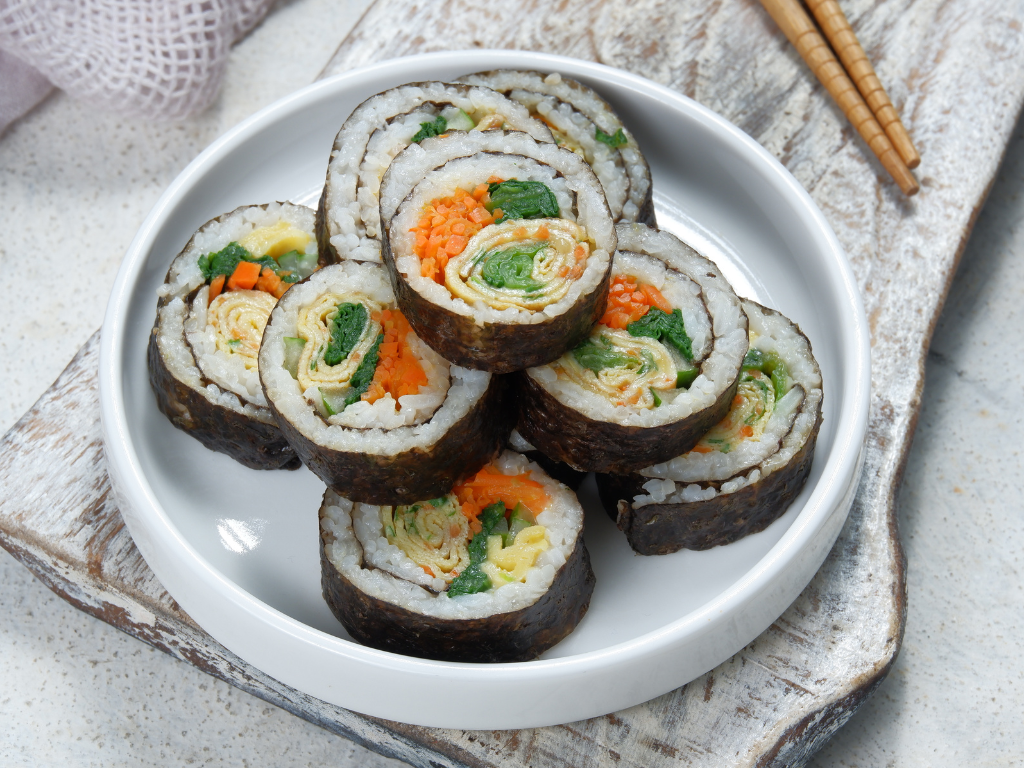
Seaweed for gimbap is gimbap gim, an unseasoned, thicker sheet
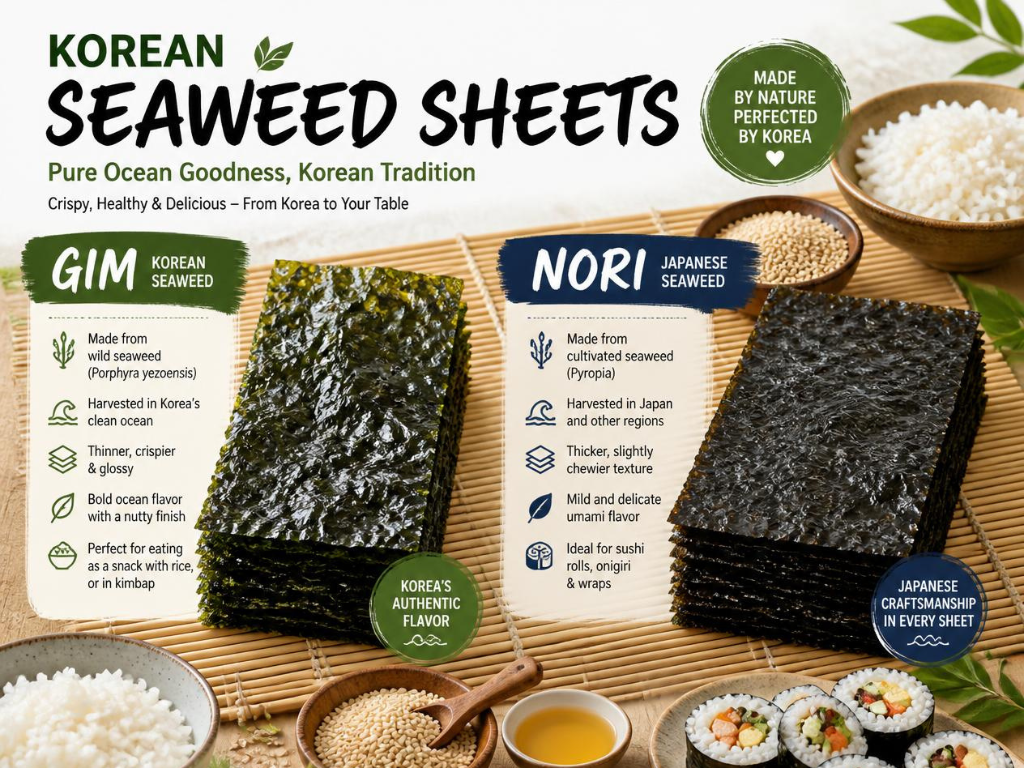
Korean seaweed sheets are gim, dried sheets of red algae