
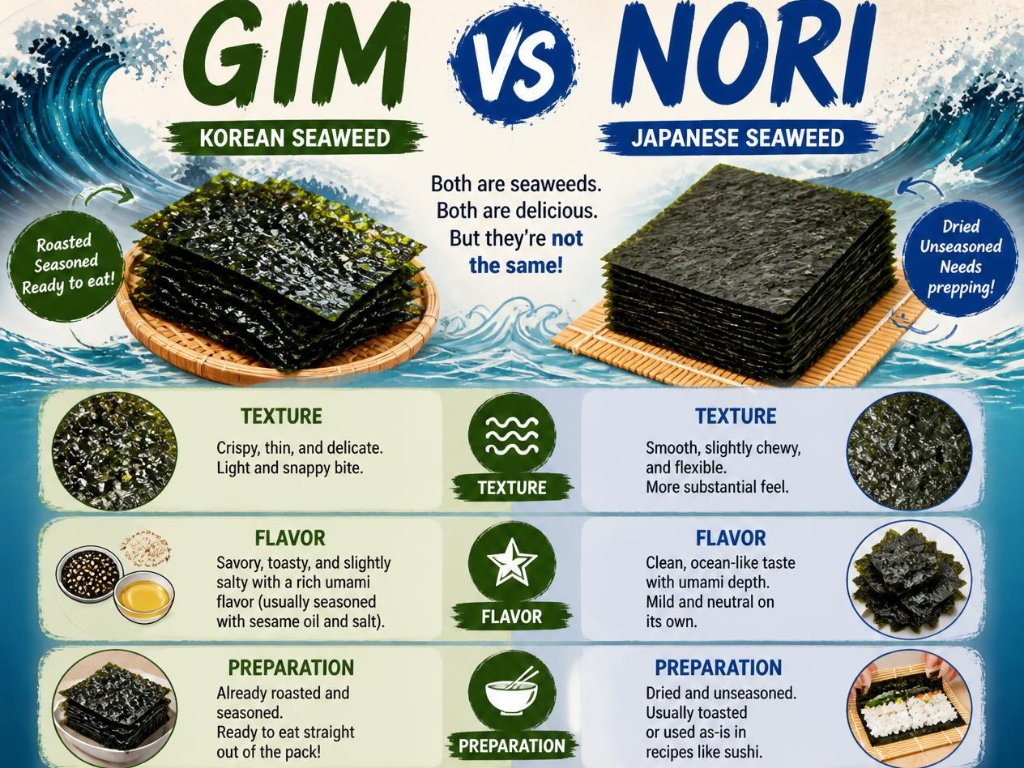
Gim vs nori is one seaweed: dried sheets of the
Nori seaweed sheets come in standard cut formats, and choosing the right one decides how clean your sushi looks and how fast your line moves. Full, half, 7 cut, and 20 cut each suit a different dish. This blog will walk you through nori cut formats for sushi, hand rolls, and onigiri, and when to use each.
What nori seaweed sheets are
Nori is roasted laver, made from red algae in the Pyropia and Porphyra families. The raw seaweed is washed, minced, pressed into thin sheets, dried, and toasted until crisp. A standard full sheet runs roughly 19 by 21 centimetres, and that single dimension is the reference point every cut format works back from. Toasting is what gives the sheet its deep green color, its snap, and the mild sweetness sushi depends on, which is why most commercial product is sold as yaki nori, the roasted grade. The reason cut format gets its own conversation is simple. A sushi counter does not buy nori the way a home cook does. It buys to a spec that matches the dish, the volume, and the labor budget. The pre-cut nori range Yoroshii supplies exists for exactly that reason, so a kitchen can order the sheet already sized for the job instead of trimming by hand between orders.
Nori cut formats and what each is for
Cut format is the difference between a sheet that fits the dish and one a chef has to fight. Here is how the common formats line up.| Cut format | What it is | Best for |
| Full cut | One whole sheet, about 19 by 21 cm | Futomaki, temaki hand rolls, large nigiri belts |
| Half cut | Sheet cut in two | Hosomaki thin rolls, smaller hand rolls, onigiri wraps |
| 7 cut | Sheet cut into seven strips | Onigiri bands, garnish strips, snack strips |
| 20 cut | Sheet cut into twenty small pieces | Fine garnish, rice-bowl topping, bite-size pieces |
Full cut nori
The full sheet is the default for anything that needs to wrap a lot of rice and filling. Futomaki, the thick roll packed with several ingredients, needs the full width to close around its core, and a temaki cone is rolled from a whole or half sheet depending on how large you want it. Full-cut roasted nori is also what most kitchens cut down themselves when they run out of a smaller format, though that defeats the point of buying pre-cut in the first place.Half cut nori
The half sheet is the quiet workhorse of a sushi bar. Hosomaki, the slim single-filling roll like a cucumber or tuna roll, is built on a half sheet, because rolling a thin core on a full sheet leaves a thick, clumsy band of nori around a small amount of rice. A half sheet also makes a neat, hand-sized temaki and wraps an onigiri with enough coverage to hold without overwhelming the rice. If a kitchen could stock only one cut beyond the full sheet, the half cut would earn its place.7 cut nori
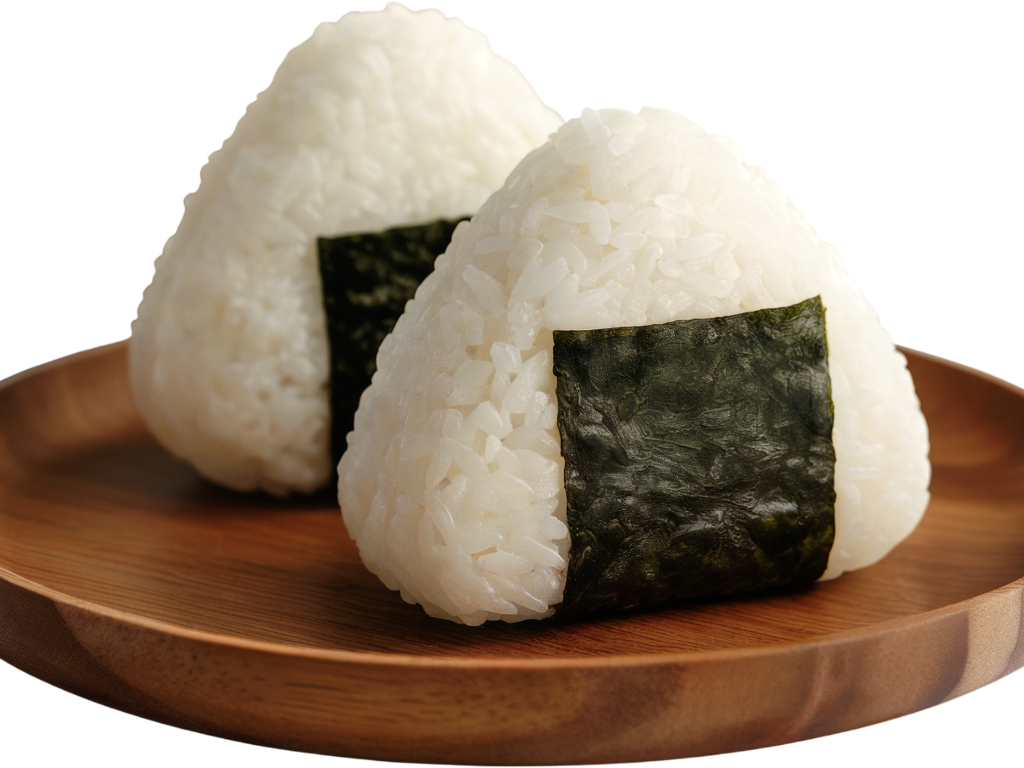
The 7 cut splits a full sheet into seven strips. Those strips are the band you see wrapped around the middle of an onigiri, the thin ribbon laid across a piece of nigiri, or the garnish on a rice bowl. They also pack well as snack strips. The strip format wins for onigiri because a full sheet wrapped around a rice ball goes soft and chewy within minutes, while a strip keeps its crispness right up to the moment it is eaten.20 cut nori
The 20 cut is the smallest standard format, a full sheet divided into roughly twenty pieces. These are finishing pieces: a scatter over a donburi, a bite-size square under a canapé, the dark accent on a bibimbap. Because each piece is small, a single sheet stretches across many plates, which makes the 20 cut one of the more cost-efficient garnishes a kitchen can keep on hand.
Matching the cut to the dish
Knowing the formats is half the job. The other half is reaching for the right one under service pressure. The seaweed selection cut for Japanese kitchens is organized around these exact dishes, from sushi sheets to onigiri wraps.Sushi rolls
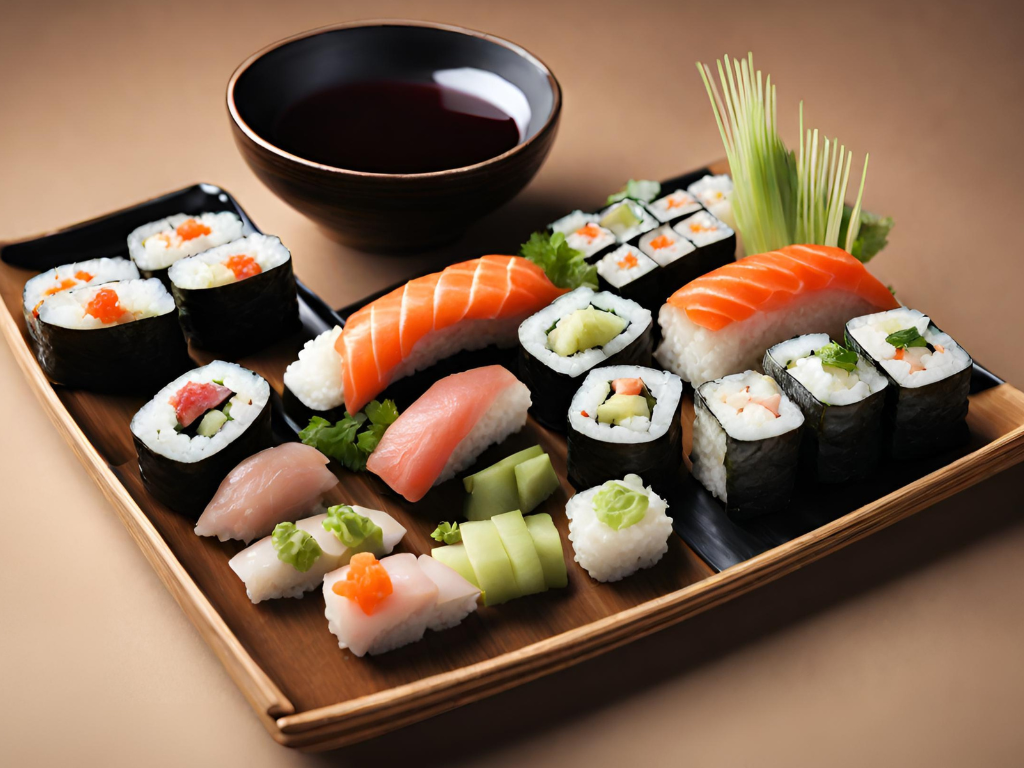
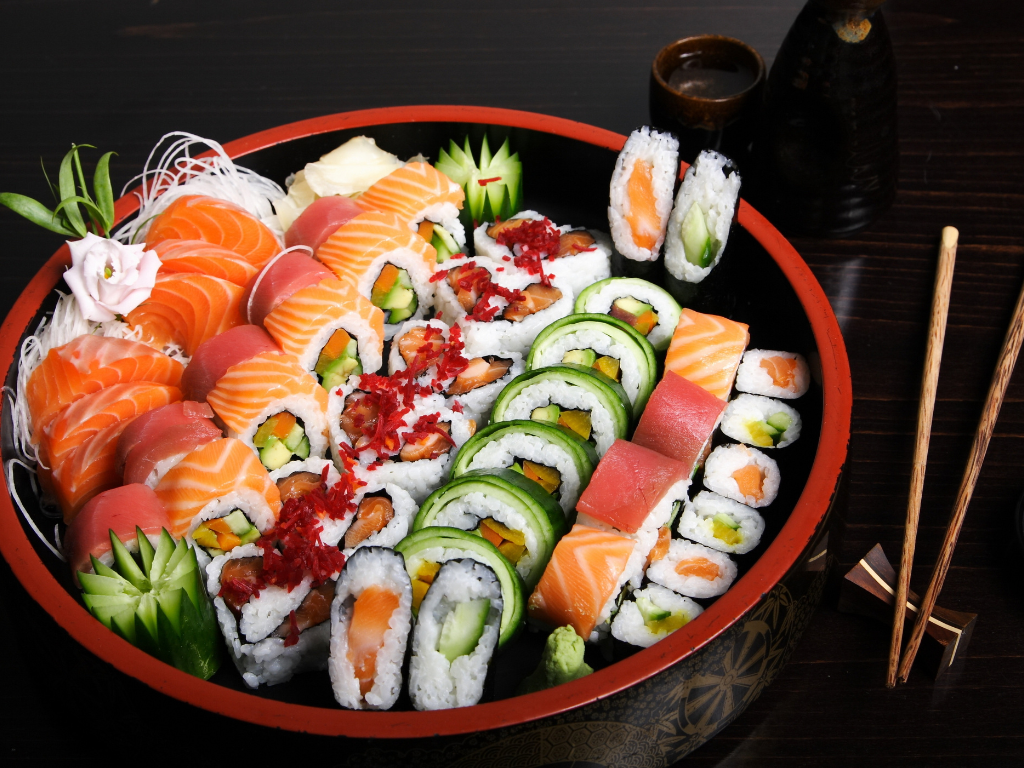
Maki covers a family of rolls, and the cut follows the thickness. Futomaki and inside-out uramaki want a full sheet so the wrap reaches all the way around a fat core. Hosomaki wants a half sheet, kept tight and thin. Getting this wrong is the most common nori mistake on a new line, and it shows immediately in a roll that looks bulky or unravels. For a simple build that puts a roasted sheet to work, these seaweed sushi bites show the format in a quick, repeatable form.Hand rolls
Temaki is a cone, not a cylinder, so it is more forgiving of sheet size. A full sheet makes a generous cone for a sit-down order, while a half sheet suits a smaller, walk-up portion. The one rule that holds is timing. Temaki should be rolled to order, because the nori softens fast once it meets warm rice, and a cone made ten minutes early arrives limp.Onigiri
Onigiri is where the strip formats prove their worth. A 7-cut strip wraps the middle of a triangle and gives a clean handhold while keeping the rest of the rice exposed. A half sheet works when you want the rice fully covered, the convenience-store style. Either way, the sheet is best kept separate from the rice until the last moment in a high-turnover setting, which is why packaged onigiri uses clever folding to keep the nori dry until you open it.Why cut consistency and sourcing matter
Cut accuracy is not a cosmetic detail at volume. A format that drifts in size between deliveries throws off every roll built on it, and inconsistent toasting shows up as pale patches or sheets that tear. The quality markers worth checking are even color, a clean snap, and pieces that arrive the same size every time. Moisture is the other variable. Nori loses crispness the moment it meets humid air, so packaging that seals well and includes desiccant matters as much as the cut itself. For buyers ordering at scale, this is where supplier standards separate a reliable line from a gamble. A manufacturer working under ISO 22000 food safety management, with HACCP and GMP behind it, gives documented consistency rather than a promise. Yoroshii, the flagship brand of Singapore’s VGE Pte Limited, has supplied sushi bars and retailers since 1993 and manufactures through its Malaysian subsidiary Front Option under those certifications, with JAKIM Halal for Muslim-majority markets. Sourcing close to supply helps too. Asia produces around 97 percent of the world’s farmed algae, according to the FAO’s 2024 fisheries and aquaculture report, so a Southeast Asian buyer working with an Asia-based certified manufacturer keeps lead times short. If your menu reaches beyond cut sheets, the wider premium seaweed range covers shredded kizami, flakes, and powder for finishing.Conclusion
Nori cut format is a small decision that shapes how every roll, cone, and rice ball turns out. Full sheets for futomaki and temaki, half sheets for hosomaki and onigiri, 7-cut strips for bands and garnish, and 20-cut pieces for finishing will cover almost any Japanese menu without waste or rework. If you run a sushi bar, a central kitchen, or a retail line, request samples of Yoroshii’s nori cuts and test the formats against your own builds before you commit to a wholesale order.Frequently asked questions
What size is a full sheet of nori?
A standard full nori sheet is roughly 19 by 21 centimetres. Every other cut format, from half cut to 7 cut and 20 cut, is divided from that full sheet. Sushi bars choose the format by dish, since a futomaki needs a full sheet while a hosomaki uses a half.What is the difference between full cut and half cut nori?
A full cut is one whole sheet used for futomaki and temaki hand rolls. A half cut is that sheet divided in two, sized for hosomaki thin rolls and onigiri wraps. Using a full sheet for a thin roll leaves too much nori around a small rice core.Which nori cut is best for onigiri?
A 7-cut strip is the usual choice for onigiri, wrapping the middle of the rice ball while keeping the rest exposed and crisp. A half sheet works when you want full coverage. Strips stay crisper than a full sheet, which softens quickly once it touches warm rice.What is nori made from?
Nori is made from laver, a red algae in the Pyropia and Porphyra families. The seaweed is washed, minced, pressed into thin sheets, dried, and roasted into yaki nori. That roasting step gives the sheet its color, crisp snap, and the mild flavor that suits sushi and onigiri.Why does nori go soft in sushi?
Nori absorbs moisture from rice and humid air, which is why a roll or hand roll loses its crispness within minutes. Sushi bars roll temaki to order and keep onigiri nori separate until serving. Sealed packaging with desiccant protects crispness before the sheet reaches the kitchen.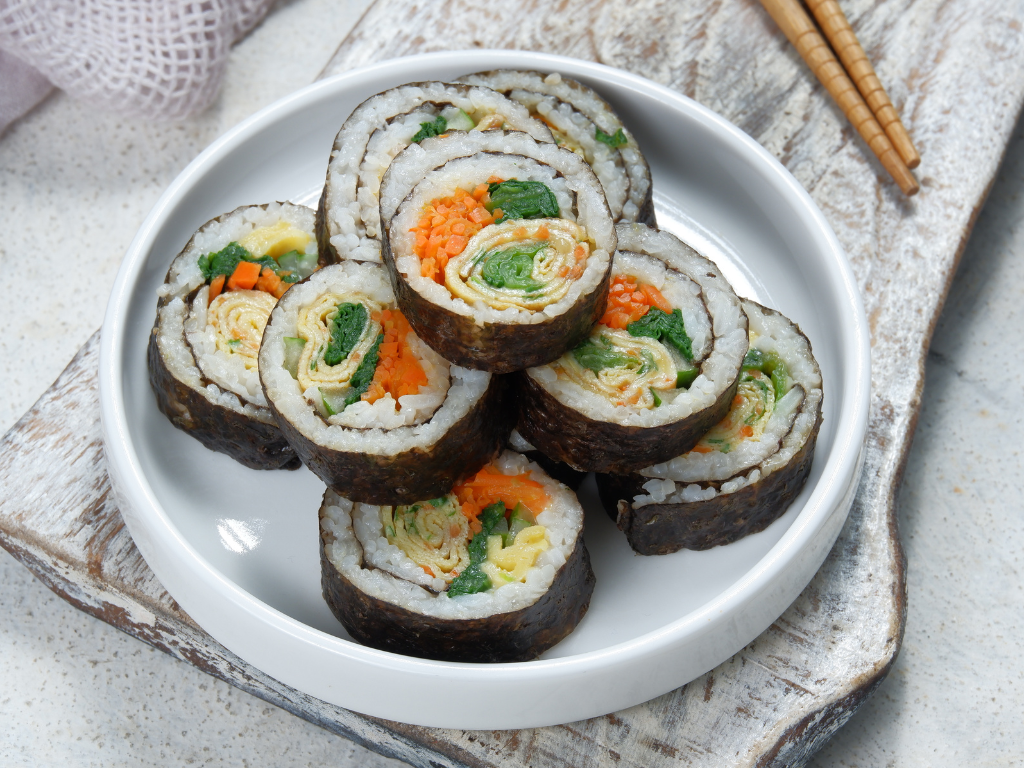
Seaweed for gimbap is gimbap gim, an unseasoned, thicker sheet
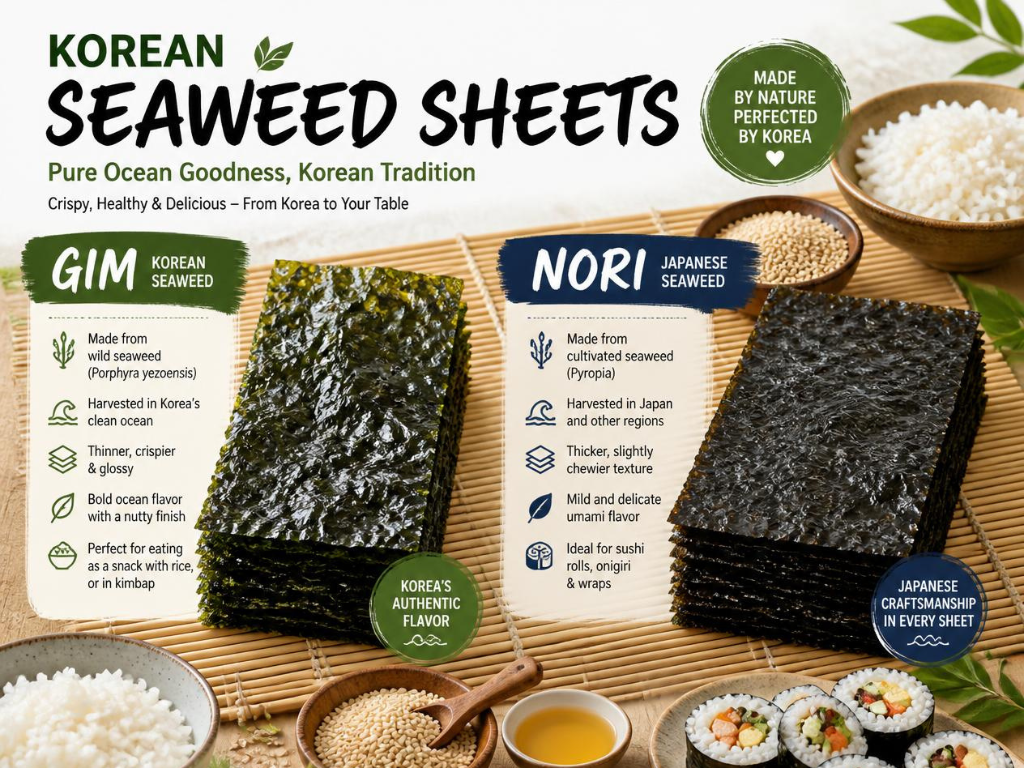
Korean seaweed sheets are gim, dried sheets of red algae