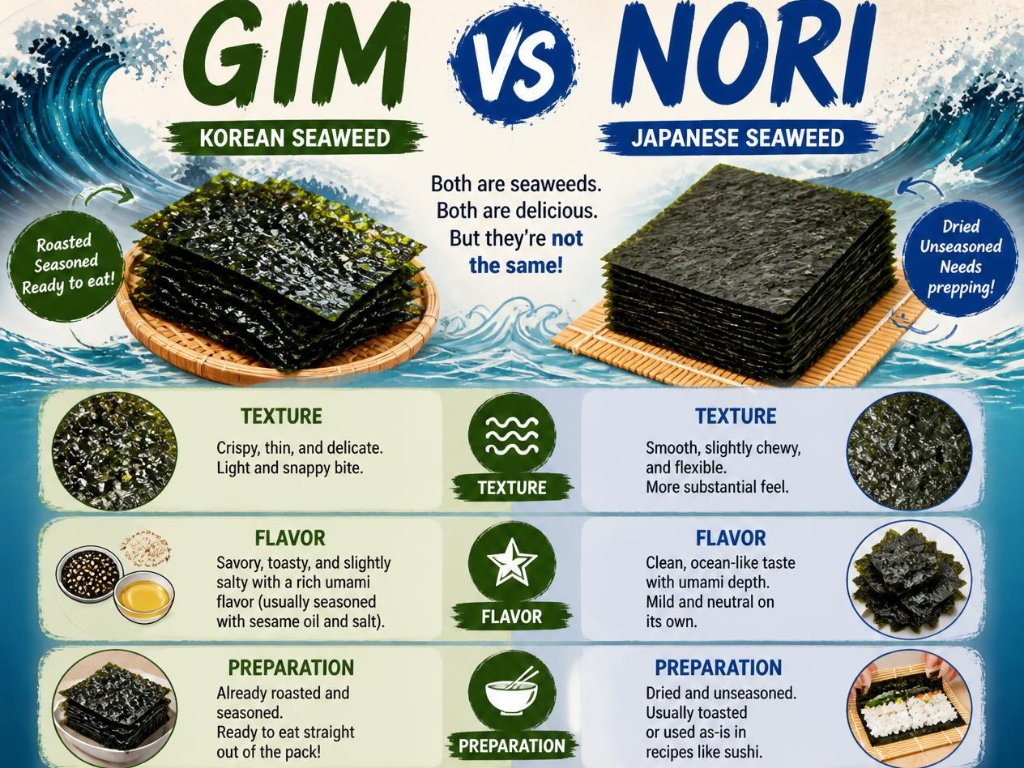
Gim vs nori is one seaweed: dried sheets of the
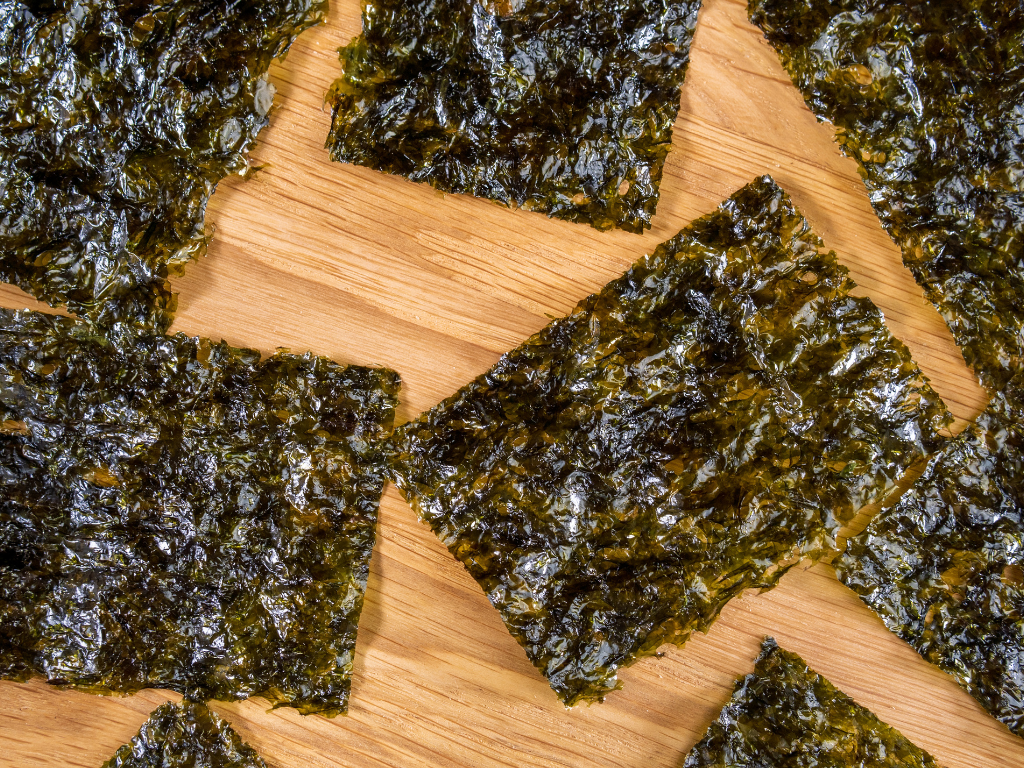
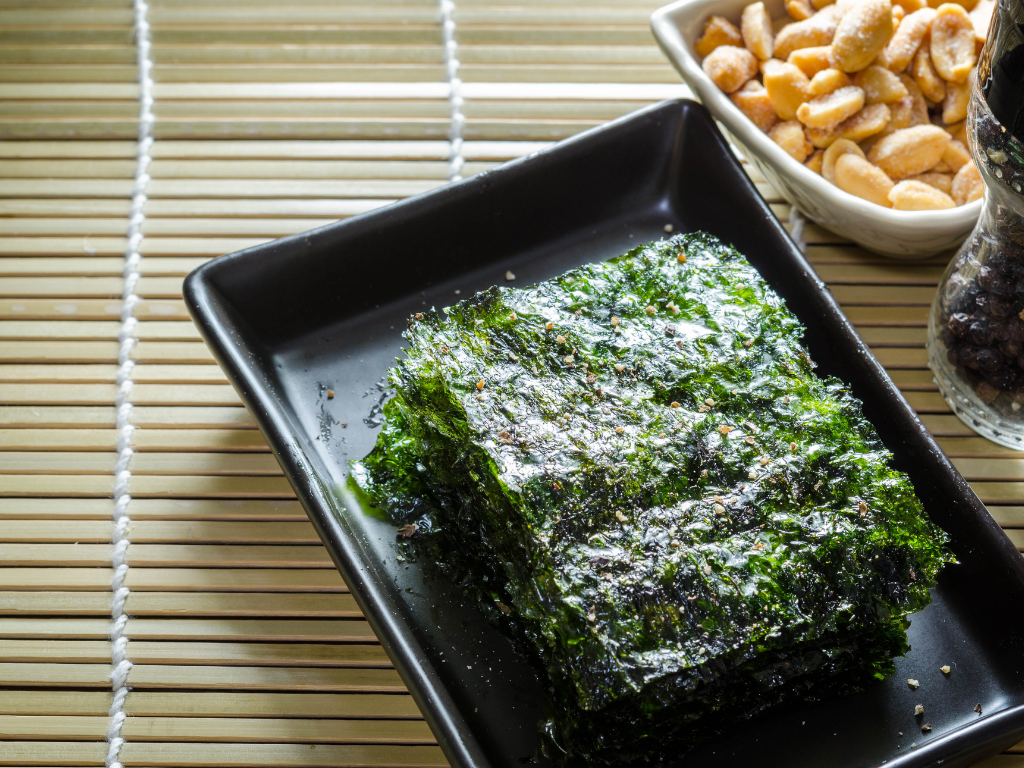
A crispy seaweed snack is a roasted, seasoned sheet of laver that snaps cleanly and carries a savory, salty hit for very few calories. The crispness is engineering, not luck. This blog will walk you through what makes a seaweed snack crisp, why it sells, and what retailers look for when they stock it.
What a crispy seaweed snack actually is
A crispy seaweed snack starts as laver, the red algae behind nori and Korean gim. The sheet is washed, pressed thin, dried, then roasted at high heat until it turns deep green and brittle. Seasoning goes on before or during that roast, usually oil and salt, sometimes a spicy or savory coating. The result is a sheet you can snap between your fingers, sold in single-serve packs or larger snacking formats. The Yoroshii snack range sits in this category, built from pure roasted seaweed rather than fried or heavily processed bases. The distinction worth holding onto: a crispy seaweed snack is finished and ready to eat, unlike a plain cooking sheet meant for sushi. That finish, the roast plus the seasoning, is the whole product. Get it wrong and you have a chewy, limp sheet that no one buys twice.
What makes a seaweed snack crisp
Crispness comes down to three things working together: low moisture, even roasting, and packaging that holds the line.Moisture is the enemy
Roasted seaweed is crisp because almost all its water has been driven off. Laver naturally pulls moisture from the air, so the moment a sheet sits in humid conditions it starts to soften. In a tropical climate like Singapore’s, an open pack left out for an afternoon goes limp on its own. This is why the snap of a fresh sheet is the single clearest signal of quality, and why a soft sheet reads instantly as stale.The roast does the work
High-heat roasting is what transforms a leathery dried sheet into a brittle one. The heat finishes drying the laver and develops the toasted, faintly nutty flavor that makes the snack moreish. Roast too little and the sheet stays pliable. Roast unevenly and you get pale, chewy patches next to over-toasted ones. Consistent roasting across a production run is harder than it sounds, and it is one of the things that separates a reliable manufacturer from a cheap one.Oil, seasoning, and the seal
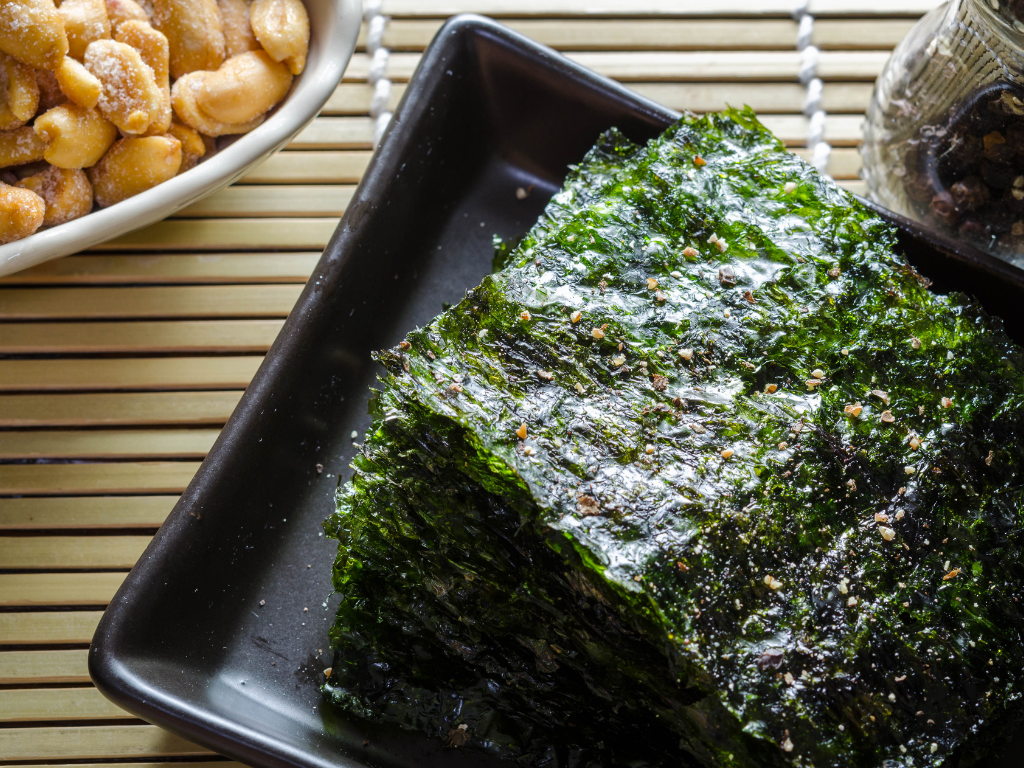
Most snack sheets, especially Korean-style gim, are brushed with a thin layer of oil and salt before roasting. Sesame oil is the common choice for snacks because it holds up well over shelf life, while perilla oil gives a nuttier, more traditional Korean finish. The oil carries flavor and helps the salt cling, but it does not soften the sheet if the moisture is controlled. The last piece is packaging. Sealed packs with a desiccant sachet keep ambient humidity out, which is the only way crispness survives the trip from factory to shelf to pantry. A well-sealed roasted snack commonly holds its quality for several months unopened, but once a pack is opened the clock speeds up, and in a humid climate a sheet can soften within a day if left exposed. The premium roasted seaweed forms across the wider range all depend on the same seal-and-desiccant logic.
Why crispy seaweed snacks sell so well
The demand is real and measurable, not a passing trend. The global seaweed snacks market was valued at about 2.43 billion US dollars in 2024 and is forecast to grow at double-digit rates through the decade, with the Asia-Pacific region holding just over half of global revenue and strips and chips making up the largest product segment. For a retailer, that is a category pulling shoppers in rather than one that needs pushing.The health positioning is genuine
Most snack aisles are full of products dressed up as healthy. Seaweed largely earns the label. A typical seasoned snack pack is low in calories, naturally high in fibre, and rich in minerals, and seaweed is one of the richest natural food sources of iodine, according to the NIH Office of Dietary Supplements. It delivers calcium, iron, and vitamin B12 with no artificial additives when made well. That nutrition profile is why dietitians and shoppers treat it as a real alternative to crisps rather than a novelty.It fits multiple diets at once
A clean roasted seaweed snack is vegan, gluten-free, and allergen-light in one product. That overlap matters on a shelf, because a single SKU satisfies the plant-based shopper, the gluten-free shopper, and the clean-label shopper without separate lines. Few snack categories cover that much ground at once, which is part of why seaweed keeps winning facings in health-food and mainstream retail alike.Format suits modern snacking
Single-serve packs match how people actually snack now, in small portions, on the move, with portion control built in. The same roasted base also stretches across flavors, from plain salted to a spicy seasoned roasted seaweed for shoppers who want heat. Korean-style seasoned sheets add another proven format, and the Korean seasoned seaweed packs ride the continuing wave of K-food interest in Southeast Asian and global markets. That K-food pull is strong enough that the dedicated Korean seaweed line has become a category in its own right rather than a single product. Beyond the pack, the snack doubles as an ingredient. Crumbled over rice, folded into a wrap, or torn across a salad, the same crisp sheet earns a second use in the kitchen, which widens its appeal for shoppers who want more than a between-meals bite. The collection of seaweed recipes shows how a snack sheet crosses over into quick meals, and that versatility is a quiet selling point retailers can lean on in product descriptions and shelf talkers.What retailers and buyers look for
Stocking seaweed snacks well takes more than picking a brand off a catalogue. The buyers who do it profitably check a few specific things. Shelf stability comes first. A snack that softens before its sell-by date becomes returns and waste, so packaging integrity and a realistic shelf life matter as much as taste. Consistency is next. Color, crispness, and seasoning level need to hold from one delivery to the next, because shoppers who liked last month’s pack expect the same this month. Certification carries real weight at the buying desk. A product made under ISO 22000 food safety management, with HACCP and GMP behind it, gives a buyer documented control rather than a verbal promise. For Muslim-majority markets across Southeast Asia, JAKIM Halal certification is often a hard requirement, not a nice-to-have. Yoroshii, the flagship brand of Singapore’s VGE Pte Limited, has supplied supermarkets, health-food retailers, and distributors since 1993 and manufactures through its Malaysian subsidiary Front Option under those standards. Margin and flexibility close the deal. Wholesale pricing, private-label options, and the ability to supply both single-serve retail packs and bulk formats let a retailer build a range around one supplier instead of juggling several. For buyers weighing it against other better-for-you snacks, that supply flexibility is often the deciding factor.Conclusion
A crispy seaweed snack earns its place through controlled moisture, even roasting, and packaging that protects the snap, and it earns its shelf space through genuine health credentials and a format that fits how people snack today. For retailers, the combination of a fast-growing category and a product that satisfies vegan, gluten-free, and clean-label shoppers at once is rare. If you are building a snack range or sourcing for retail, request samples and wholesale or private-label pricing from Yoroshii and test the crispness and seasoning against your own shelf before you commit.Frequently asked questions
Are seaweed snacks healthy?
Roasted seaweed snacks are low in calories, high in fibre, and rich in minerals like iodine, calcium, and iron, with vitamin B12. Pure versions have no artificial additives and are vegan and gluten-free. Watch sodium in heavily seasoned packs, but in normal portions a seaweed snack is a sound alternative to crisps.What makes seaweed snacks crispy?
Crispness comes from driving moisture out of the laver through high-heat roasting, then sealing the sheet against humidity. Roasted seaweed absorbs water from the air fast, so a desiccant sachet and an airtight pack keep it crisp. A limp sheet means moisture has crept in and the snack is past its best.Are seaweed snacks vegan and gluten-free?
Pure roasted seaweed is both vegan and gluten-free, which is why a single Yoroshii snack pack can suit several diets at once. Check seasoned varieties, since some flavor coatings use soy-based or other sauces that can introduce gluten or animal-derived ingredients in certain products.Why are seaweed snacks so popular?
They combine genuine nutrition with convenient single-serve packs and a savory, salty crunch. The seaweed snacks market was worth around 2.43 billion US dollars in 2024 and keeps growing, led by Asia-Pacific. Health-conscious snacking, plant-based diets, and rising interest in Korean food all feed the demand.What is the difference between a snack sheet and a sushi sheet?
A snack sheet is roasted and seasoned with oil and salt so it is ready to eat straight from the pack. A sushi sheet, or yaki nori, is roasted plain so its mild flavor suits rolls. Using a thin seasoned snack sheet to roll sushi usually ends in tearing.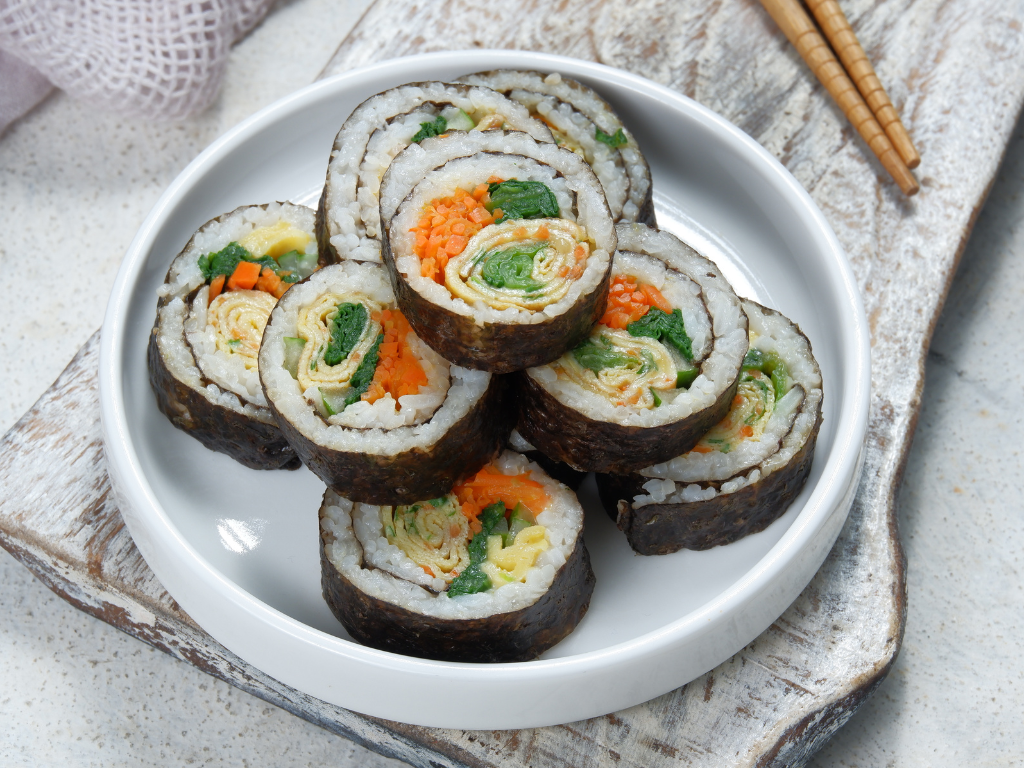
Seaweed for gimbap is gimbap gim, an unseasoned, thicker sheet
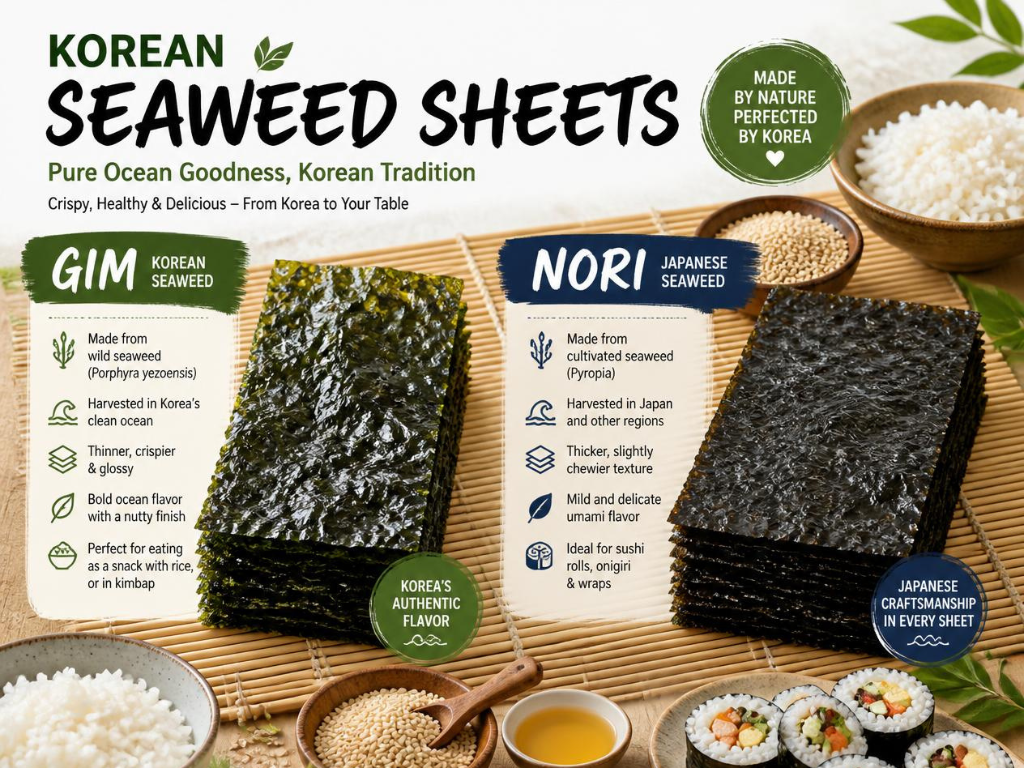
Korean seaweed sheets are gim, dried sheets of red algae