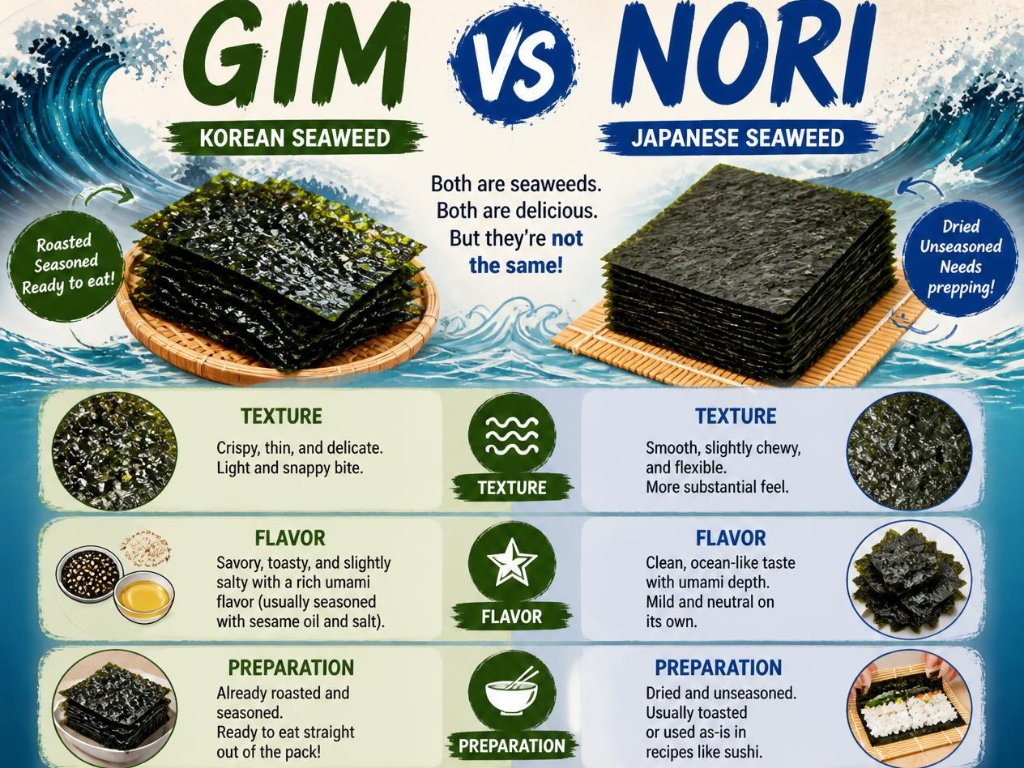
Gim vs nori is one seaweed: dried sheets of the
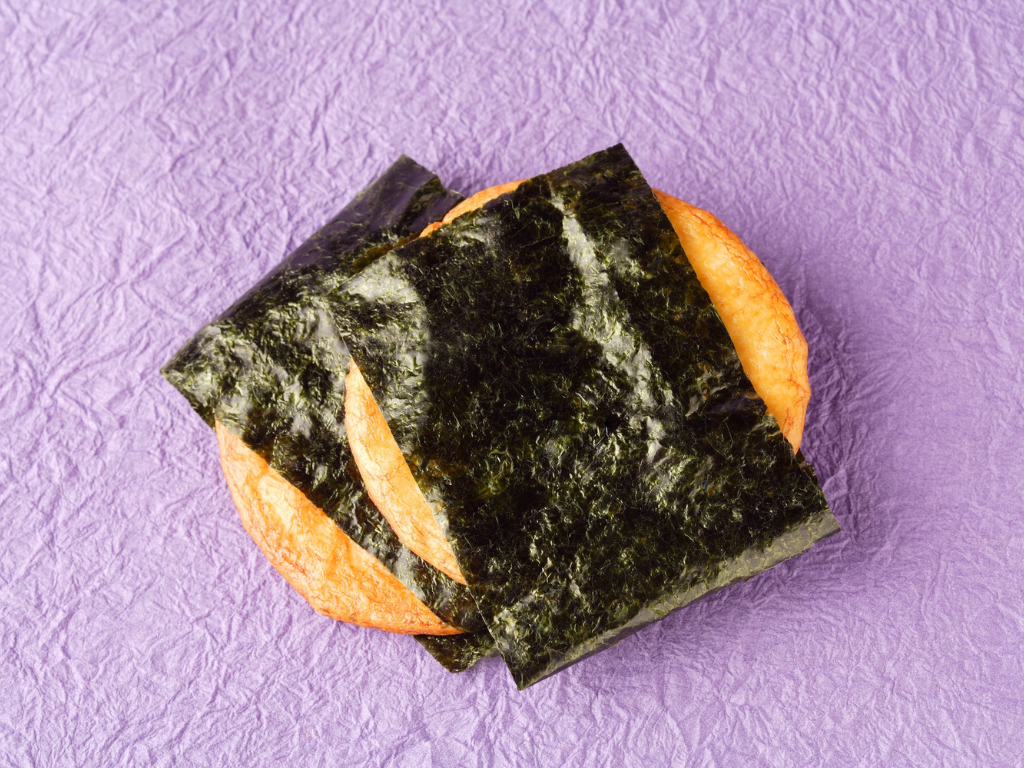
Seaweed strips split into two jobs: a snack you eat by the handful, and a garnish a chef scatters over ramen. Strips and chips already make up the largest segment of a seaweed snacks market worth 2.43 billion US dollars in 2024. This blog walks you through both formats and how buyers use them, starting from our premium seaweed range.
What are seaweed strips?
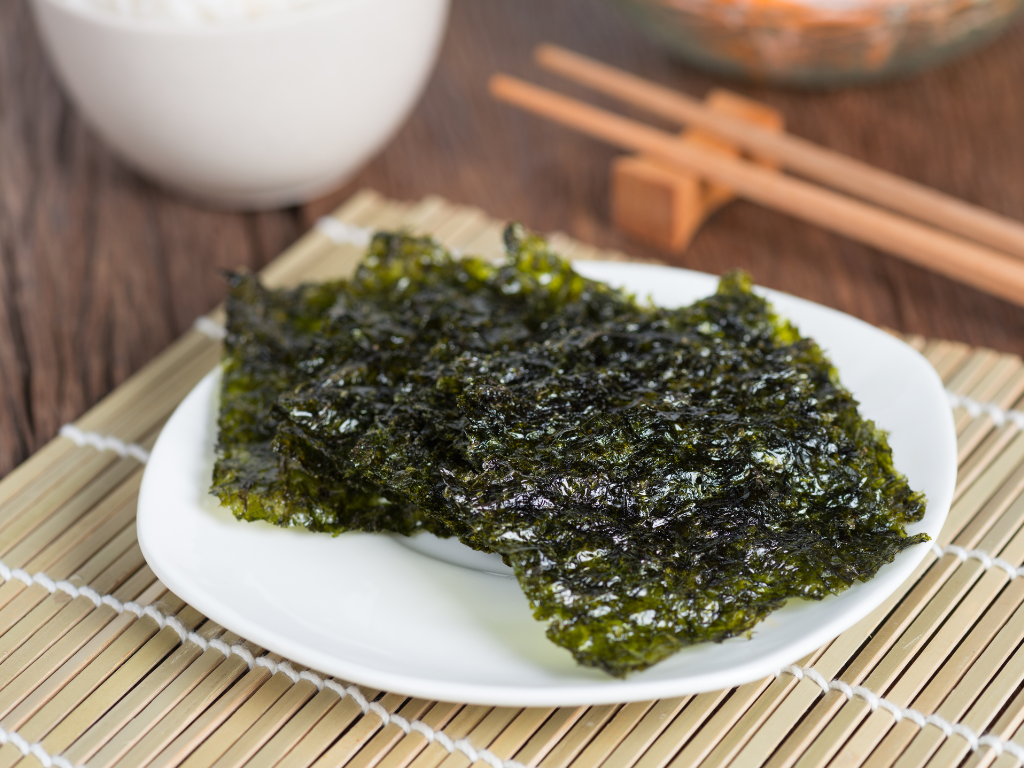
Seaweed strips are roasted nori cut into narrow pieces, sold in two broad formats: snack strips for eating straight from the pack, and garnish strips for topping cooked dishes. Both start as the same laver sheet. The width of the cut and the seasoning decide which job the strip does.
The snack format is a wider, seasoned strip built to taste finished on its own. The garnish format is finer and usually plain, made to sit on top of food. Kizami nori, the shredded garnish most people know from ramen shops, is sliced to roughly 2mm wide, thin enough to soften into a bowl of noodles in seconds. A snack strip is many times wider and carries the oil and salt the garnish leaves out. One is a product you buy to eat, the other an ingredient you buy to cook with.
What is the difference between snack strips and garnish strips?
Width and seasoning are the two differences that matter. Snack strips are wider and seasoned. Garnish strips are finer and mostly plain. A snack strip stands on its own; a garnish strip finishes a dish someone else cooked.
The use follows the form. You eat a seasoned snack strip on its own, and it carries flavour to do that job. You scatter a plain garnish strip over hot food, where it adds colour, a crisp-then-soft texture, and a hit of umami without fighting the broth. Kizami nori at 2mm melts into ramen within seconds, while a 7-cut strip holds its shape long enough to wrap a rice ball. The seasoning gap is just as real. Snack strips carry oil and salt, garnish strips usually carry neither, which lets a chef control the seasoning of the finished plate. Confuse the two on a purchase order and you end up with salted shreds ruining a delicate donburi, or plain strips disappointing a snack shopper.
How do buyers use seaweed strips as a garnish?
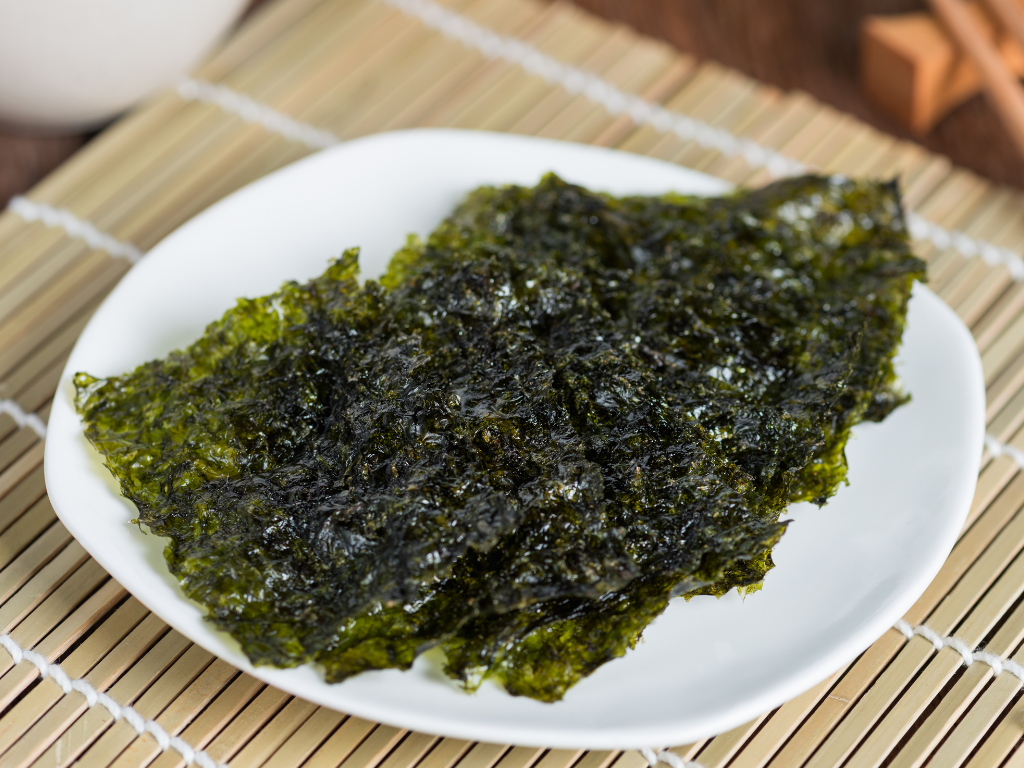
Chefs use fine seaweed strips as the finishing touch on noodle and rice dishes, added at the last second so they keep their texture. Kizami nori is the standard here, sprinkled over ramen, soba, udon, and donburi rice bowls, and folded through chirashi sushi. It delivers nori flavour and a clean visual line without the bulk of a full sheet.
Foodservice buyers care about consistency above all, because a garnish that varies from batch to batch shows up on every plate. That is why professional kitchens buy precision-cut formats rather than tearing sheets by hand. Our precision-cut nori formats are made for this, sized the same every time so a bowl looks identical across a hundred covers. For wider garnish and wrap work, a seven-cut seaweed strip gives a longer piece that holds under heat, which suits temaki and onigiri where the strip does structural work as well as flavour. A garnish strip earns its place by being identical every service.
How do retail buyers use seaweed snack strips?
Retailers stock snack strips as a grab-and-go impulse item, sold in single-serve packs at a checkout or on a health-snack shelf. The strip format suits snacking because it is pre-portioned and seasoned, so a shopper opens a pack and eats with no prep. Korean seasoned seaweed made this format famous, and the category has broadened well past it.
The commercial logic is straightforward. A snack strip is a low-price, high-frequency buy, which makes it a trial product that pulls a shopper toward a brand’s other lines. Our range of roasted seaweed snacks runs from single-serve packs to larger formats, so a retailer can stock a trial size and a repeat-purchase size from one supplier. The snack strip is the entry point, and once a shopper trusts the brand, the plain and seasoned sheets follow into the basket.
What nori cut formats are there, and which suits which use?
Nori is cut by how many pieces a full sheet is divided into, and each cut has a job. A full cut is the whole sheet, used for hand rolls and full-size sushi. A half cut suits smaller rolls and sandwiches. A 7-cut produces seven long strips per sheet, right for temaki, onigiri, and wide garnish. A 20-cut yields twenty small pieces, the snack-and-garnish workhorse.
Yoroshii supplies the full ladder, from full and half cut through 7-cut and 20-cut, on a wholesale basis quoted on request. The cut you order is a use decision. A sushi bar wrapping temaki wants 7-cut, a snack brand packing bite-size pieces wants 20-cut, and a caterer garnishing donburi wants kizami shred. Because the cut is set at the factory, ordering the right format removes a labour step from the kitchen and keeps every piece uniform.
Why is demand for seaweed strips rising?
Seaweed strips are riding the same wave lifting the whole category, led by snacking and by Korean food’s global run. Strips and chips are the largest product segment of a seaweed snacks market that reached 2.43 billion US dollars in 2024, according to Grand View Research, with the Asia-Pacific region holding just over half of revenue. The garnish side rides restaurant demand, as ramen and rice-bowl formats spread across casual dining worldwide.
Korea’s export numbers show the scale. Korean gim exports topped 1 billion US dollars for the first time in 2025, climbing from 997 million in 2024 and 793 million in 2023, with Korea holding more than 70 percent of the global seaweed market and the United States its top buyer at 220 million. Minister of Oceans and Fisheries Chun Jae-soo credited the milestone partly to “the innovative capabilities of private companies”, a nod to the snack and seasoned formats built for overseas tastes. A lot of that innovation lands in strips, in both their snack and garnish forms.
Should you source strips for retail or foodservice?
Match the format to the channel: seasoned snack strips for retail shelves, plain precision cuts and kizami for foodservice kitchens. A retailer wants retail-ready single-serve packs with clean labels. A restaurant wants bulk, uniform cuts that cut prep time and plate the same every service. One format rarely serves both well.
The sourcing question underneath is consistency and certification. A bulk buyer needs every case to match the last, which comes down to production control more than the recipe. Yoroshii manufactures through its Malaysian subsidiary Front Option under ISO 22000, HACCP, GMP, and JAKIM Halal certification, which governs the batch-to-batch uniformity a foodservice buyer depends on. Ordering bulk seaweed supply from one certified source lets a buyer cover snack strips, cut formats, and kizami on a single line rather than chasing three vendors. Decide your channel first, then the format, then the supplier, in that order.
Conclusion
Seaweed strips do two different jobs, and the format tells you which. Wide, seasoned snack strips sell off a retail shelf and eat on their own, while fine, plain garnish strips like kizami nori finish a chef’s ramen or donburi and demand batch-to-batch consistency. The nori-cut ladder, from full and half through 7-cut and 20-cut, lets a buyer match the exact piece to the exact use.
If you are sourcing seaweed strips and want the snack packs, precision cuts, and shredded garnish from one certified supplier, ask Yoroshii for format specifications, wholesale pricing, and samples before you set your order.
Frequently asked questions
Are seaweed strips the same as seaweed sheets?
No. Seaweed strips are cut from full nori sheets into narrower pieces, from 7-cut strips down to 2mm kizami shred. A sheet wraps sushi and hand rolls whole, while strips are built for snacking or garnishing. Yoroshii supplies both the full sheet and the cut formats from the same roasted laver.
How long do seaweed strips last?
Roasted seaweed strips keep for months when sealed, since the risk is moisture rather than spoilage. Nori is sensitive to humidity and turns from crisp to chewy once air gets in, so Yoroshii packs strips with a seal and desiccant. Store them cool and dry, and reseal after opening.
Are seaweed snack strips healthy?
Seaweed snack strips are low in calories and carry iodine, calcium, and fibre, which makes them a lighter snack than fried options. The one number to watch is sodium, since seasoned strips add salt. A plain roasted strip has almost none, so read the pack if you eat them daily.
Can you use garnish strips as a snack?
You can eat kizami nori on its own, but it is built to garnish. The 2mm shred is plain and delicate, so it lacks the seasoning and bite of a proper snack strip. For snacking, a seasoned roasted strip from Yoroshii’s range delivers more flavour and holds up better out of the pack.
What does a 20-cut of seaweed mean?
A 20-cut means a full nori sheet divided into twenty small pieces, the common size for bite-size snacks and garnish. Yoroshii’s nori-cut range runs from full and half cut through 7-cut and 20-cut, each sized for a specific use, from sushi wrapping to rice-bowl topping.
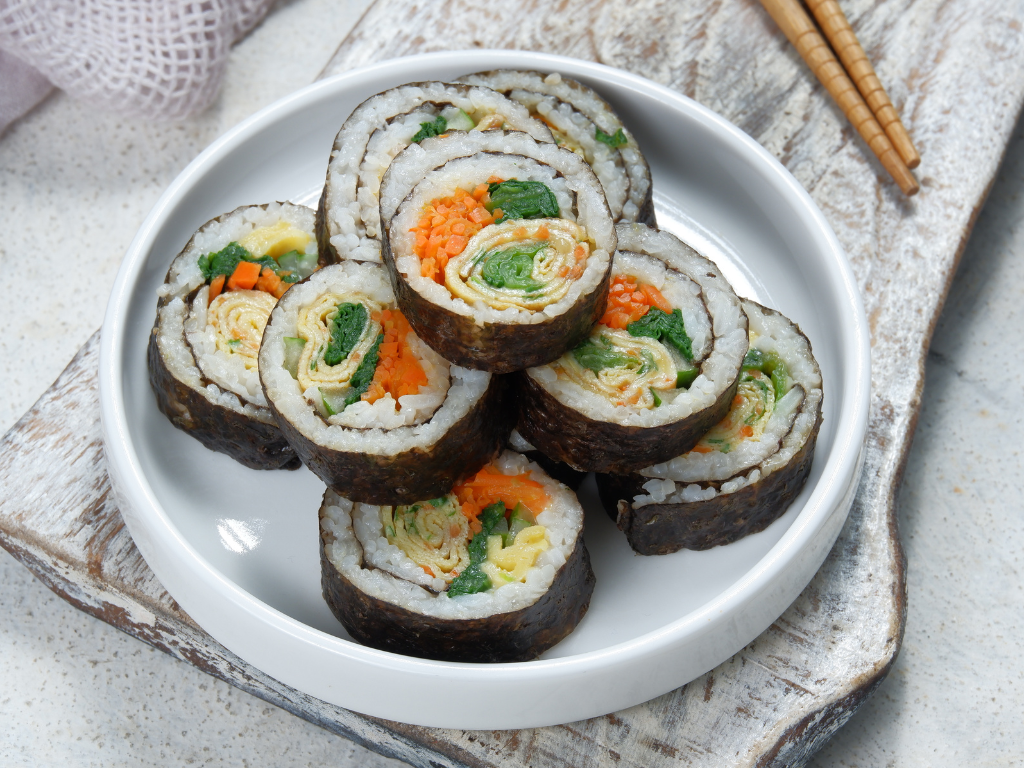
Seaweed for gimbap is gimbap gim, an unseasoned, thicker sheet
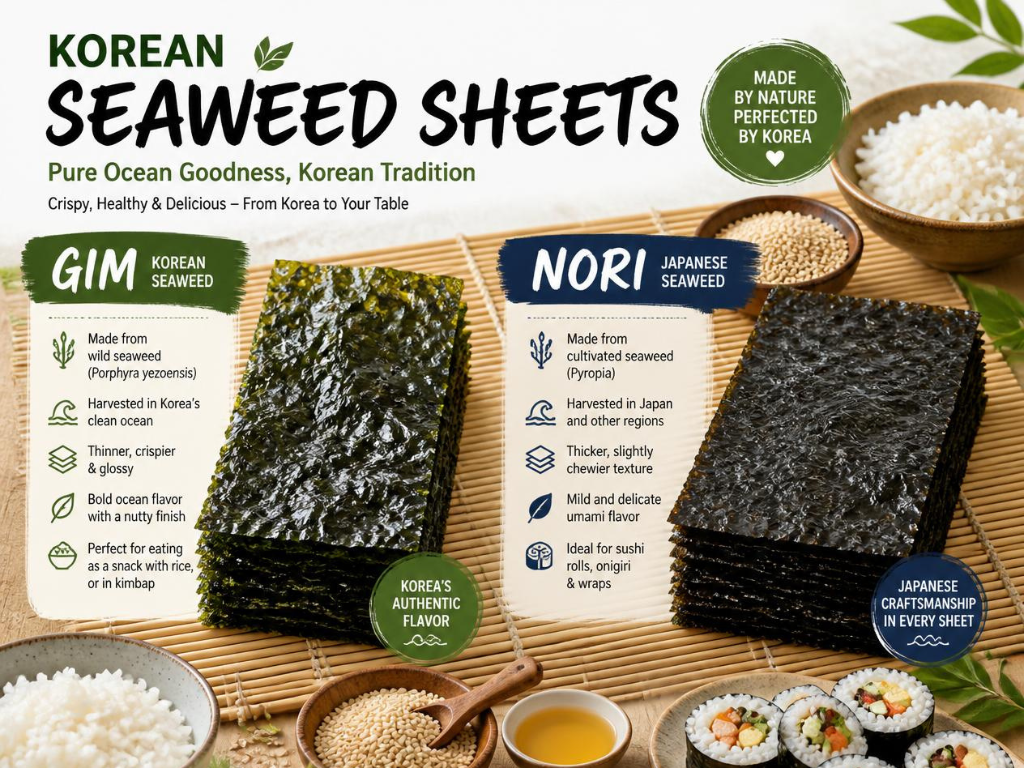
Korean seaweed sheets are gim, dried sheets of red algae