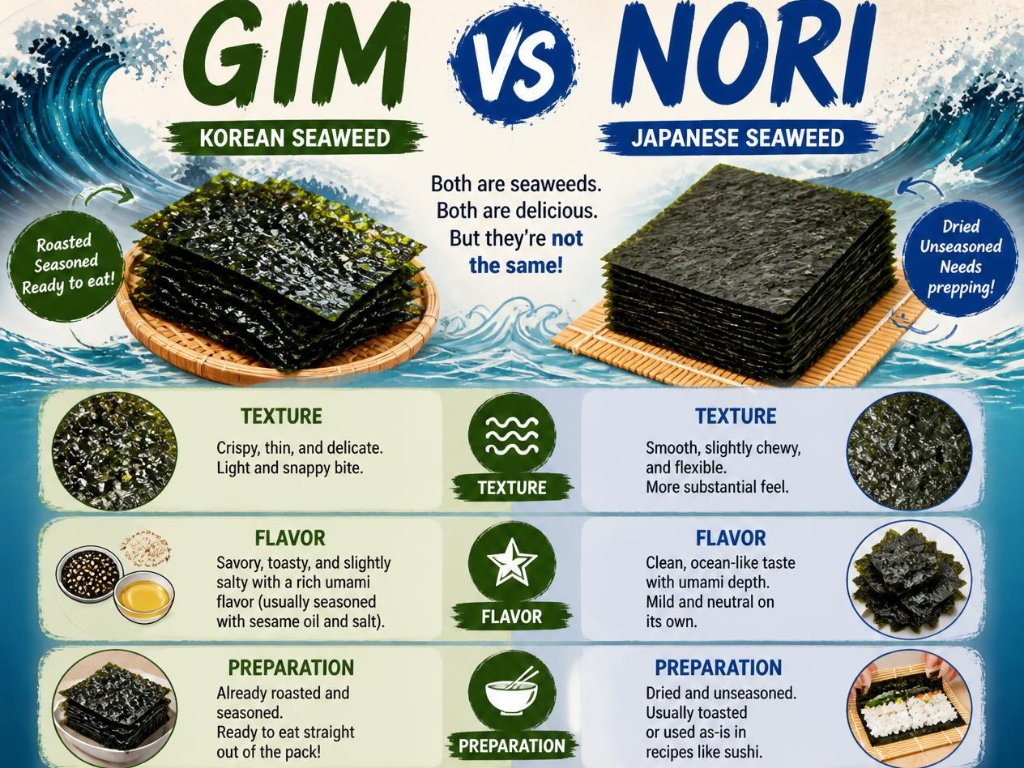
Gim vs nori is one seaweed: dried sheets of the
Korean seaweed snacks are oiled, salted, and roasted sheets of gim, sold ready to eat in single-serve packs and family formats. For retailers, they are one of the fastest-moving K-food lines on the shelf. This blog will walk you through the flavours, the pack formats, and how to source Korean seaweed snacks at wholesale.
What Korean seaweed snacks are
A Korean seaweed snack is gim, the Korean name for laver, brushed with oil and salt and roasted until crisp. That oil-and-salt step is what sets it apart from plain Japanese nori, which is usually toasted bare for sushi. The seasoning makes gim a finished product you eat straight from the pack rather than an ingredient you cook with. The Korean seaweed range Yoroshii supplies sits in this seasoned, ready-to-eat tradition, the same gim that anchors a Korean table as banchan and now fills snack aisles across Southeast Asia. The category has a clear pedigree. Gwangcheon, a coastal region in South Korea, is known for the quality of its seasoned gim, and Gwangcheon-style sheets, sometimes romanised as Kwangchun, are a recognised mark among Korean shoppers. That regional name on a pack signals provenance the way a place name does on cheese or wine.
The flavours that define a Korean seaweed snack
Flavour in a Korean seaweed snack comes from two decisions: the oil and the salt level. Everything else builds on those.Sesame and perilla, the two base oils
Sesame oil is the workhorse. It gives the clean, nutty roast most people associate with Korean seaweed snacks, and it holds up well over a long shelf life, which is why export-grade product leans on it. Perilla oil, deulgireum in Korean, is the more traditional choice and carries a grassier, deeper note that reads as more authentic to Korean palates. Some premium lines blend the two. If a snack tastes distinctly herbal under the salt, that is usually perilla doing the work.Salt, and the move toward lighter seasoning
Salt level is where brands differentiate for different markets. Classic gim is assertively salty. Newer lines aimed at health-conscious shoppers dial the salt back and lean on the oil and the natural savoury depth of the seaweed instead. This matters for a retailer reading their shopper base, because a minimart near offices may move a lighter, lower-sodium pack faster than a heavily salted one.Flavoured and premium variants
Beyond plain salted, the category has expanded into wasabi, spicy, and kimchi-inflected coatings, plus formats that fold the seaweed with rice or almond for crunch. These keep the line fresh for repeat buyers, though plain seasoned gim still does the bulk of the volume. The strongest range pairs a dependable original with one or two flavour variants rather than a sprawl of novelties that confuse the shelf.
The pack formats retailers stock
Format decides where a Korean seaweed snack sells and how. The same gim performs differently depending on how it is cut and packed.| Format | What it is | Where it sells |
| Single-serve snack pack | Small tray of seasoned strips, often 3 to 5 g | Minimarts, checkout, lunchboxes |
| Multipack | Several single packs banded together | Hypermarkets, family grocery runs |
| Bulk or value pack | Larger sheets or a big bag of cut pieces | Hypermarkets, wholesale, foodservice |
| Promotional bundle | Buy-two-free-one and similar offers | Retail promotions, trial-driving |
Single-serve snack packs
The small tray of seasoned strips is the format that built the category abroad. It is portion-controlled, travels well in a bag or lunchbox, and sits naturally at a minimart checkout. For a retailer, it is the impulse-buy unit and the entry point for a first-time shopper who wants to try Korean seaweed without committing to a big pack.Multipacks and family formats
Multipacks turn the snack into a grocery staple rather than an impulse buy. A band of several single packs suits a hypermarket basket and a household that has already decided it likes the product. The single-pack Korean seasoned seaweed and its larger configurations let a retailer stock both the trial size and the repeat-purchase size from one line.Promotional bundles
Bundle offers do a specific job: they get a hesitant shopper to try the product. A buy-two-free-one Gwangcheon seasoned seaweed lowers the cost of a first purchase and moves volume during a promotion window, which is useful when launching the line in a new store or region.Why the category is worth shelf space
The demand behind Korean seaweed snacks is documented, not hype. South Korea’s dried seaweed exports passed the one billion US dollar mark for the first time in 2025, and the country supplies the large majority of the world’s gim. The wider seaweed snacks market sat at roughly 2.43 billion US dollars in 2024, with the Asia-Pacific region holding just over half of global revenue and strips and chips making up the biggest product segment. K-food momentum, from Korean dramas to convenience-store culture, keeps pulling new shoppers toward the snack. The health positioning holds up too. A clean seasoned gim is low in calories, naturally high in fibre, and rich in minerals, and pure seaweed is vegan and gluten-free. That lets a single snack pack satisfy the plant-based shopper, the gluten-free shopper, and the clean-label shopper at once, which few snack categories manage. The seaweed itself is also one of the richer natural sources of iodine and calcium, a point worth making on shelf talkers for health-focused stores.Sourcing Korean seaweed snacks at wholesale
Buying the category well takes more than picking a brand. A few things separate a supplier worth a standing order from a one-off. Consistency comes first. Colour, crispness, and seasoning level need to hold from one delivery to the next, because a shopper who liked last month’s pack expects the same this month. Shelf stability is close behind, since a snack that softens before its date becomes returns and waste, so packaging integrity and a desiccant sachet matter as much as taste. Certification carries real weight at the buying desk. A product made under ISO 22000 food safety management, with HACCP and GMP behind it, gives documented control rather than a verbal promise. For Muslim-majority markets across Southeast Asia, JAKIM Halal certification is often a hard requirement. Yoroshii, the flagship brand of Singapore’s VGE Pte Limited, has supplied supermarkets, health-food outlets, and distributors since 1993 and manufactures through its Malaysian subsidiary Front Option under those standards. Flexibility closes the deal. Wholesale pricing, private-label options, and the ability to supply single-serve packs, multipacks, and bulk formats from one source let a retailer build a range without juggling several suppliers. Yoroshii’s broader roasted seaweed snack brand extends the same supply into spicy and plain formats, and the seaweed recipe ideas give a retailer ready content for product pages and in-store promotion.Conclusion
Korean seaweed snacks earn their shelf space through a recognisable sesame-and-salt flavour, formats that span impulse buys to family multipacks, and genuine clean-label credentials that pull several shopper types at once. The category is growing, well documented, and backed by strong K-food demand, but the margin lives in choosing a supplier whose quality and certification hold across every delivery. If you are sourcing Korean seaweed snacks for a minimart chain, a hypermarket, or a private label, request samples and wholesale pricing from Yoroshii and test the flavour and formats against your own shelf before you scale.Frequently asked questions
What are Korean seaweed snacks made of?
They are made of gim, the Korean name for laver, brushed with oil and salt and roasted until crisp. Sesame oil gives the common nutty flavour, while perilla oil adds a more traditional Korean note. Pure gim has no artificial additives, which makes it vegan and gluten-free.Are Korean seaweed snacks healthy?
A clean seasoned gim is low in calories, high in fibre, and rich in iodine, calcium, and other minerals, and it is vegan and gluten-free. Watch sodium in heavily salted packs, since salt is part of the seasoning. In normal portions, it is a sound alternative to crisps.What is the difference between Korean and Japanese seaweed snacks?
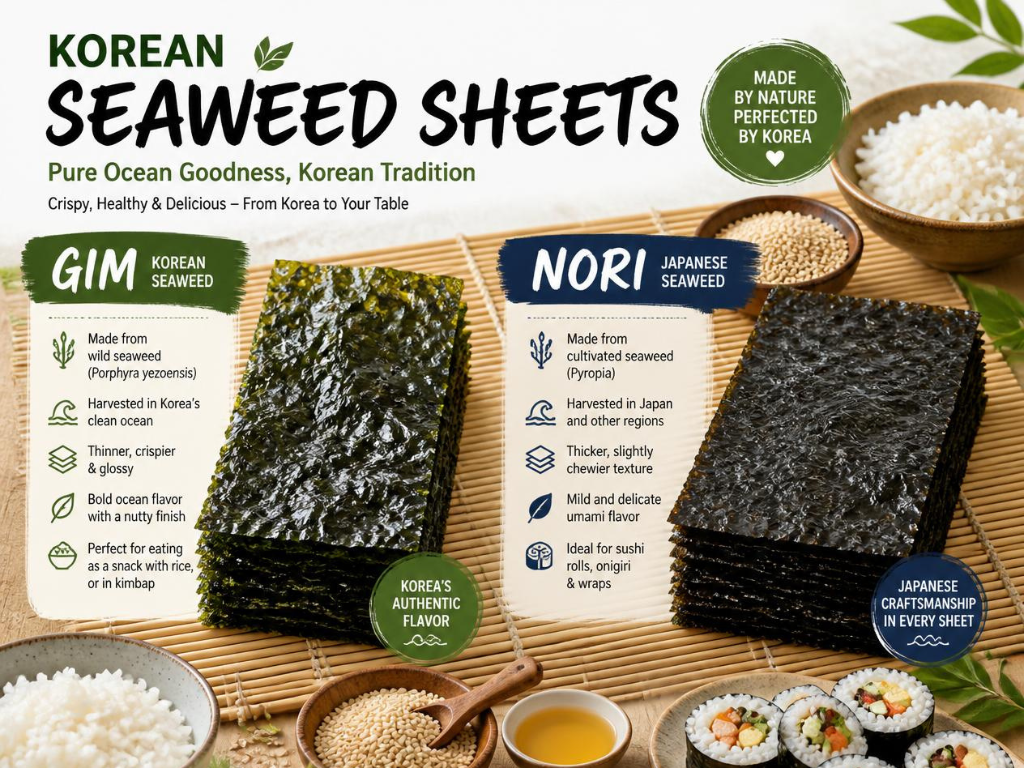
Both come from laver. Korean gim is brushed with sesame or perilla oil and salt before roasting, so it tastes savoury straight from the pack. Japanese nori is usually roasted plain for sushi. That oil-and-salt finish is why Korean seaweed is so popular as a ready-to-eat snack.Where can retailers buy Korean seaweed snacks wholesale?
Wholesale Korean seaweed snacks are sold by suppliers like Yoroshii, often by the case with sample and private-label options. Look for batch consistency, sealed moisture-protective packaging, and certifications such as ISO 22000 and JAKIM Halal, which matter for retail buyers across Southeast Asia.What is Gwangcheon or Kwangchun seaweed?
Gwangcheon, sometimes romanised as Kwangchun, is a coastal region in South Korea known for high-quality seasoned gim. A Gwangcheon-style name on a pack signals provenance, much like a place name on cheese, and is a recognised quality marker among Korean seaweed shoppers.
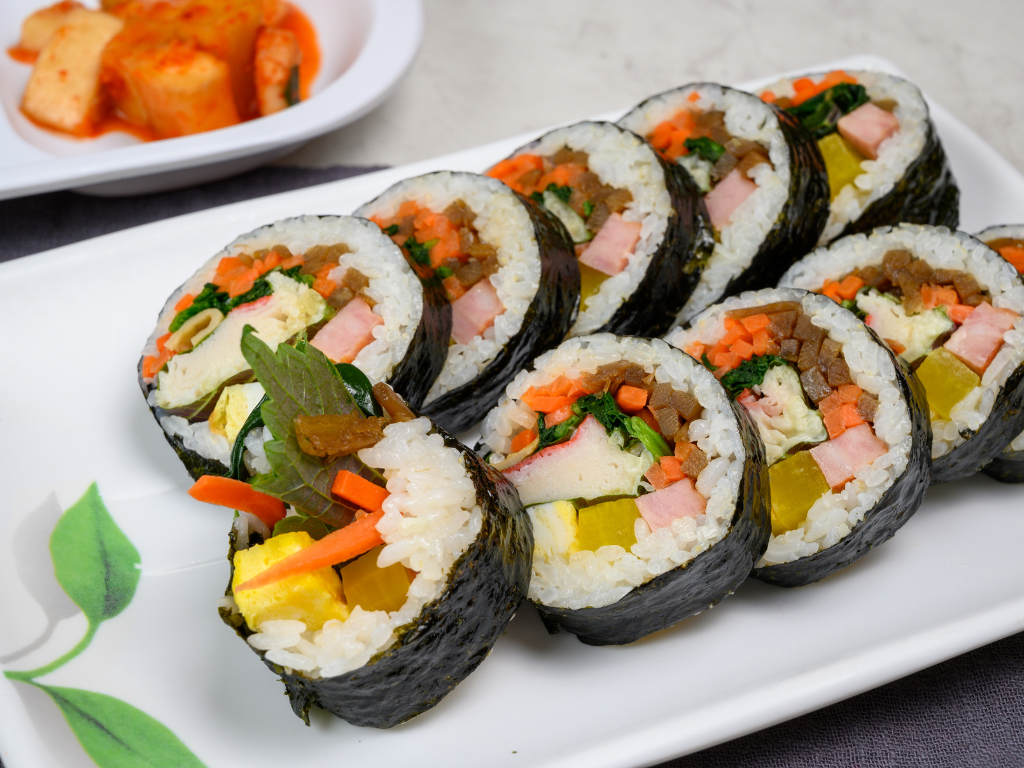
Seaweed for gimbap is gimbap gim, an unseasoned, thicker sheet
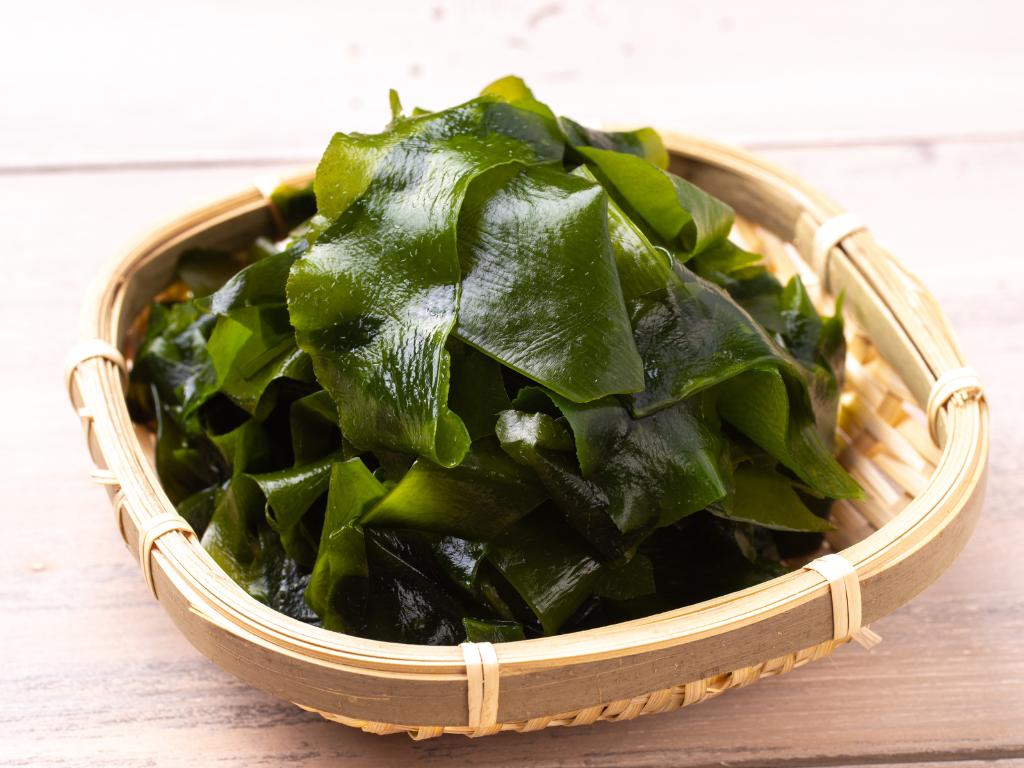
Korean seaweed sheets are gim, dried sheets of red algae