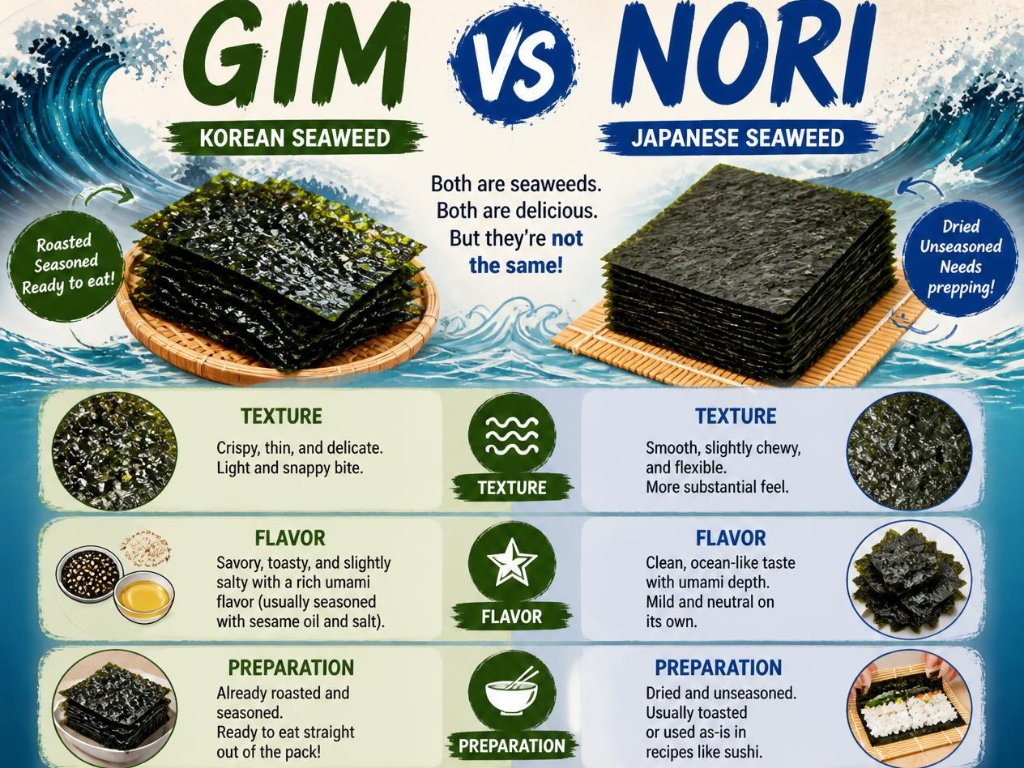
Gim vs nori is one seaweed: dried sheets of the
Seasoned seaweed and plain roasted seaweed look almost identical on the shelf, yet they sell to different shoppers and carry different sodium. With the seaweed snacks market at 2.43 billion US dollars in 2024, that difference is worth getting right. This blog walks you through how Yoroshii’s seasoned range differs from plain, across flavour, process, and nutrition, starting from our premium seaweed range.
What is seasoned seaweed, and how is it different from plain?
Seasoned seaweed is a roasted sheet of laver with a flavour layer added, usually oil and salt, sometimes a spice. Plain roasted seaweed is that same sheet, roasted, with nothing on top. They share a base and part ways at the very last step.
We find it easier to talk about our range in three tiers, not two. At the bottom is raw seaweed, the unroasted base sheet, meant for cooking rather than snacking; our Raw Seaweed (B06) runs $2.30. The middle tier is plain roasted seaweed, the standard crisp snack, toasted and packed with no flavour coat, like our Roasted Seaweed (B20T) at $2.00. The top tier is seasoned roasted seaweed, the same crisp sheet finished with oil, salt, or spice, like our Spicy Seasoned Roasted Seaweed (H20T) in a 12 gram pack, also $2.00. One plant, three products, and each one earns its keep in a different way on the shelf or in the kitchen.
What is seasoned seaweed actually seasoned with?
Oil and salt do most of the work, and the oil sets the character. Korean-style seasoned seaweed, gim, gets a brush of sesame oil and salt before its final roast, which is where that clean, nutty taste comes from. Some traditional lines reach for perilla oil instead, deulgireum, for a grassier, deeper note. After that, brands build flavours on top: chilli for a spicy pack, a savoury blend for an original-style snack. Our spicy seasoned roasted seaweed starts from the roasted sheet and lays a chilli seasoning over the oil-and-salt base.
Why seasoned seaweed tastes so savoury
The savouriness is glutamate, the compound behind umami, and seaweed is where the story started. A Japanese chemist named Kikunae Ikeda pulled glutamate out of kombu seaweed broth in 1908 and called the taste umami. Nori carries its own umami compounds, glutamate along with inosinate and guanylate, so a plain sheet already tastes savoury before any seasoning touches it. Add sesame oil and salt and you are amplifying a flavour the seaweed brought to the table itself. That is the quiet edge of seaweed as a snack base. The umami is built in, so the seasoning has less to prove than it would on a plain cracker.
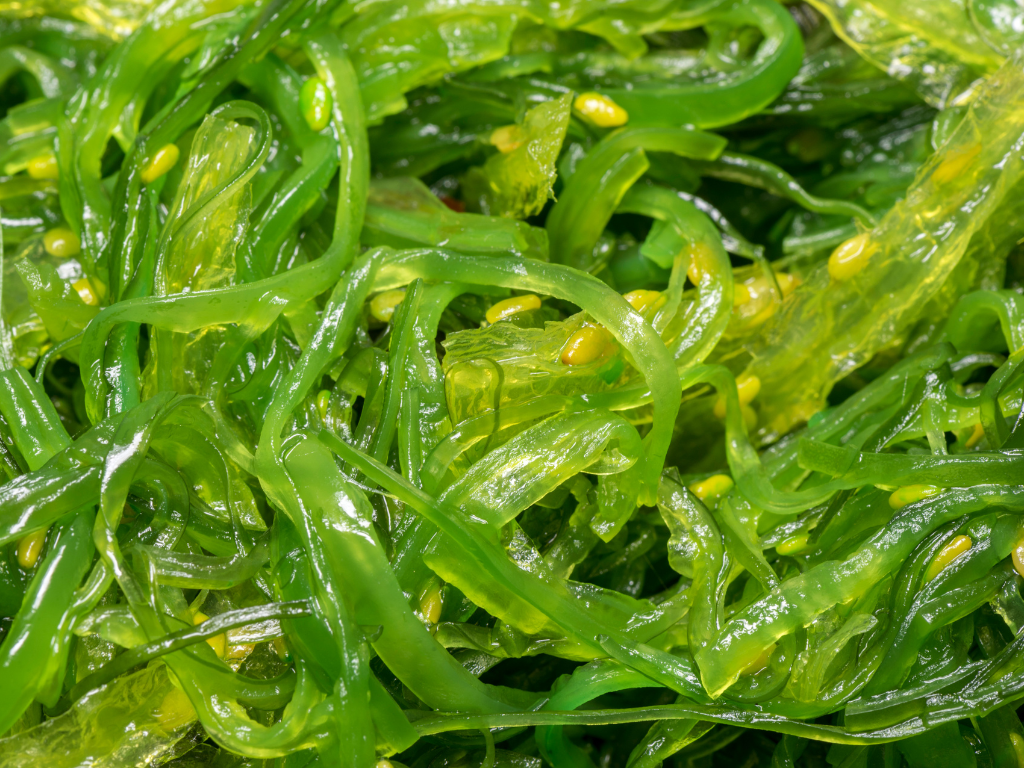
Is plain roasted seaweed healthier than seasoned?
Plain is lower in sodium, and for something you eat most days, that is the figure that counts. A plain roasted sheet has almost no salt. A seasoned pack adds salt as part of the recipe, and the amount rides on the flavour. The pack is small, so the totals stay modest, but the gap is real and worth knowing if seaweed is a daily habit.
Salt is not a minor public health matter. The World Health Organization puts the adult ceiling at 2,000 milligrams of sodium a day, roughly 5 grams of salt, and ties about 1.7 million deaths a year to eating too much of it, with the global average running more than double the target. Umami is what saves seaweed here. A 2025 review in the journal Nutrients found that umami substances can “enhance the flavor of food while simultaneously reducing salt intake”, a conclusion it drew from clinical trials using glutamate as a partial stand-in for salt. A lightly seasoned seaweed snack can taste finished on less salt than a crisp needs, because the seaweed’s own glutamate is already carrying part of the load. So the call is simple. Seasoned seaweed is still a sound snack, but if you are keeping an eye on sodium, take the plain sheet or a lightly seasoned one and trust the label over the badge on the front.
How is the seasoned range made differently from plain?
Both lines start the same and split at one stage. The laver is washed, pressed into sheets, dried, and roasted hot until it turns crisp and deep green. For a plain product, that is the end of it, and the sheet moves straight to cutting and packing. Our plain roasted snack pack, the YN10 at $3.60, is the roasted sheet with nothing added.
A seasoned product takes one more stage between the roast and the pack. The sheet picks up a thin, even coat of oil and salt, plus any spice or flavour, then a final pass of heat to set it before cutting. Evenness is the whole game. A patchy oil coat or uneven salt reads instantly as flavour that wanders from pack to pack, which is the line between a snack someone rebuys and one they leave. Oil brings a second headache too. A seasoned sheet pulls in moisture faster than a bare one and can slide from crisp to chewy on the shelf, so the seal and the desiccant matter even more than usual. Every control that defines what makes a good roasted snack applies twice over to a seasoned line, since there are more moving parts to hold steady.
Should retailers stock seasoned or plain seaweed?
Stock both, and let the shopper decide the split. Seasoned packs are the impulse and the trial. Flavour closes the sale, which fits a minimart checkout or a snack shelf where a first-timer wants something that tastes finished straight from the bag. Plain roasted packs catch a different buyer, the health-led, clean-label shopper who wants the seaweed and not the seasoning, and those packs double as a cooking ingredient for rice and soups. A store that carries only one usually leaves money on the counter, because the two rarely steal from each other. They fill different baskets.
The category is growing fast enough to earn shelf space for both. Grand View Research put the global seaweed snacks market at 2.43 billion US dollars in 2024, with Asia-Pacific taking 50.6 percent of revenue and strips and chips the biggest product segment. Pack size tracks the same shopper logic. A single-serve seasoned pack like the H20T at $2.00 is made for impulse, while a bigger plain format like our YN50 at $12.30 suits a household that already knows it likes the stuff. The goal most retailers are after is covering both ends without running several suppliers, which is where wholesale seaweed snack supply from one certified source pays off. A point we keep coming back to with buyers: one reliable plain line plus a couple of seasoned variants beats a wall of flavours that just confuses the shelf.
Conclusion
Seasoned and plain seaweed are the same roasted laver, split at the final step, one finished with oil, salt, and flavour, the other left clean. Seasoned wins on taste and impulse pull, plain wins on sodium and on doubling as an ingredient, and because the umami is already in the seaweed, even the seasoned version leans on less salt than most snacks. For a retailer, the sensible play is stocking both and matching the format to the shopper.
If you are building a snack range and want to weigh the seasoned and plain lines against each other, ask us for samples, pack specifications, and wholesale pricing before you lock in a planogram.
Frequently asked questions
What is original flavour seaweed?
Original flavour seaweed is the standard roasted snack, lightly finished rather than spiced. In the Yoroshii range it falls under the plain Roasted Seaweed line, like the B20T at $2.00, as opposed to the Spicy Seasoned Roasted Seaweed (H20T). Original is the everyday version most shoppers reach for first.
Is seasoned seaweed the same as Korean seaweed?
Korean seaweed, gim, is one kind of seasoned seaweed, brushed with sesame or perilla oil and salt before roasting. Yoroshii’s Korean Seasoned Seaweed (KS02) is that style. Seasoned seaweed is the wider category, and it also covers spicy and other flavoured sheets well beyond the Korean tradition.
Can you cook with seasoned seaweed?
You can, though it is really built for snacking. Seasoned seaweed already carries oil, salt, and flavour, so it works crumbled over rice or noodles more than as a neutral ingredient. For cooking proper, the unseasoned options fit better, like Yoroshii’s Raw Seaweed (B06) at $2.30 or a plain roasted sheet.
Is raw seaweed the same as roasted seaweed?
No. Raw seaweed, like the Yoroshii B06, is the unroasted base sheet, pale and pliable, sold for cooking. Roasted seaweed has been toasted hot until crisp and deep green, ready to eat as is. Seasoned seaweed is roasted seaweed with an added oil, salt, and flavour layer on top.
How much does seasoned seaweed cost?
Yoroshii’s Spicy Seasoned Roasted Seaweed (H20T) is $2.00 for a 12 gram single-serve pack, the same price as the plain Roasted Seaweed (B20T). Larger plain formats like the YN50 run $12.30. Wholesale and Korean Seasoned (KS02) pricing is quoted on request.
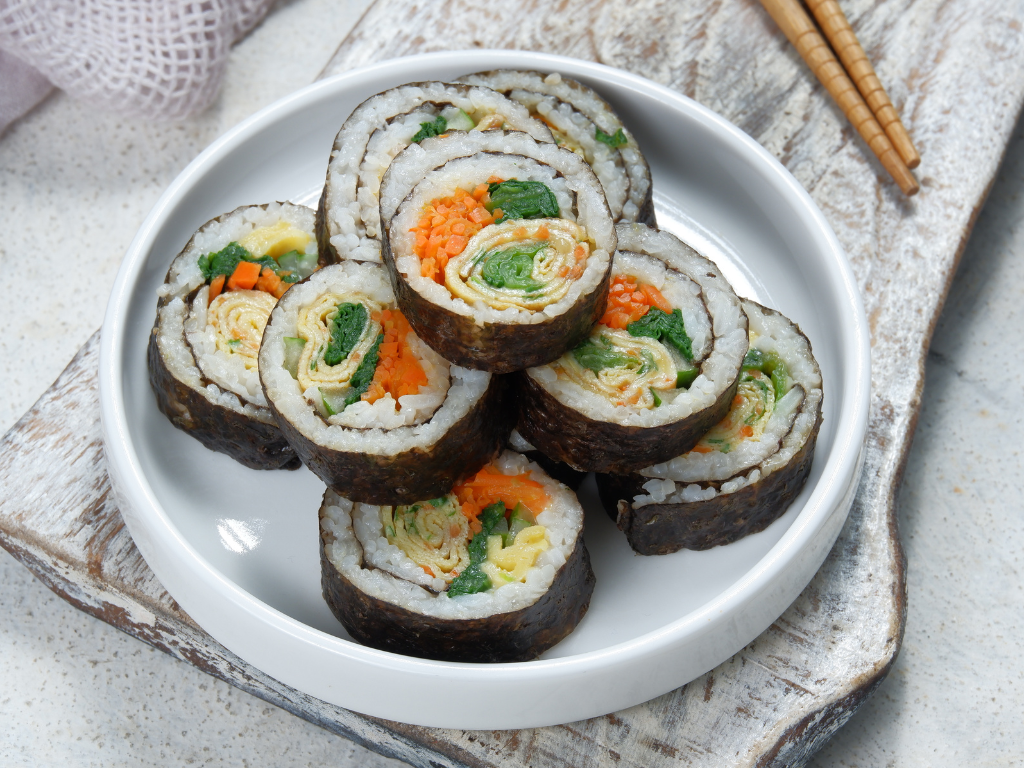
Seaweed for gimbap is gimbap gim, an unseasoned, thicker sheet
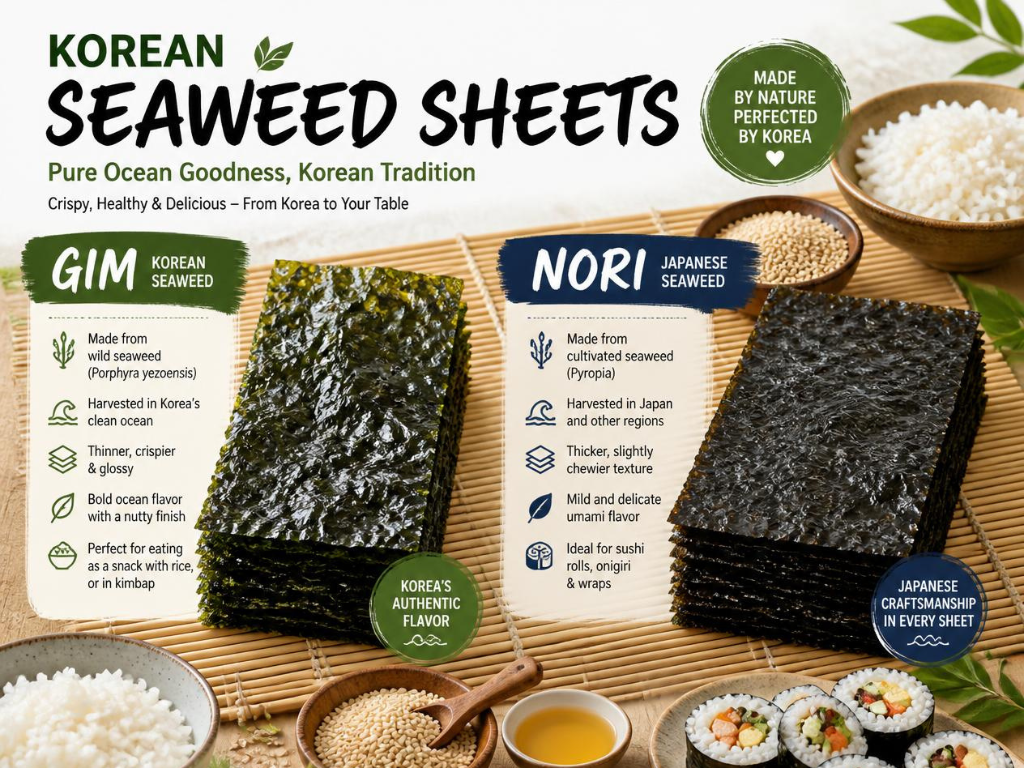
Korean seaweed sheets are gim, dried sheets of red algae