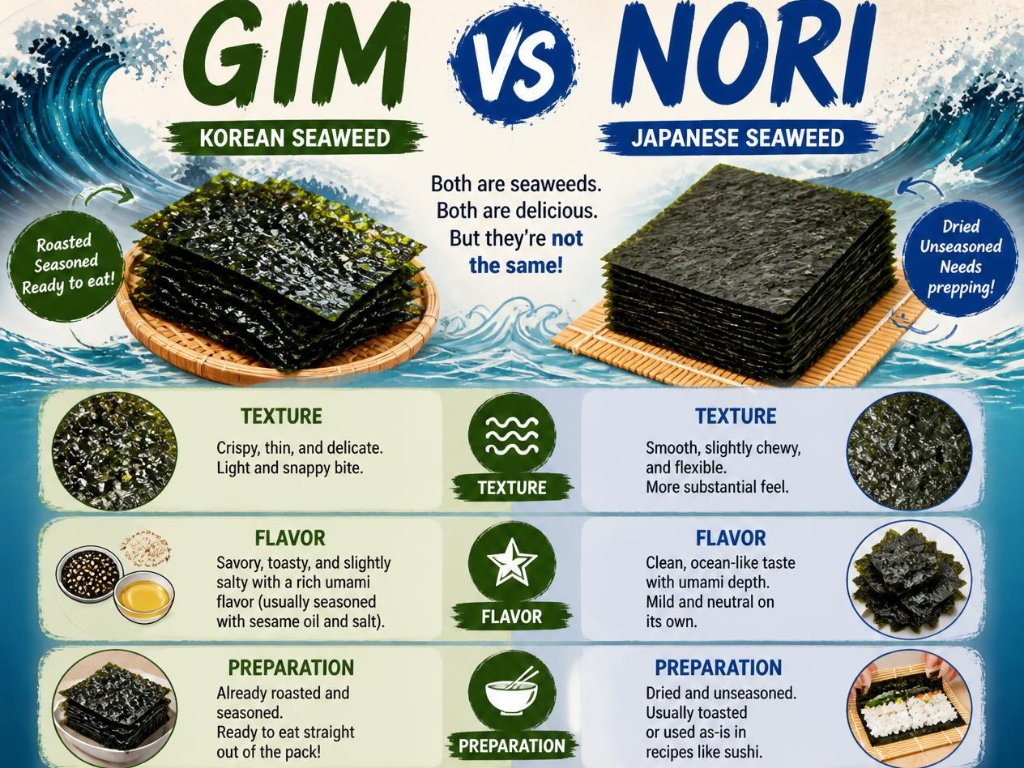
Gim vs nori is one seaweed: dried sheets of the
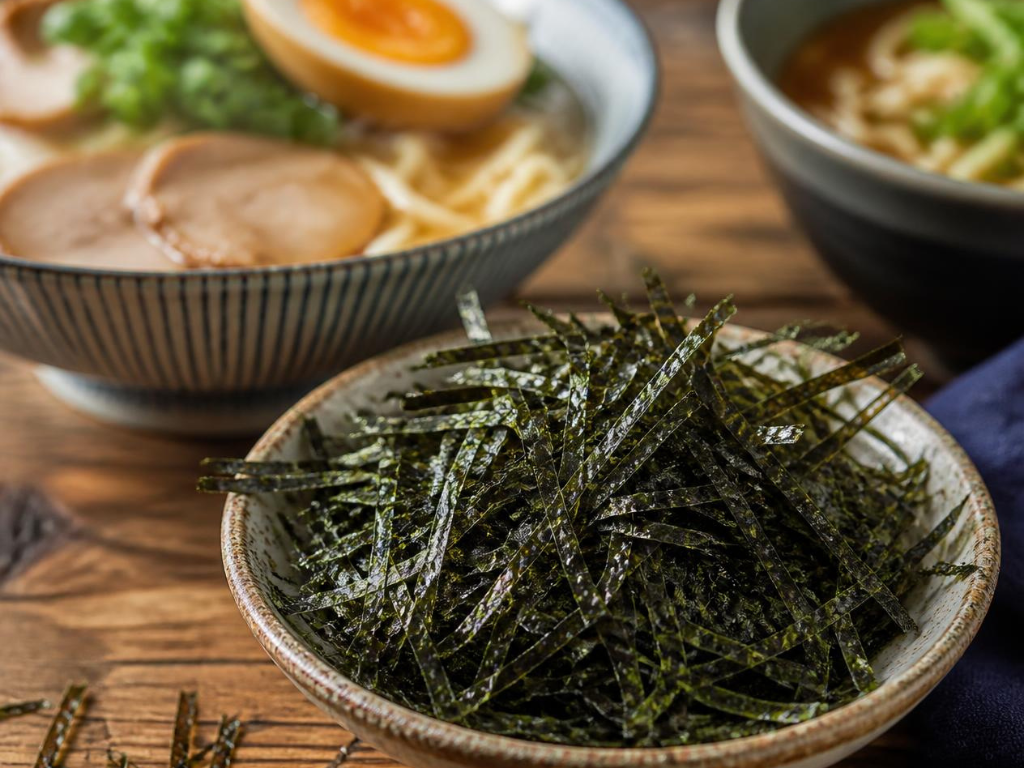
Kizami nori is roasted nori cut into fine strips, 0.5 to 1.5 mm wide, used as a finishing garnish on ramen, rice bowls, and salads rather than as a wrap. It is the same red-algae sheet as sushi nori, shredded for sprinkling. This blog walks you through what kizami nori is and how kitchens use it. For the wider cut range, see our cut nori formats.
What is kizami nori?
Kizami nori is roasted nori sliced into thin strips, most often 0.5 to 1.5 mm wide, and sold unseasoned as a topping. The name is literal: kizami means chopped or shredded, and nori is the seaweed, so kizami nori is shredded nori. It starts as a full yaki nori sheet, the same roasted Pyropia sheet used for sushi, then runs through a cutter into fine ribbons.
The plant behind it is red algae in the genus Pyropia, the same species pressed into sushi sheets, so kizami carries the same clean, briny umami in a sprinkle-ready form. Its savoury pull comes from glutamic and aspartic acids, which a peer-reviewed assessment of red and brown seaweeds found to be the most abundant amino acids in nori. Unlike ajitsuke nori, kizami carries no soy or sugar seasoning, so it adds aroma and texture without changing the flavour balance of the dish underneath. A pinch delivers the nori scent with no chopping. The strips keep the nutrition of the sheet they come from, since shredding changes the shape, not the content. Nori is a source of iodine, iron, and dietary fibre, and the vitamin C in it holds up through the roasting step.
What is kizami nori used for?
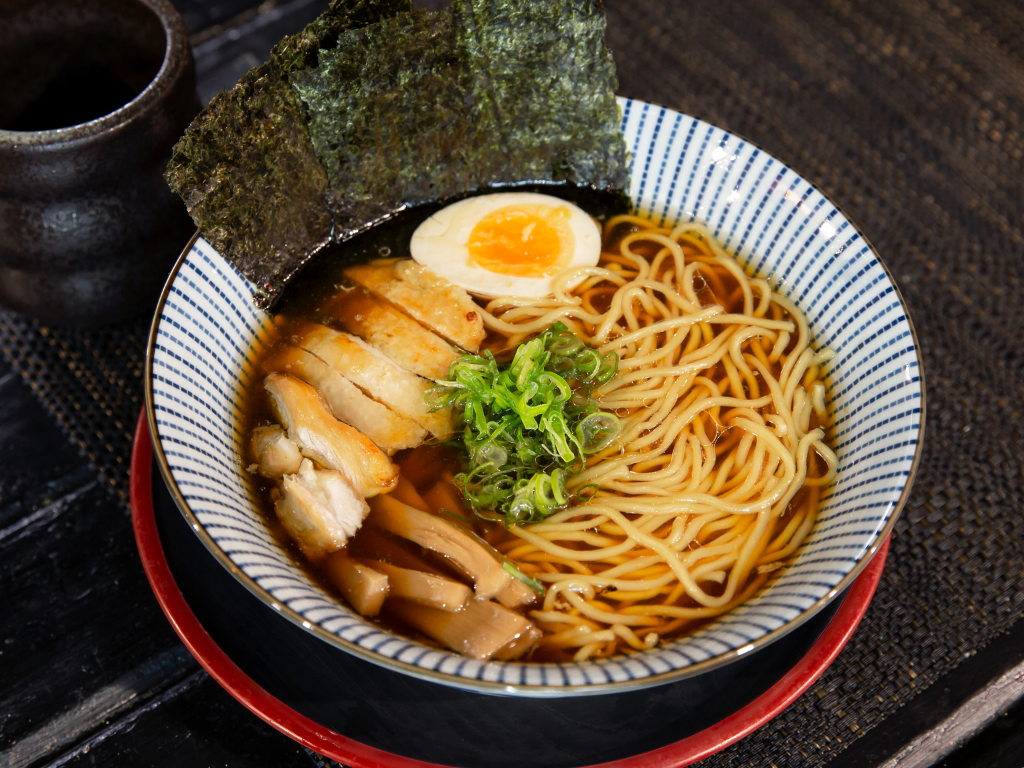
Kizami nori is a finishing garnish, scattered over hot and cold dishes at the moment of serving. It tops ramen, soba, and udon, where a pinch goes on just before the bowl leaves the pass so the aroma hits first. It crowns donburi rice bowls of salmon, tuna, tofu, or a fried egg, and it finishes chirashi sushi, ochazuke, cold soba, and salads dressed with soy or sesame.
The reach runs past the traditional bowl. Kizami nori sits on mentaiko pasta and other Japanese-style spaghetti, on poke bowls, and on cold tofu, and it works as a base for furikake rice seasoning. It also finishes tamagoyaki, tops natto over rice, and lands on avocado toast and popcorn in fusion kitchens, which is how one Japanese garnish crossed onto Western plates. Harris Salat, writing in Saveur, calls nori “the workhorse of the sushi bar,” and kizami extends that workhorse role to the finishing station, where one bag garnishes a dozen different dishes. Our guide to nori for rice bowls covers the donburi side in more detail. A little goes far, since kizami is aroma-forward and a heavy hand buries a delicate bowl.
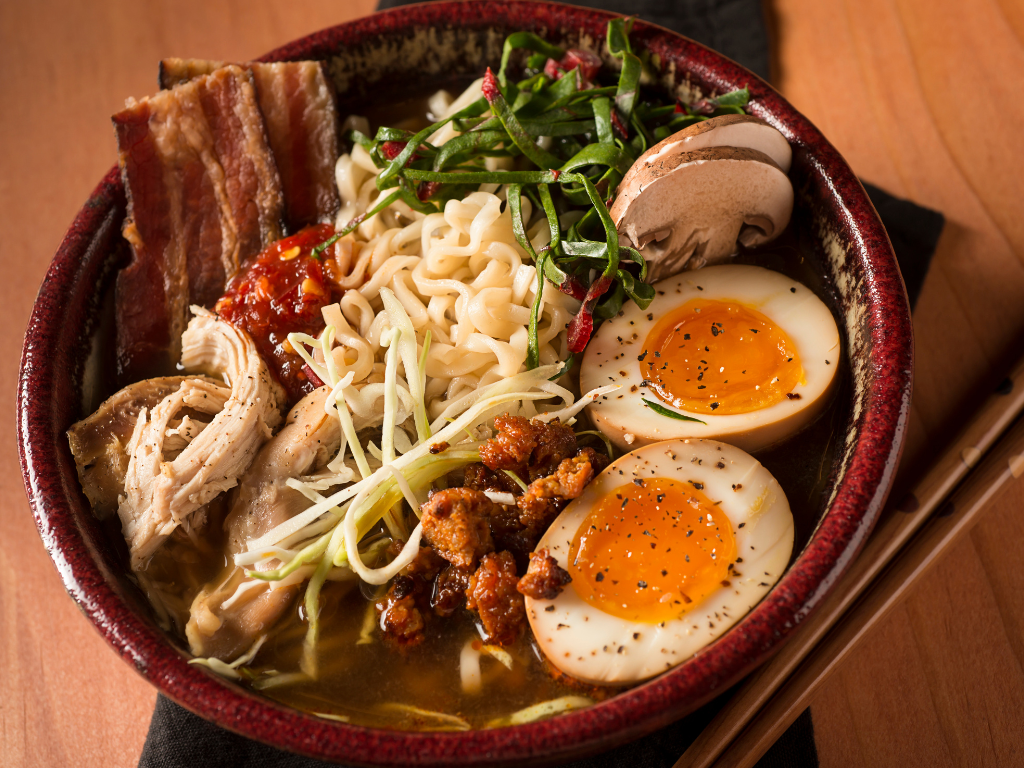
How do you use kizami nori without it going soggy?
Add kizami nori after cooking, never during, and treat it like a finishing herb rather than an ingredient. On hot food the strips soften within a minute or two, releasing their fragrance into the steam, which is why they go on at the pass and not in the pot. On cold dishes they stay crisp far longer and keep a light bite, so a salad or a poke bowl holds its texture through the meal.
Timing is the whole technique. Nori pulls moisture from the air and from hot food within minutes, so a bowl garnished too early loses both the crunch and the sharp aroma that make the topping worth adding. Store the bag sealed in a cool, dry place away from light, because humidity is the ingredient’s main enemy and an open pack softens fast. For a busy line, that means portioning kizami into small sealed containers and refilling often rather than leaving a large bag open by the pass. The strips reward a kitchen that treats them as the last touch, added in the final seconds before a dish is served.
How is kizami nori different from momi nori and ao nori?
Kizami nori is cut into uniform strips; momi nori is nori torn or crumbled by hand into irregular flakes; ao nori is a green powder from a different algae species entirely. Kizami and momi are both roasted Pyropia nori used as toppings, and they are close cousins, with kizami giving neat ribbons and momi giving a rougher scatter. A kitchen that wants a consistent, tidy garnish picks kizami; one that wants a rustic crumble picks momi.
Ao nori is the one to keep straight. It is a bright green powder made from Monostroma or Ulva, a separate green algae with a grassy, sweeter flavour, and it finishes takoyaki, okonomiyaki, and yakisoba. Ao nori is not a substitute for kizami nori. Swapping one for the other changes both the colour and the flavour of the dish, since they come from different species and different processing. For the full spread of forms across the seaweed family, see the seaweeds we supply. Kizami also differs from a full sheet in intent, since a sheet is made to wrap and kizami is made to scatter, a split covered in our guide to sheet cut formats.
Why do foodservice kitchens buy kizami nori instead of cutting sheets?
Kitchens buy kizami nori pre-shredded to remove a knife-work step and to keep every garnish consistent. Cutting full 21 by 19 cm sheets into fine strips by hand is slow, uneven, and hard to repeat across a shift, and the strips vary in width every time. A bag of kizami gives uniform ribbons the moment a bowl needs finishing, which matters most on a ramen or donburi line pushing high covers at service.
Consistency and speed are the real purchases here. A ramen shop garnishing hundreds of bowls a night saves minutes per batch and serves a topping that looks the same on every bowl, which hand-cutting cannot promise. Portioning is the other gain. A measured pinch per bowl controls cost per serving and keeps the garnish even across a rush, where hand-torn nori drifts wider each hour of a shift. That predictability is why a high-volume ramen or poke counter treats kizami as a standing order rather than a hand-prep task. Yoroshii supplies shredded kizami nori alongside its sheet range, manufactured through its Malaysian subsidiary Front Option under ISO 22000 food safety management, plus HACCP, GMP, and JAKIM halal certification on the relevant lines. A kitchen that finishes many bowls a day buys kizami for the labour it removes, not just the flavour it adds. Yoroshii has supplied roasted seaweed and nori cuts across Singapore and export markets since 1993.
Conclusion
Kizami nori is the sprinkle-ready form of the same roasted Pyropia sheet that wraps sushi, cut into fine strips and added at the last second to lift ramen, donburi, and salads. Its value in a kitchen is as much about labour and consistency as flavour, since pre-shredded ribbons remove a knife-work step no busy line has time for. Treat it as a finishing herb, keep it dry, and a pinch does the work.
Finishing a lot of bowls a day? Browse Yoroshii’s roasted nori range or contact the team for a quote on kizami nori matched to your service volume.
FAQs About Kizami Nori
What does kizami nori taste like?
Kizami nori tastes clean, briny, and lightly roasted, with a mild umami rather than a strong fishy flavour. Its savour comes from glutamic and aspartic acids in the Pyropia seaweed. It is aroma-forward, so a small pinch lifts a bowl’s scent more than it changes the seasoning underneath.
Is kizami nori the same as regular nori?
Yes. Kizami nori is regular roasted nori (yaki nori) cut into fine strips, made from the same red algae, genus Pyropia, as sushi sheets. The only difference is form: sheets wrap, kizami sprinkles. It is unseasoned, unlike ajitsuke nori, which carries added soy sauce and sugar.
Can you put kizami nori in ramen?
Yes, and it is close to standard at ramen counters. Add kizami nori right before serving so the strips keep their aroma and a light bite before they soften in the steam. A pinch across the top of the bowl is enough; added too early, the nori goes limp and loses its scent.
Is kizami nori seasoned?
No. Kizami nori is plain, unseasoned roasted nori, which is what separates it from ajitsuke nori and from furikake blends. Its flavour is the natural umami of the Pyropia seaweed. That neutrality is why it works as a finishing garnish across ramen, donburi, and salads without clashing with the dish.
How do you store kizami nori?
Keep kizami nori in a sealed, airtight container in a cool, dry place away from light. Moisture is its main enemy, and an open pack softens within minutes in humid air. For a busy kitchen, portion it into small sealed tubs and refill often rather than leaving one large bag open at the pass.
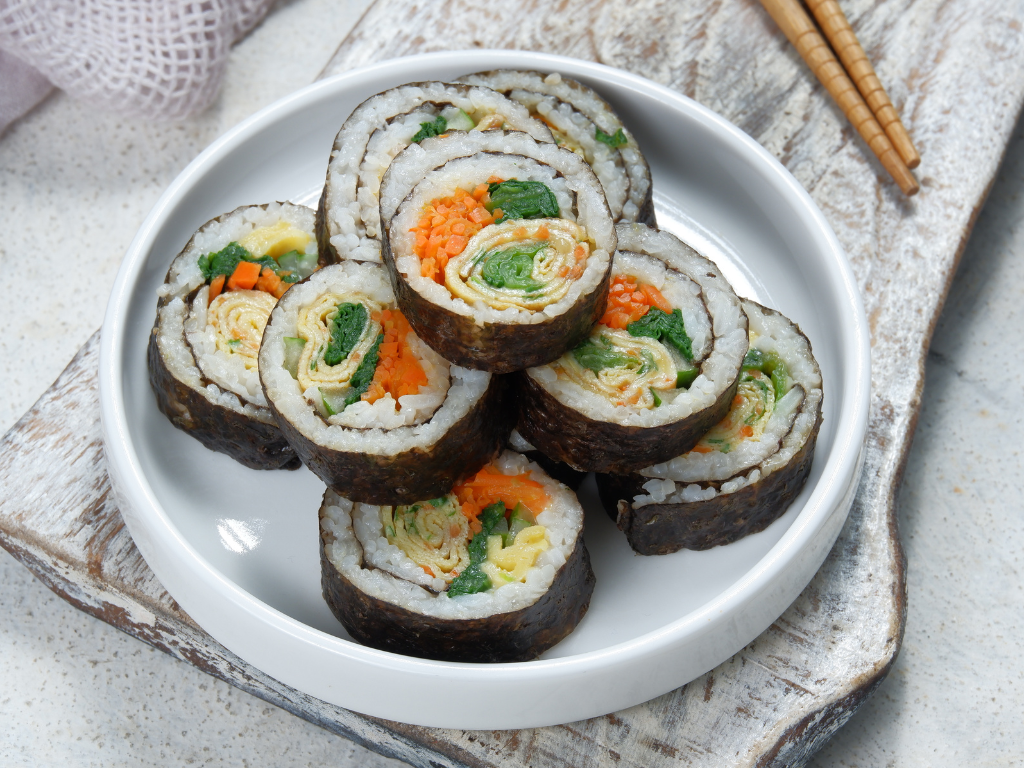
Seaweed for gimbap is gimbap gim, an unseasoned, thicker sheet
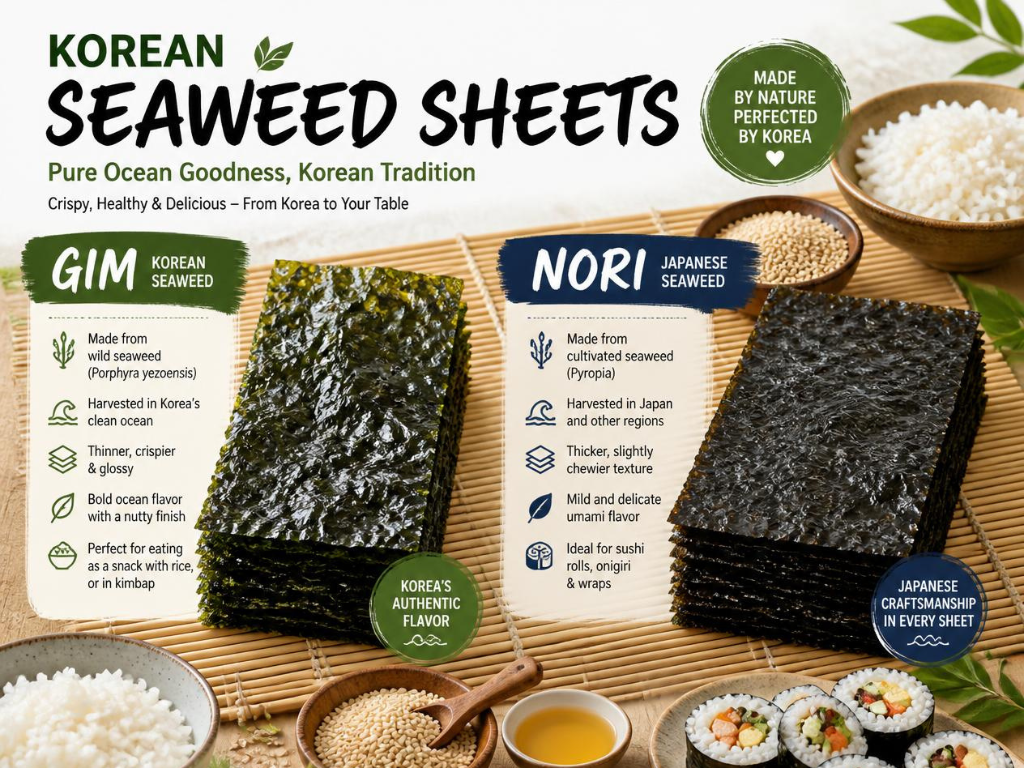
Korean seaweed sheets are gim, dried sheets of red algae