
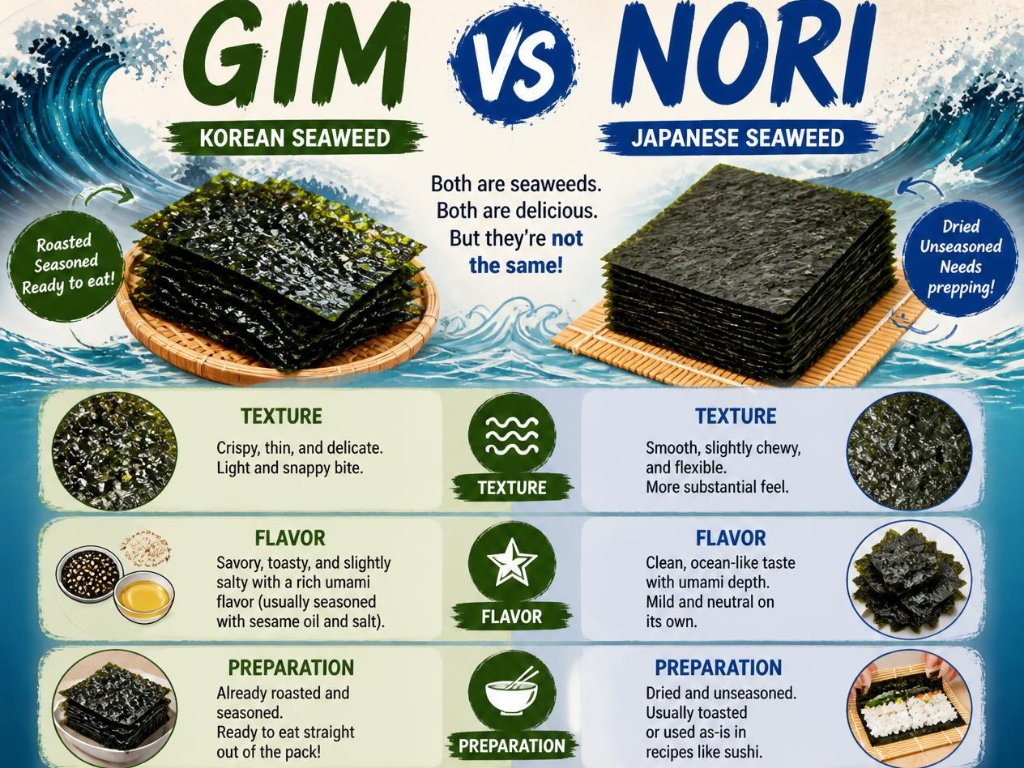
Gim vs nori is one seaweed: dried sheets of the
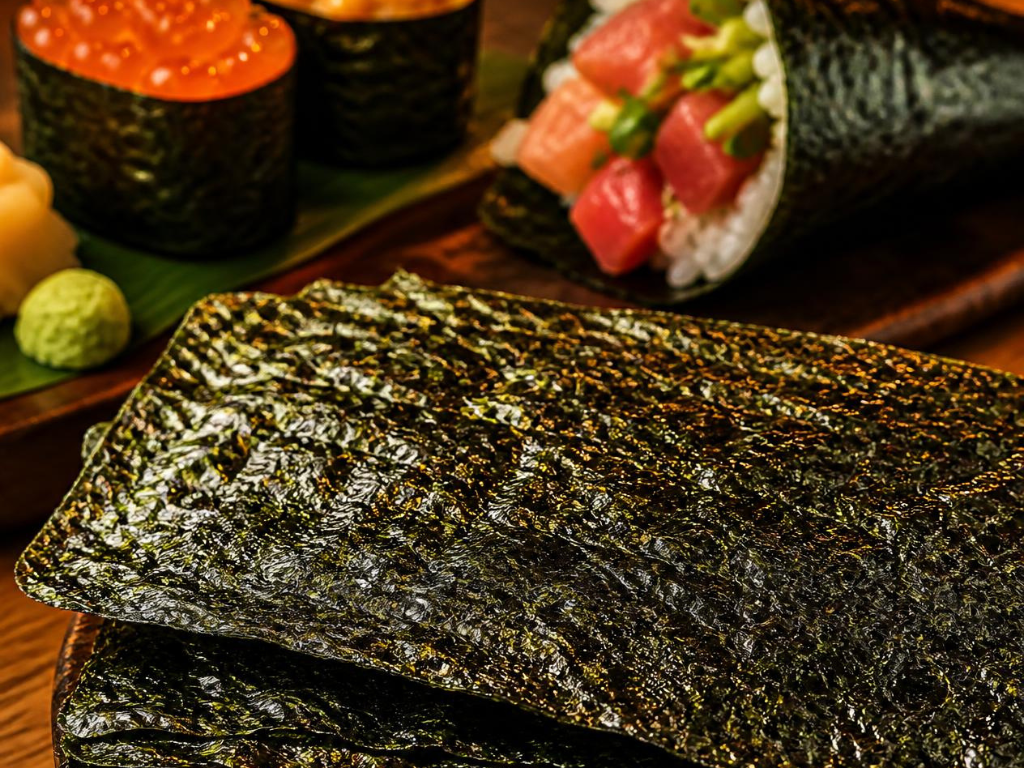
Sushi seaweed is nori, the roasted sheet of red algae (genus Pyropia) that wraps maki, temaki, and gunkan. One sheet, about 21 by 19 cm, gets rolled, coned, or cut into a strip depending on the format. This blog walks you through how sushi seaweed is used across the main roll types and why crispness matters. For the sheets, see our cut nori for sushi.
What seaweed is used in sushi?
The seaweed used in sushi is nori, a roasted sheet pressed from red algae in the genus Pyropia. No other seaweed does the wrapping job, because nori is the one edible seaweed pressed thin enough to hold rice, cut clean, and still snap when bitten. The species behind it, chiefly Pyropia yezoensis, was reclassified from Porphyra in a 2011 revision of the Bangiales, though packs still carry both names. The sheet sold for sushi is yaki nori, meaning it has been roasted after drying. That roast fixes the crisp texture a roll needs and lifts the marine aroma, which is why raw, unroasted sheets are toasted before they ever reach a cutting board.
One detail decides how every piece is built: nori has two faces. The glossy, smooth side goes outward for appearance, and the rough, matte side faces in to grip the rice. Getting that backwards is the most common home mistake, since rice slides on the shiny face. A full sheet runs about 21 by 19 cm and carries faint grain lines every 3.3 cm, the marks a chef uses to cut strips to size. That single sheet is the raw material for a tight maki roll, a temaki cone, and a gunkan strip alike.
How is nori used in maki rolls?
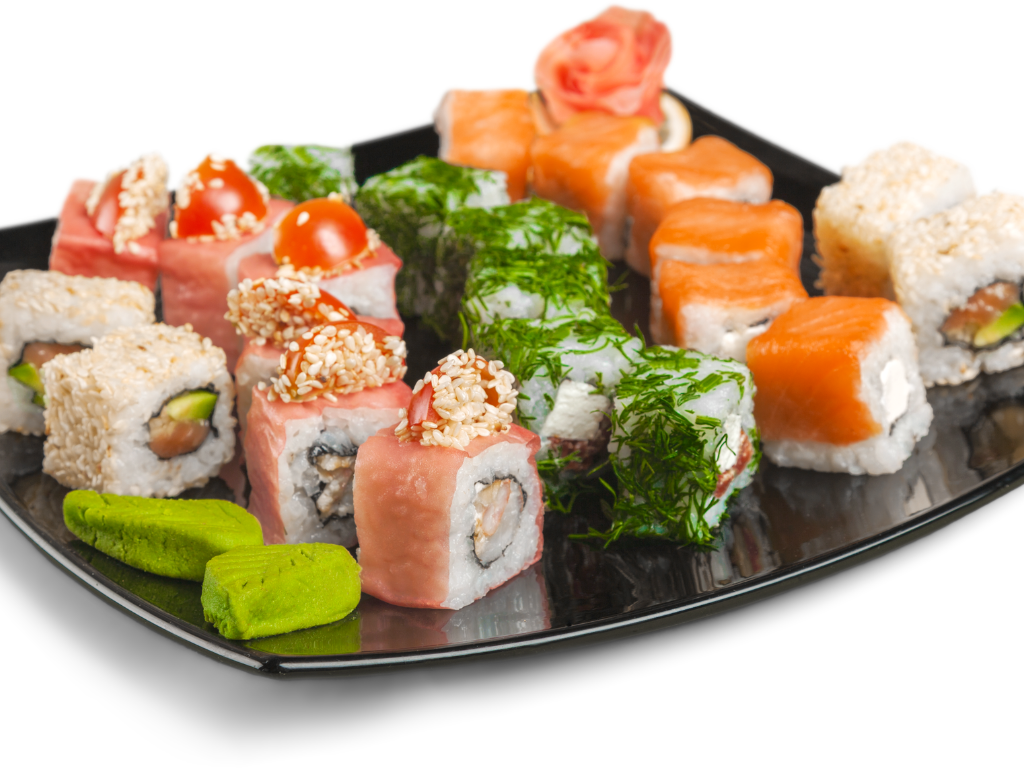
Maki uses a full or half sheet laid flat on a bamboo mat, rough side up, with rice spread across it and fillings set in a line before it is rolled tight and sliced. A thick futomaki takes a full 21 by 19 cm sheet; a thin hosomaki rides on a half sheet cut to roughly 21 by 9.5 cm. The mat, a makisu, gives the even pressure that keeps the roll cylindrical.
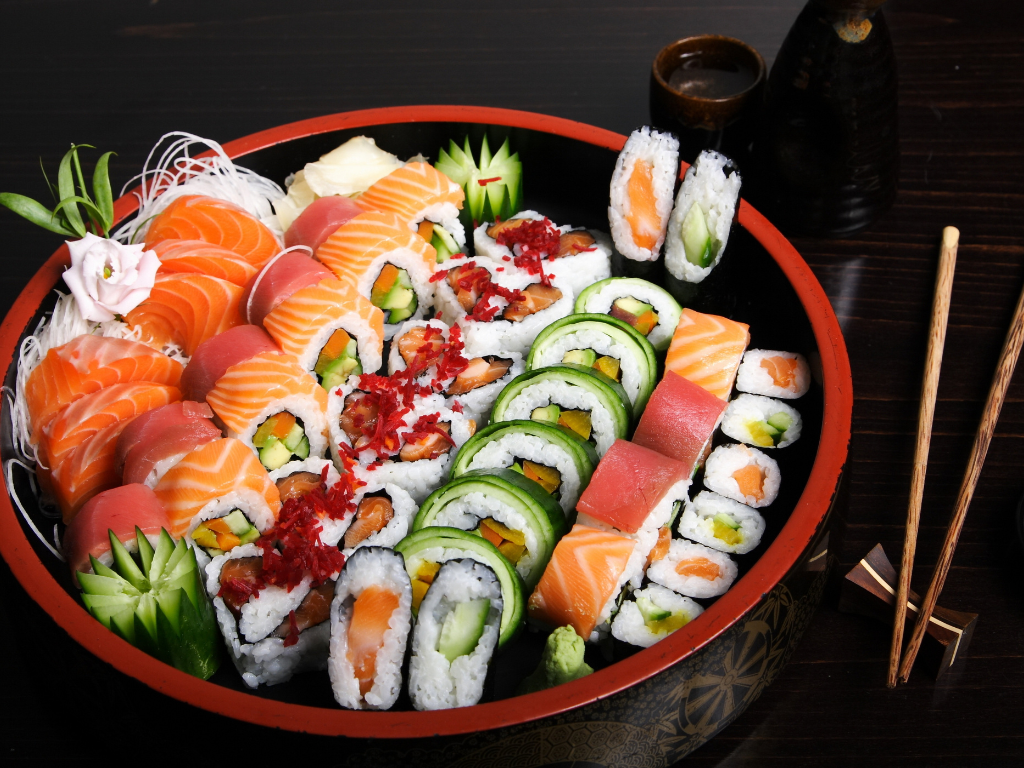
Nori sits on the outside of a standard maki and inside an uramaki, where rice wraps the outside and the sheet hides within. Because the sheet is cut, filled, and often concealed, maki is the most forgiving format for sheet quality: a clean mid-grade sheet with no holes rolls as well as a premium one once it is inside the roll. A single roll is sliced into six to eight pieces, so one sheet feeds a whole serving. For the cut sizes each roll calls for, our guide to which cut for which roll maps the formats to the sheet. Where maki forgives, the next two formats do not.
How is nori used in temaki hand rolls?
Temaki uses a half sheet of nori rolled by hand into a cone, with no mat and no slicing, and it is built to be eaten within minutes. The chef lays rice across one half of the sheet, sets fillings on the diagonal, and rolls corner to corner into a cone in under a minute. A full 21 by 19 cm sheet cut in half makes one hand roll. The cone itself dates to Japan’s Edo period, when it served as portable street food that kept a worker’s hands clean, and the hand-held shape has stayed the same since.
Timing is the whole game here. Nori starts crisp and begins pulling moisture from the rice on contact, turning chewy within about ten minutes, which is why a hand roll is passed straight from the counter to the diner. Chef Jihan Lee of Nami Nori serves his temaki open so guests eat it “while the seaweed stays crisp.” The sheet quality shows more than it does in maki, because the cone must hold its snap through the first bites rather than hide inside a roll. A tired or thin sheet goes limp fast, so temaki rewards a fresh, crisp sheet. Our nori for temaki and rice bowls covers the hand-held formats in more detail.
How is nori used in gunkan (battleship) sushi?
Gunkan uses a strip of nori wrapped around an oval of rice to build a wall that holds soft, loose toppings the rice cannot support on its own. The nori strip stands taller than the rice, forming a vessel, and the ends are sealed with a grain of rice. Typical fillings are the wet, slippery ones, ikura, uni, and tobiko, that slide straight off a nigiri.
The format is a documented invention, not folk tradition. Gunkan-maki was created in 1941 at the Ginza Kyubey restaurant in Tokyo, where chef Hisaji Imada wrapped rice in a tall nori band to serve a customer’s salmon roe that would not sit on plain nigiri. The nori wall is structural, so its rigidity and crispness are load-bearing in a way they never are inside a maki. A gunkan strip is cut to the sheet’s 3.3 cm grain line, the natural height for the wall, with the glossy side facing out. This is the format where a limp or holed sheet fails outright, because a soft wall buckles and the topping spills. Gunkan is a nigiri variant, the one member of that family that depends on nori, which is why its sheet has to perform where plain nigiri uses none. Gunkan and temaki, not maki, are the formats that expose a weak sheet.
How does the sushi format change the nori you should buy?
Buy nori to the format you build most, because a hidden maki and an exposed gunkan ask different things of the sheet. Maki tolerates a clean mid-grade sheet, since the nori is cut and often buried under rice. Temaki and gunkan put the sheet on show and under structural load, so they need a fresher, crisper, tear-resistant sheet that holds its snap and its shape at the counter.
Yoroshii supplies roasted nori and cut sheets to sushi bars, foodservice, and wholesale buyers, manufactured through its Malaysian subsidiary Front Option under ISO 22000 food safety management, plus HACCP, GMP, and JAKIM halal certification. A bar running high-volume maki orders full sheets in bulk; a counter built on hand rolls and gunkan orders to a tighter crispness spec and turns stock faster. Naming the cut is the practical step, whether full sheets for maki or half sheets for hand rolls that a line halves again for gunkan strips. Yoroshii has supplied roasted seaweed and nori cuts across Singapore and export markets since 1993.
Conclusion
One sheet of nori does three different jobs in sushi: it rolls tight for maki, cones by hand for temaki, and stands as a wall for gunkan. The more the sheet is exposed and load-bearing, the more its crispness and integrity decide the result, which is why a counter built on hand rolls and battleship sushi buys to a tighter spec than a maki line. The seaweed is always nori; the format sets the sheet.
Building a menu around specific roll types? Browse Yoroshii’s roasted nori cut range or contact the team for a quote matched to the formats and volume your kitchen runs.
FAQs About Sushi Seaweed
What is the seaweed on the outside of a sushi roll called?
It is called nori, a roasted sheet pressed from red algae in the genus Pyropia. Nori wraps maki rolls and hand rolls and forms the wall on gunkan. The one wrapper that is not seaweed is soy paper (mamenori), a soybean sheet sold as a nori substitute.
Which side of the nori faces out on sushi?
The glossy, smooth side faces out, and the rough, matte side faces in against the rice. The rough side grips the rice while the shiny side gives the clean, dark finish you see on a roll. Placing it the wrong way lets the rice slide, the most common home-rolling error.
Why does the seaweed on my hand roll get chewy?
Nori absorbs moisture from the sushi rice on contact and softens within about ten minutes. That is why temaki is handed over the counter to eat immediately. Sushi chefs count on roughly 10 to 20 minutes of peak crispness, so a hand roll left sitting turns chewy rather than snapping when bitten.
What is the seaweed wrap on gunkan sushi?
It is a strip of nori standing as a wall around the rice, cut to the sheet’s 3.3 cm grain line. Gunkan-maki was invented in 1941 at Ginza Kyubey in Tokyo to hold loose toppings like ikura and uni. The nori wall is structural, so crispness keeps the vessel from buckling.
Is the seaweed in sushi always nori?
Yes, the wrap and the gunkan wall are always nori, the roasted Pyropia sheet. Other seaweeds appear elsewhere on a Japanese menu, wakame in salad and kombu in dashi, but they never wrap sushi. Soy paper is the only common non-seaweed substitute for the wrap.
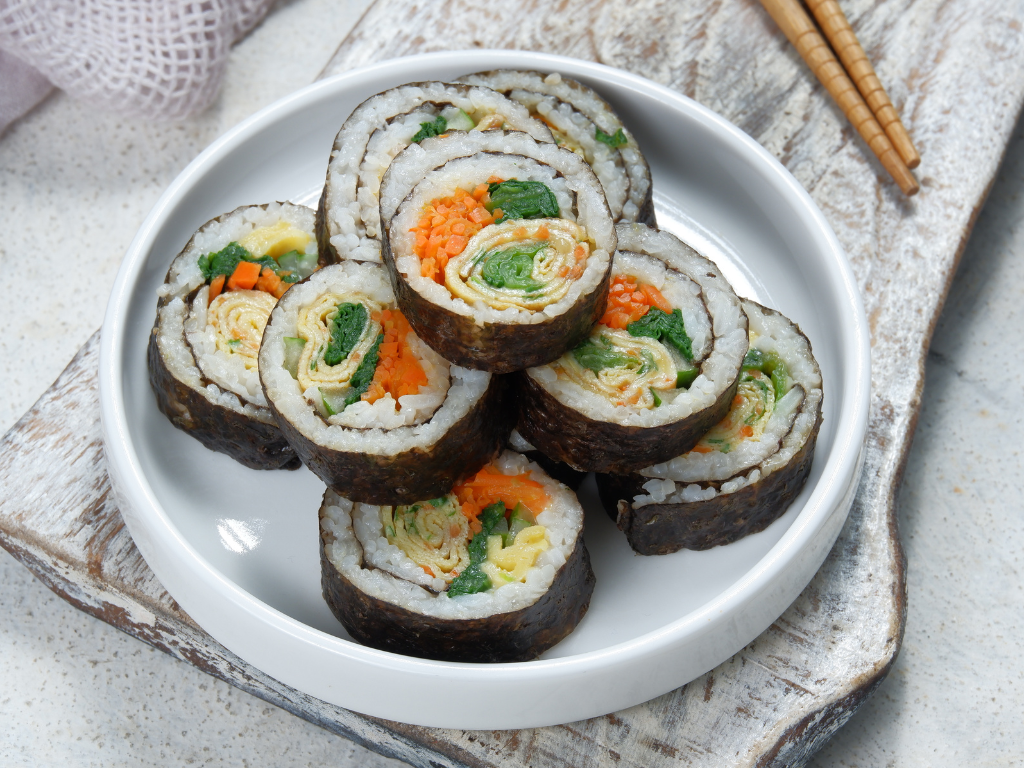
Seaweed for gimbap is gimbap gim, an unseasoned, thicker sheet
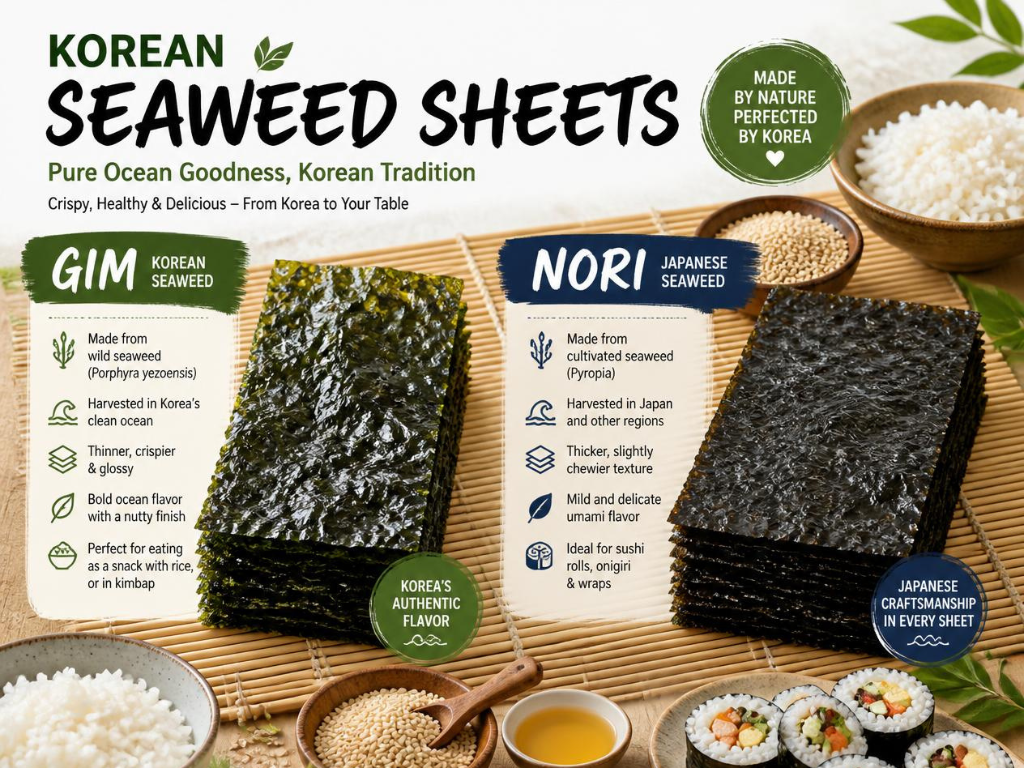
Korean seaweed sheets are gim, dried sheets of red algae