
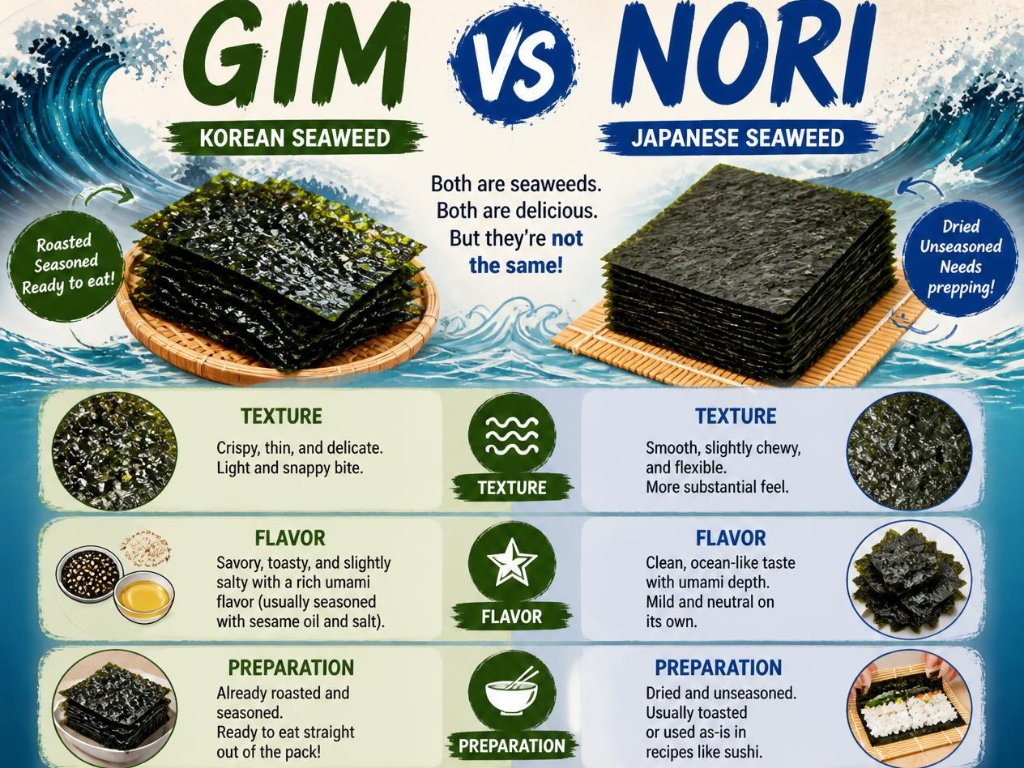
Gim vs nori is one seaweed: dried sheets of the
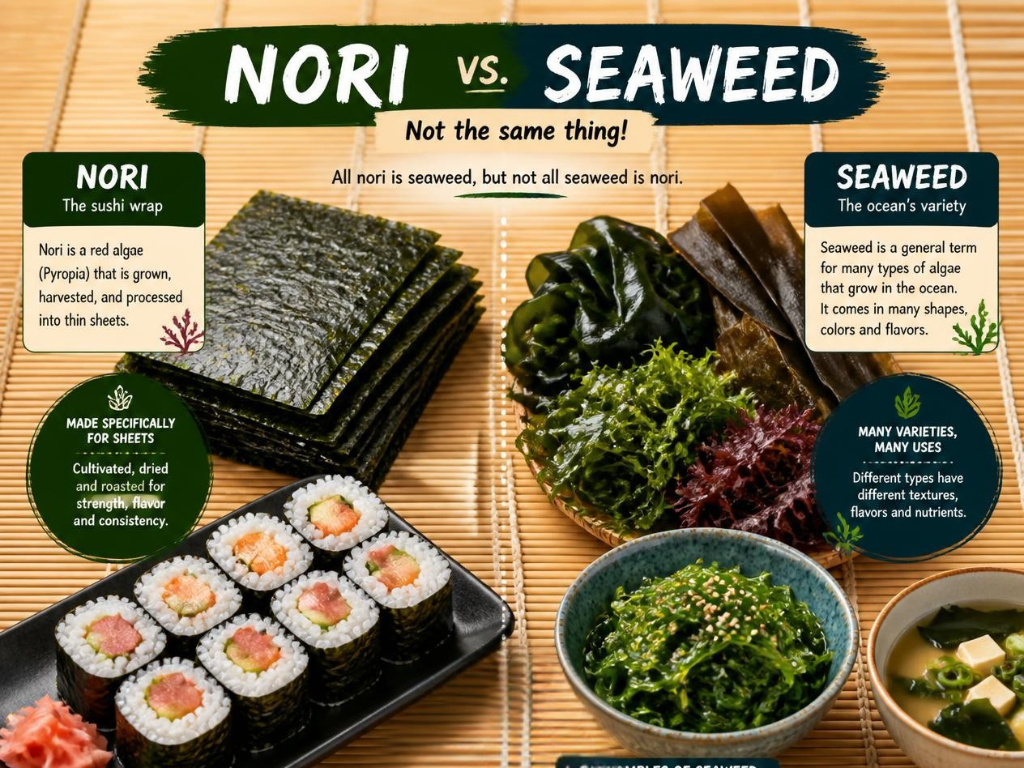
Nori vs seaweed reads like a contest, but nori is a type of seaweed: a roasted sheet of red algae in the genus Pyropia. Seaweed is the umbrella for thousands of marine algae across three colour groups, and nori is one edible red one. This blog walks you through how nori fits the seaweed family and which seaweed is in your sushi. For the sheets, see our roasted nori range.
Is nori a type of seaweed?
Nori is a type of seaweed, specifically an edible red alga in the genus Pyropia, pressed and roasted into thin sheets. Seaweed is the everyday word for marine macroalgae, the large algae you can see with the naked eye, and nori sits inside that group the way a poodle sits inside dogs. Every sheet of nori is seaweed; most seaweed is not nori.
The confusion comes from how nori looks once processed. Raw nori is a red-algae blade, yet the drying and roasting turn it dark green, so shoppers assume it is a green seaweed or a separate ingredient. It is neither. Nori is made from species such as Pyropia yezoensis and Pyropia tenera, reworked into a flat sheet roughly 21 by 19 cm. The plant is the same red algae that phycologists study; the sheet is just the processed form a kitchen buys. Seaweed itself is a common-use word, not a scientific one. It groups organisms that photosynthesise in the sea across separate lineages, which is why a single label stretches over nori, kelp, and sea lettuce without making them close relatives. The finished nori sheet is one cell layer thick once pressed, thin enough to dissolve on the tongue, a processing outcome rather than a trait of the living plant.
How is seaweed classified into red, brown, and green?
Seaweed splits into three groups by pigment: red algae (Rhodophyta), brown algae (Phaeophyta), and green algae (Chlorophyta). Marine macroalgae are divided into these three phyla, and the colour reflects the pigments each uses to photosynthesise at different depths. Nori belongs to the red group, alongside dulse and the laver family; kombu and wakame are brown; sea lettuce and aonori are green.
Red algae carry the largest species count of the three, and the group includes the Pyropia and Porphyra species that became today’s nori after a 2011 revision of the Bangiales reclassified them. Colour is a rough guide to use, not a strict rule. Brown seaweeds like kombu tend toward broths and salads, red seaweeds like nori toward sheets and snacks, and green seaweeds like aonori toward powders and garnishes. Knowing the group tells a buyer more than the word seaweed ever will, because it points to the flavour, the texture, and the form the product ships in. The red pigments, the phycoerythrins, let these algae photosynthesise in deeper, dimmer water than green species manage, which is part of why the three groups took separate evolutionary paths. The culinary split holds up in a kitchen: reach for a red seaweed to wrap, a brown one to simmer, a green one to sprinkle.
Which seaweed is in your sushi?
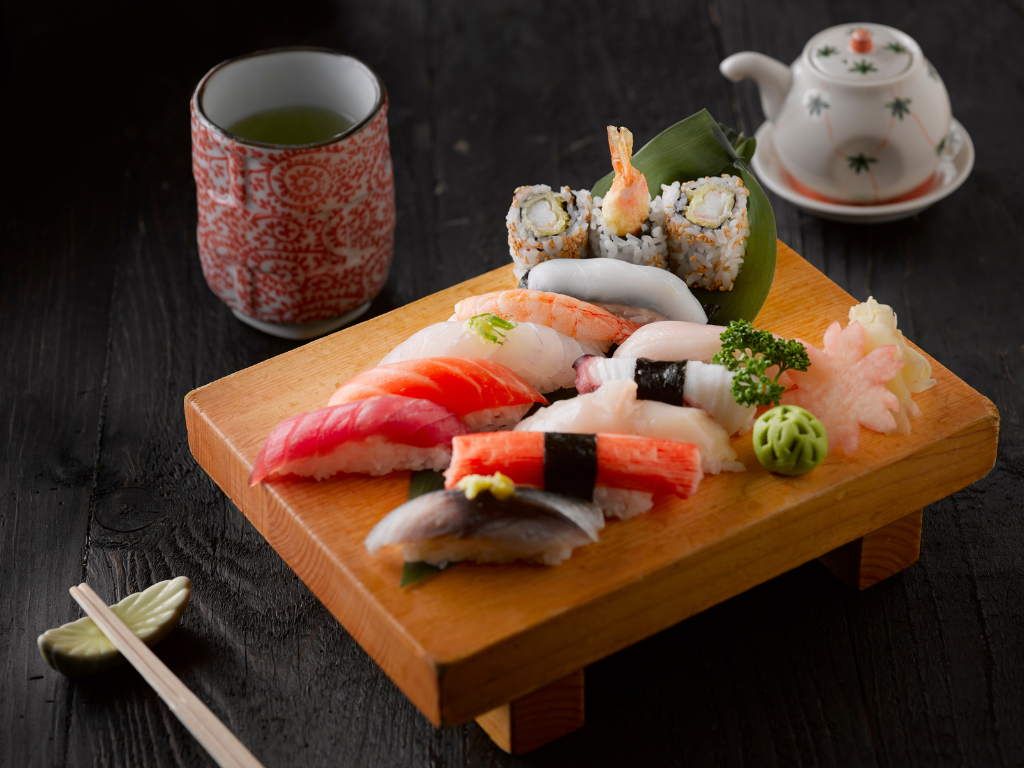
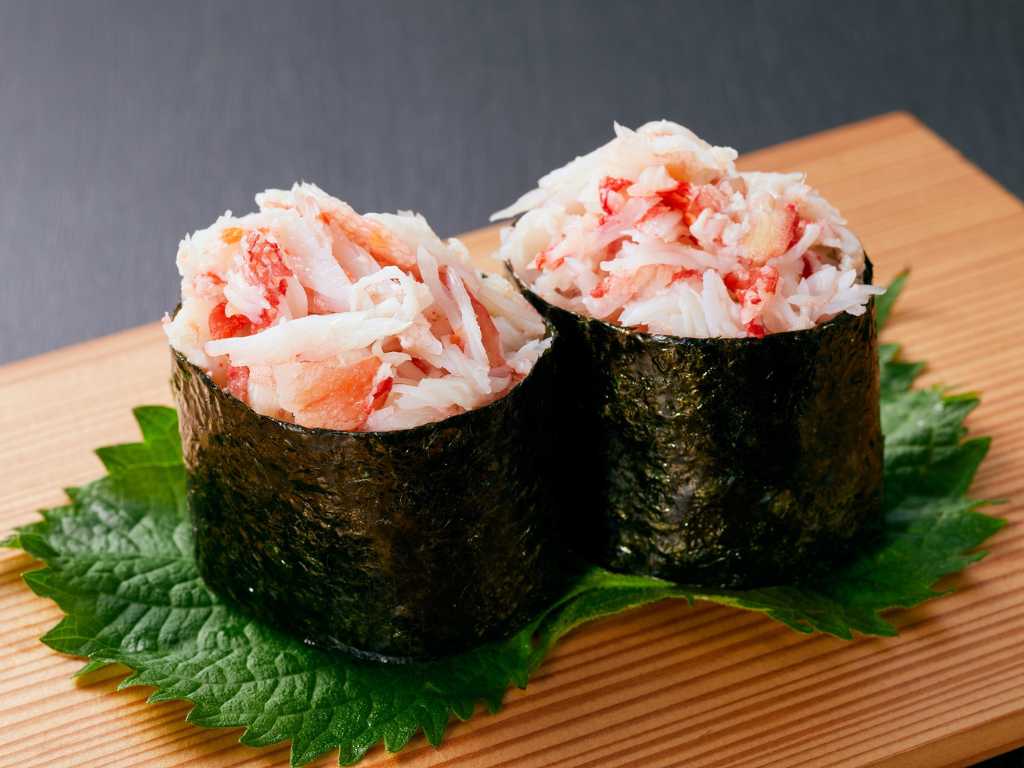
The seaweed wrapped around your sushi is nori, the roasted red-algae sheet, and nothing else fills that role. A maki roll, a temaki cone, and an onigiri wrap all use nori because it presses into a thin, strong sheet that holds rice and cuts clean. Harris Salat, writing in Saveur, calls nori “the workhorse of the sushi bar,” and no other seaweed does that wrapping job.
Other seaweeds show up across the same menu without touching the roll. Wakame, a brown alga, is the star of seaweed salad and a common float in miso soup, rehydrated from dry strips into slippery ribbons. Kombu, a brown kelp rich in glutamate, is simmered to build dashi, the stock under countless Japanese dishes, and is rarely eaten as a piece. Aonori, a green alga, is dusted over okonomiyaki as a powder. Hijiki and mozuku, both brown algae, appear as small seasoned side dishes rather than in the roll, and a colourful tosakanori garnish is red algae like nori, yet it is never pressed into a wrap. So the sushi wrap is nori, while the salad, the soup, and the stock each call on a different seaweed. For the wider set of edible seaweeds beyond the roll, see the edible seaweeds we supply.
How does nori differ from wakame and kombu?
Nori, wakame, and kombu differ by algal group, by form, and by the job they do in a kitchen. Nori is red algae (Pyropia) sold as a pressed sheet for wrapping. Wakame is brown algae (Undaria) sold as dry curly strips that rehydrate for salad and soup. Kombu is brown kelp (Saccharina) sold as thick, brittle sheets used to draw umami into stock rather than to be eaten whole.
The format is the tell. Nori is the only one of the three processed into paper-thin sheets, which is why the sheet-making step, closer to papermaking than to drying, sets it apart from every other edible seaweed. Wakame keeps its leafy shape; kombu stays thick and hard until it is cooked long or shaved fine. Kombu carries so much glutamate that it works as a natural umami base, which is why it goes into stock and not onto a roll. Korean gim is nori’s closest relative, a red-algae laver sheet brushed with sesame oil rather than left plain, and you can read how Korean gim is made for that side of the family. Treating these seaweeds as interchangeable is a sourcing error, because a recipe that calls for nori will not work with a curl of wakame.
Which seaweeds should you order, and how?
Order by species and form, not by the word seaweed, because seaweed is too broad to fill a purchase order. A kitchen buying a sushi wrap orders roasted nori in a stated cut; a kitchen building dashi orders kombu; a kitchen making salad orders wakame. The word seaweed covers all three and specifies none. A supplier’s catalogue is organised by species and form for exactly this reason, so an order naming roasted nori in a stated cut leaves nothing open to interpretation.
Yoroshii supplies roasted nori and cut sheets to retail, foodservice, and wholesale buyers, manufactured through its Malaysian subsidiary Front Option under ISO 22000, HACCP, GMP, and JAKIM halal certification. For the sushi wrap itself, naming the cut is the practical step, whether a full sheet for maki or a strip for garnish, which is why our nori cut formats exist as a defined range and our full-size sushi nori ships pre-sized. Yoroshii has supplied roasted seaweed and nori cuts across Singapore and export markets since 1993.
Conclusion
Nori is not the opposite of seaweed; it is one edible red seaweed among many, set apart by a sheet-pressing step no other seaweed goes through. The seaweed in your sushi is nori, while wakame carries the salad and kombu builds the stock. For a kitchen, the useful question is never nori versus seaweed, but which species, in which form, for which dish.
Sourcing the sheet that actually wraps sushi? Browse Yoroshii’s nori cut range or contact the team for a quote on roasted nori matched to your dishes and volume.
FAQs About Nori vs Seaweed
Is nori the same as seaweed?
No. Nori is one type of seaweed, a roasted sheet of red algae in the genus Pyropia. Seaweed is the umbrella term for thousands of marine macroalgae across red, brown, and green groups. Every nori sheet is seaweed, but most seaweed, like kombu or wakame, is not nori.
Is nori red or green?
Nori is red algae, in the genus Pyropia, even though a finished sheet looks dark green. The green colour comes from the drying and roasting process, not from the plant’s group. Phycologists classify nori under Rhodophyta, the red-algae phylum, alongside dulse and laver.
What seaweed is used for sushi rolls?
Sushi rolls use nori, the roasted red-algae sheet pressed to roughly 21 by 19 cm. It is the only seaweed pressed into a sheet strong enough to wrap rice and cut clean. Wakame and kombu appear elsewhere on a Japanese menu, not as the sushi wrap.
Is wakame the same as nori?
No. Wakame is a brown alga (Undaria) sold as dry strips that rehydrate into ribbons for seaweed salad and miso soup. Nori is a red alga (Pyropia) pressed into sheets for sushi. They differ in algal group, form, and dish, so a sushi recipe cannot substitute one for the other.
Is kombu a seaweed?
Yes. Kombu is a brown kelp, a seaweed in the Phaeophyta group, sold in thick dried sheets. It is prized for glutamate and used to make dashi stock rather than eaten whole. Kombu and nori are both seaweed, but from different colour groups and used for opposite jobs.
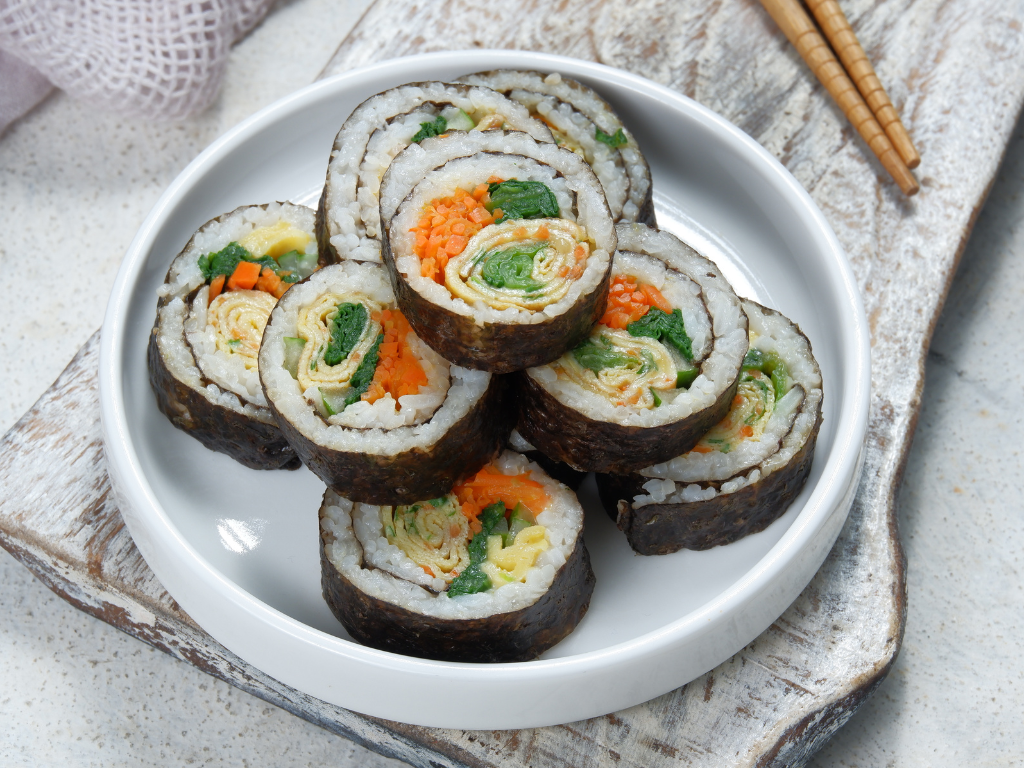
Seaweed for gimbap is gimbap gim, an unseasoned, thicker sheet
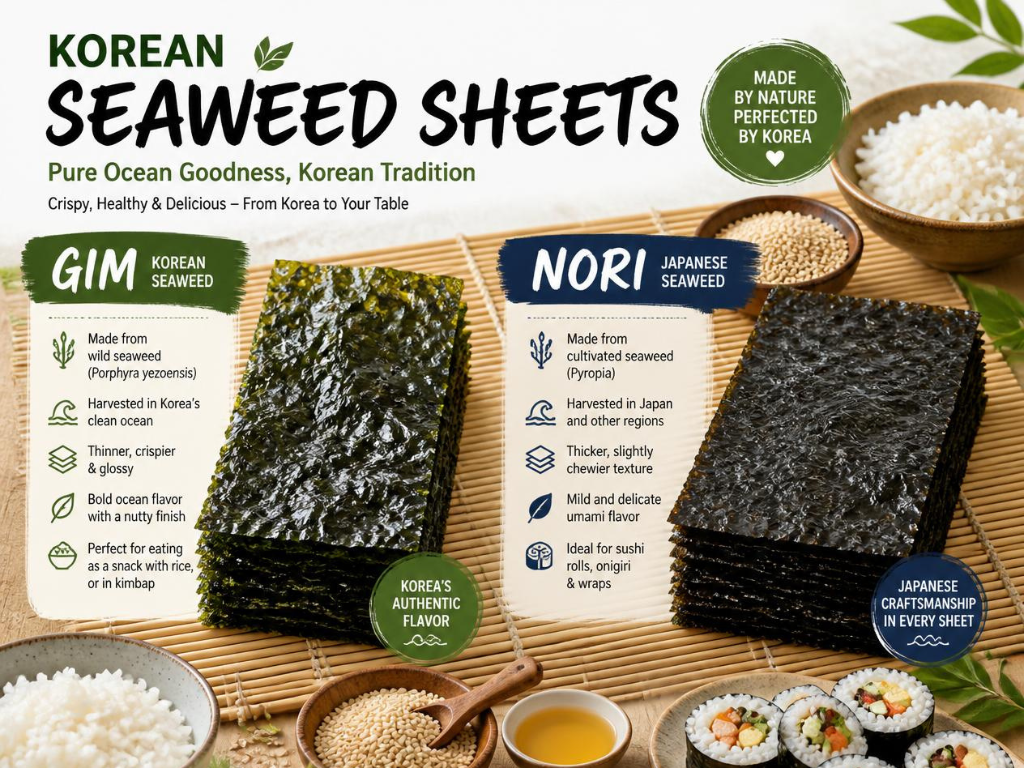
Korean seaweed sheets are gim, dried sheets of red algae