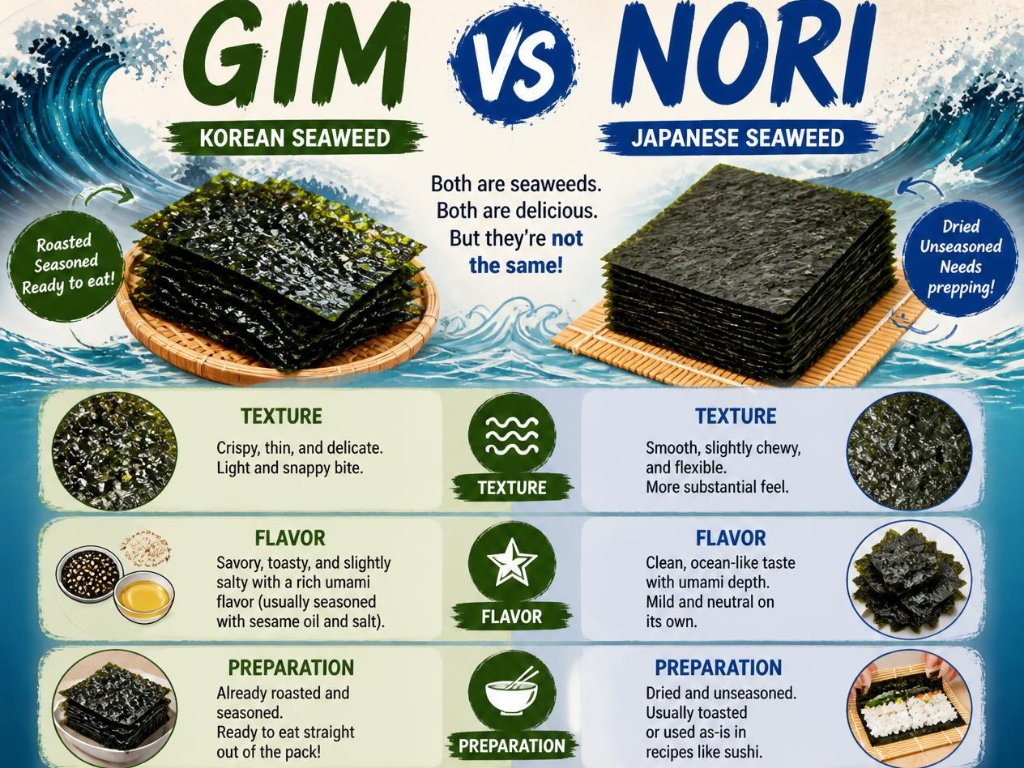
Gim vs nori is one seaweed: dried sheets of the
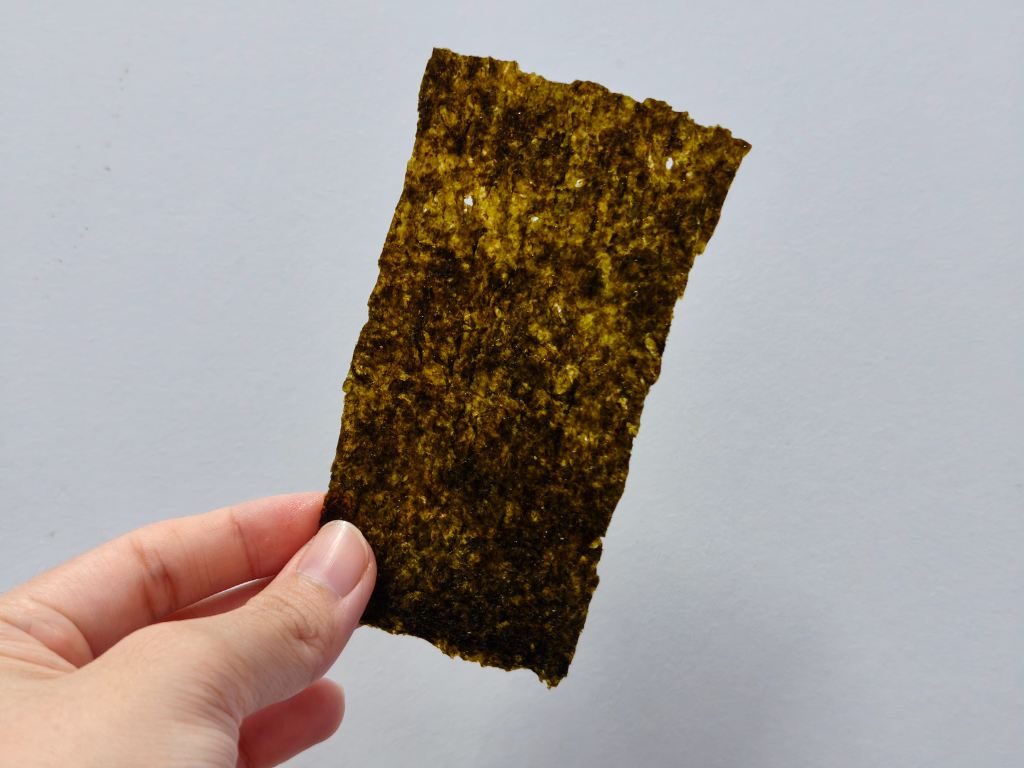
Seaweed sheets are dried, roasted laver (genus Pyropia), sold for sushi and snacking and priced by pack size and grade, not by the sheet. A standard full sheet measures 21 by 19 cm, and packs run from 10-sheet retail to 50-sheet foodservice, where bulk cuts cost per sheet. This blog walks you through seaweed sheet sizes, grades, and buying in bulk. For the range, see our bulk seaweed products.
What are roasted seaweed sheets, and what are they made of?
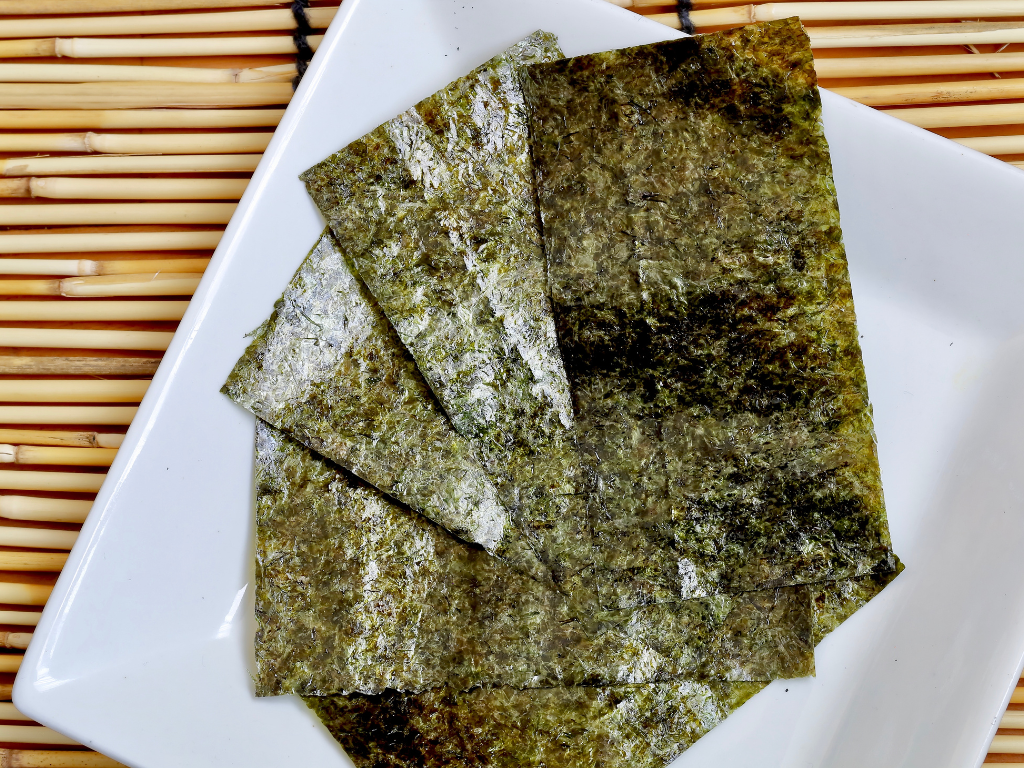
Roasted seaweed sheets are thin sheets of red algae in the genus Pyropia, washed, minced, pressed like paper, dried, and toasted until crisp. That final roast is what turns a raw blade into yaki nori, the roasted grade that holds a sushi roll and snaps when you bite a snack sheet. The same pressed sheet becomes a sushi wrapper, a snack, or a rice topping depending on how it is cut and packed.
Roasting does two jobs at once. It fixes the crisp texture a kitchen needs for rolling, and it concentrates the free glutamate behind the sheet’s savoury pull. A sheet sold unroasted (hoshi nori) has to be toasted before use, which is why almost every commercial pack, retail or foodservice, ships pre-roasted. For the way sheets are then cut down to match each dish, see our guide to cut formats for sushi and onigiri.
What sizes do seaweed sheets come in?
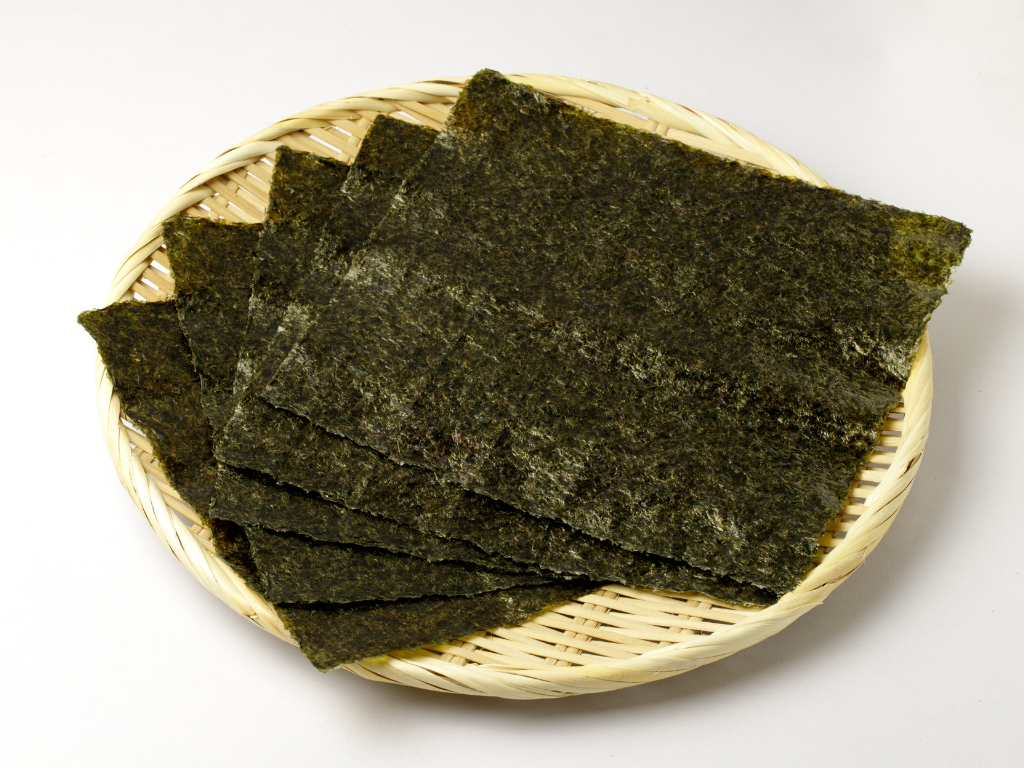
A full sheet is 21 by 19 cm, the zenkei size every other format is cut from. A half sheet (hangiri) is that full sheet cut across to roughly 21 by 9.5 cm, and quarter sheets run about 10.5 by 9.5 cm. Full sheets wrap futomaki and temaki; half sheets suit onigiri and hosomaki; strips and shreds handle garnish and toppings.
Pack size is the second axis, and it matters more for buying than sheet dimensions do. Retail snack packs typically hold 10 to 40 sheets; foodservice and wholesale packs run 50 sheets and up, into cartons of several hundred. Yoroshii’s retail line runs to a 10-sheet snack pack at S$3.60, while the 50-sheet foodservice pack sits at S$12.30. Match the sheet dimension to the dish and the pack count to the volume you turn over in a week, because a 50-sheet pack opened in a low-traffic retail spot goes soft before it sells.
What do seaweed sheet grades mean for a buyer?
Grade is set by appearance, not flavour. Japanese auction markets score sheets on color depth, sheen, thickness, and holes, running to roughly nine grades, with jet-black glossy hole-free sheets at the top and lighter, spotted sheets lower down. Gold and silver labels, or the premium tier called tokujo, sit at the top of that scale. Season feeds the grade as well. The first cutting of the year, harvested from October, carries the top grade and the top price, because the youngest blades press into the thinnest, most tender sheet.
Origin rides alongside grade. Ariake Bay off Kyushu produces the most prized Japanese nori and takes the top auction prices, a premium designation buyers treat much as they treat Champagne. The stance worth holding: for high-volume rolled sushi where the sheet is cut, filled, and hidden inside the roll, a clean mid-grade sheet with uniform thickness and no holes beats paying gold-grade prices, because rolling strength matters more than sheen a diner never sees. Reserve top grades for sheets that stay whole and on show, like a temaki cone or a plated garnish. A sheet with holes fails under a tight roll, so integrity is the one grade defect worth rejecting a batch over.
How do retail packs and foodservice packs differ?
Retail and foodservice packs are built for different buyers, and they are not interchangeable inventory. A retail snack pack holds 10 to 12 sheets in a shelf-ready, resealable pouch aimed at a shopper; a foodservice pack holds 50 or more in a bulk case aimed at a kitchen or a distributor. Buying the wrong one either raises your cost per sheet or leaves stock going stale on a slow shelf.
Cost per sheet is where the split shows. Yoroshii’s 10-sheet pack works out to about S$0.36 a sheet, while the 50-sheet foodservice pack lands near S$0.25 a sheet, roughly a third cheaper per sheet for the same roasted product. A sushi bar or a snack repacker buys the 50-sheet format for that reason; a convenience-store buyer stocking single-serve snacks buys the 10-sheet pouch because it sells as a unit. Buy foodservice packs by cost per sheet, not by the sticker price on the case.
How do you buy seaweed sheets in bulk?
Bulk buying comes down to three numbers: cost per sheet, minimum order quantity, and certification. Wholesale sheets are ordered by the carton against an MOQ, priced on a per-sheet basis that falls as volume rises, and shipped in moisture-sealed cases with desiccant to hold crispness through transit. Moisture, not age, is what ruins a bulk sheet first, so sealed cases and dry storage protect shelf life more than a fresher harvest date. Yoroshii quotes its full, half, 7-cut, and 20-cut foodservice formats per enquiry against order volume, so a distributor prices a carton run rather than a shelf pack.
Certification is a purchase gate, not a label nicety. Yoroshii manufactures through its Malaysian subsidiary Front Option under ISO 22000 food safety management, which integrates HACCP principles across the food chain, plus GMP and JAKIM halal certification on seasoned lines. A buyer supplying halal-certified or export accounts cannot stock a seasoned sheet without verified status, which is why JAKIM halal certification is checked before price on those orders. For the wider bulk snack range and ordering, see our wholesale seaweed snacks. Yoroshii has supplied roasted seaweed to retail, foodservice, and wholesale buyers across Singapore and export markets since 1993.
Which pack size and grade should you buy?
Match the pack to your turnover, then buy the lowest grade that survives your use. A sushi bar running steady volume buys 50-sheet foodservice packs of clean mid-grade full sheets; a snack repacker buys bulk cartons and portions into retail pouches; a grocery buyer stocking a shelf buys 10-sheet retail packs sized to sell as a unit. Gold and silver grades earn their premium only where the sheet stays whole and visible.
The common overspend is a retailer buying foodservice-size packs for a slow shelf, or a kitchen buying gold-grade sheets for rolls that hide the nori. Manuel Barange of the FAO calls aquaculture “the fastest-growing food production system around the world,” and farmed seaweed output has more than tripled since 2000, so supply is not the constraint on price. Pack format and grade tier are the levers a buyer actually controls. Buy on cost per sheet and pack fit first, grade second.
Conclusion
Sheet size decides what a sheet can wrap; grade decides how it looks on the plate; pack format decides what it costs you per sheet. A buyer who reads cost per sheet and turnover, rather than the sticker price on a case, matches the pack to the account and stops paying gold-grade prices for nori hidden inside a roll.
Sizing an order for a shop, a sushi line, or a distribution account? Browse Yoroshii’s bulk seaweed range or contact the team for a wholesale quote priced to your pack size and volume.
FAQs About Seaweed Sheets
How many sheets are in a pack of seaweed sheets?
Retail snack packs usually hold 10 to 40 sheets, while foodservice and wholesale packs run 50 sheets and up, into cartons of several hundred. Yoroshii’s retail pack holds 10 sheets and its foodservice pack holds 50, the two most common formats for shoppers and kitchens.
How much do seaweed sheets cost per sheet?
Cost per sheet drops as pack size rises. Yoroshii’s 10-sheet pack is S$3.60, about S$0.36 a sheet, while the 50-sheet pack is S$12.30, roughly S$0.25 a sheet. Buying the larger pack cuts the per-sheet cost by about a third for the same roasted product.
What is the standard size of a full seaweed sheet?
A standard full sheet, the zenkei size, measures 21 by 19 cm. A half sheet (hangiri) is roughly 21 by 9.5 cm, and quarter sheets run about 10.5 by 9.5 cm. Every smaller cut format works back from that single full-sheet dimension.
Are Yoroshii seaweed sheets halal?
Plain roasted sheets are single-ingredient dried seaweed and inherently halal. Seasoned lines carry JAKIM halal certification, verified because soy sauce and flavourings must be checked. Yoroshii manufactures under ISO 22000, HACCP, GMP, and JAKIM halal through its Malaysian subsidiary Front Option.
How do you store bulk seaweed sheets so they stay crisp?
Keep them dry and sealed. Moisture is what ruins sheets first, so nitrogen-flushed or resealable cases with silica desiccant matter more than harvest date. An opened sheet absorbs humidity and goes limp within minutes, which is why bulk foodservice cases stay moisture-sealed until service.
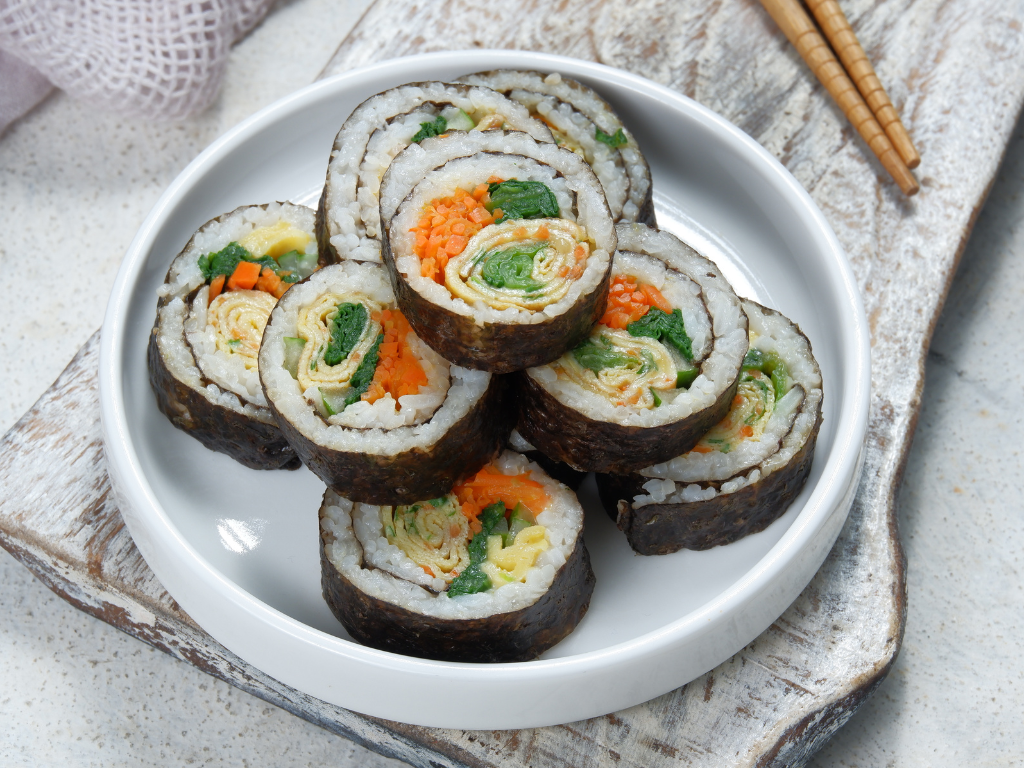
Seaweed for gimbap is gimbap gim, an unseasoned, thicker sheet
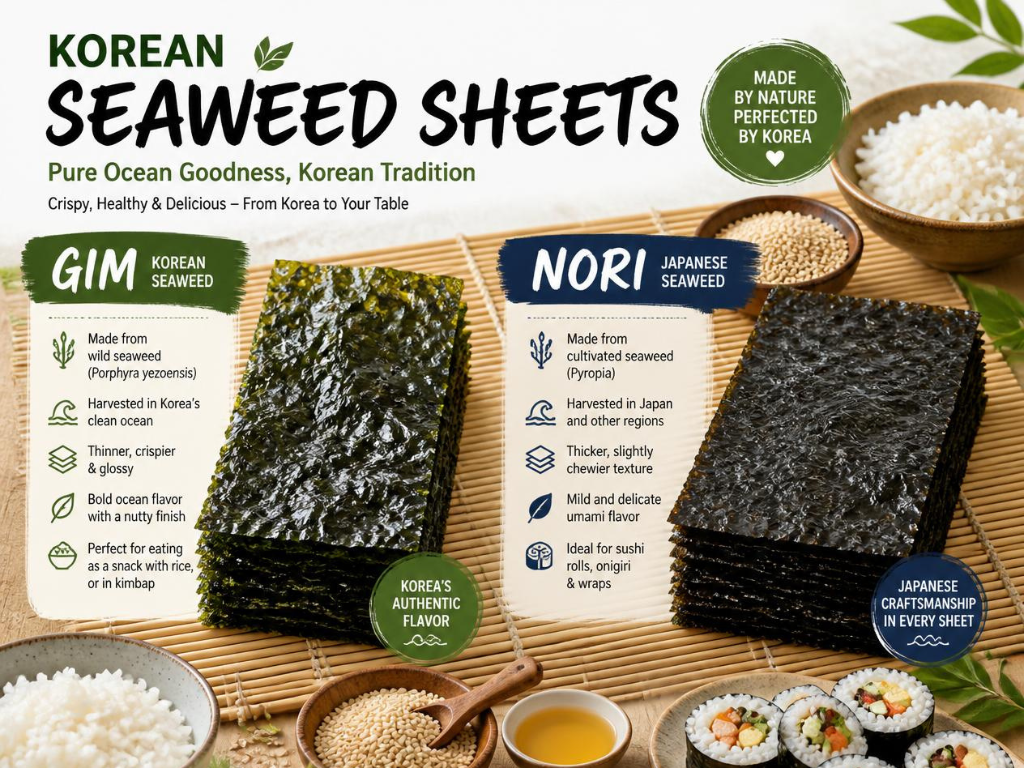
Korean seaweed sheets are gim, dried sheets of red algae