
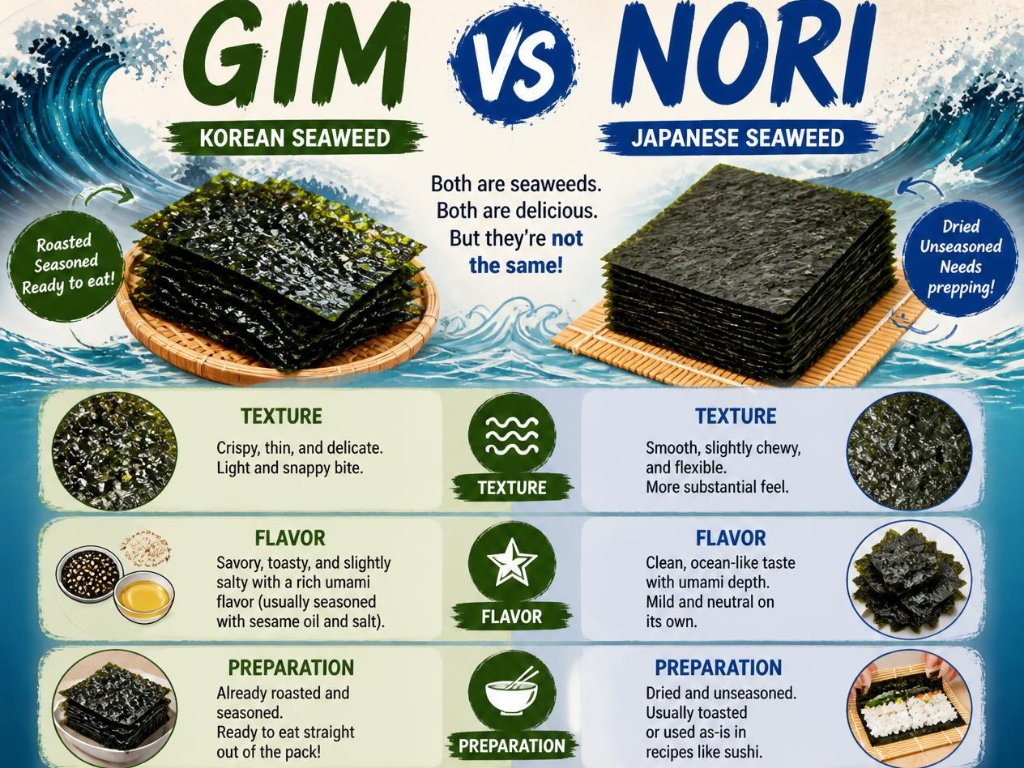
Gim vs nori is one seaweed: dried sheets of the
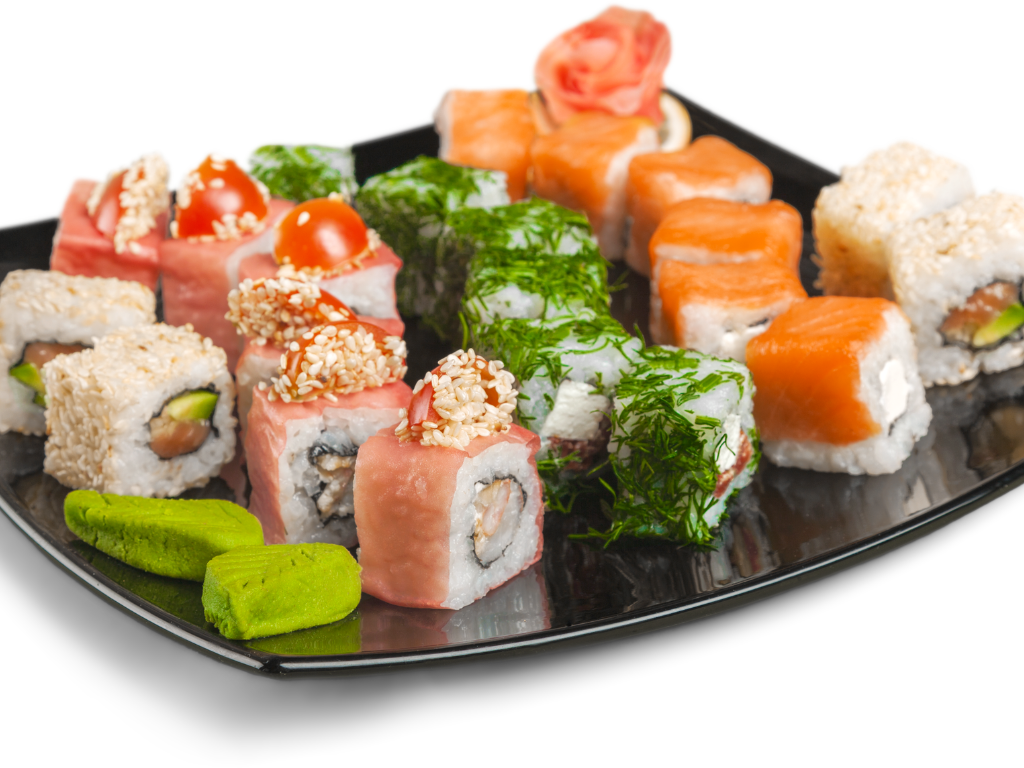
Sushi seaweed sheets are the roasted nori a sushi bar wraps around maki and temaki, and grade decides how it rolls, tears, and tastes. Japan sorts nori into roughly nine grades, gold at the top and green at the bottom, scored on color, thickness, and holes. This blog walks you through sushi nori grades and what a bar should order. For sheets built for sushi, see our precision-cut nori range.
What makes a sushi nori grade?
A sushi nori grade is set by appearance, measured on color, sheen, thickness, and the number of holes in the sheet. Japan runs its nori through auction markets that sort each batch into roughly nine grades, and darker reads as better: the scale falls from jet-black through black and dark green down to a light green at the bottom. A jet-black, glossy, hole-free sheet grades high; a pale, spotted, thin sheet grades low.
Grade tracks a few physical facts a sushi chef can feel. Thickness gives the sheet its strength under a tight roll, so a thicker gold-tier sheet resists tearing where a thin green-tier sheet splits. Sheen and deep color come from dense, evenly grown blades, and the first cutting of the season, the shin harvest, gives the darkest, most tender top-grade sheet. Holes are the one defect worth rejecting outright, because a sheet that fails at a weak point fails mid-roll on a busy line.
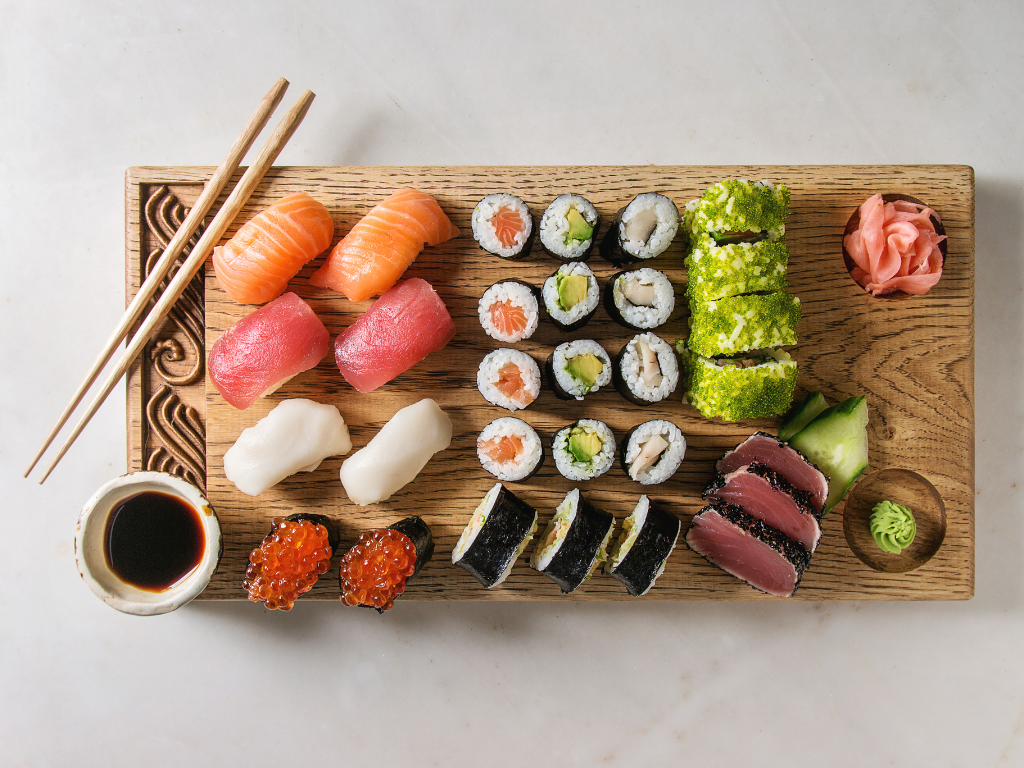
What is the difference between gold and green grade nori?
Gold grade is thick, jet-black, glossy, and strong enough to roll tight without tearing; green grade is thinner, lighter in color, weaker, and prone to holes. Gold sits at the premium top of the scale and green near the bottom, which is why green-tier sheets get used for garnish, crumbled toppings, and nori hidden inside a roll rather than for a sheet a diner sees.
The gap shows up in performance, not just looks. A gold-tier sheet carries a more concentrated umami and a clean, crisp tear, the hagire snap a chef listens for. Green-tier nori tastes flatter and softens faster once it meets warm rice, so a hand roll built on it goes limp before it reaches the table. For most sushi work the useful range sits between the two extremes: a clean mid-grade sheet, uniform in thickness and free of holes, does the job of gold on any roll where the nori is cut and hidden. Grade the sheet to the job, not to the medal on the pack. For the way each sheet is then sized to the dish, see our guide to cut formats for each roll.
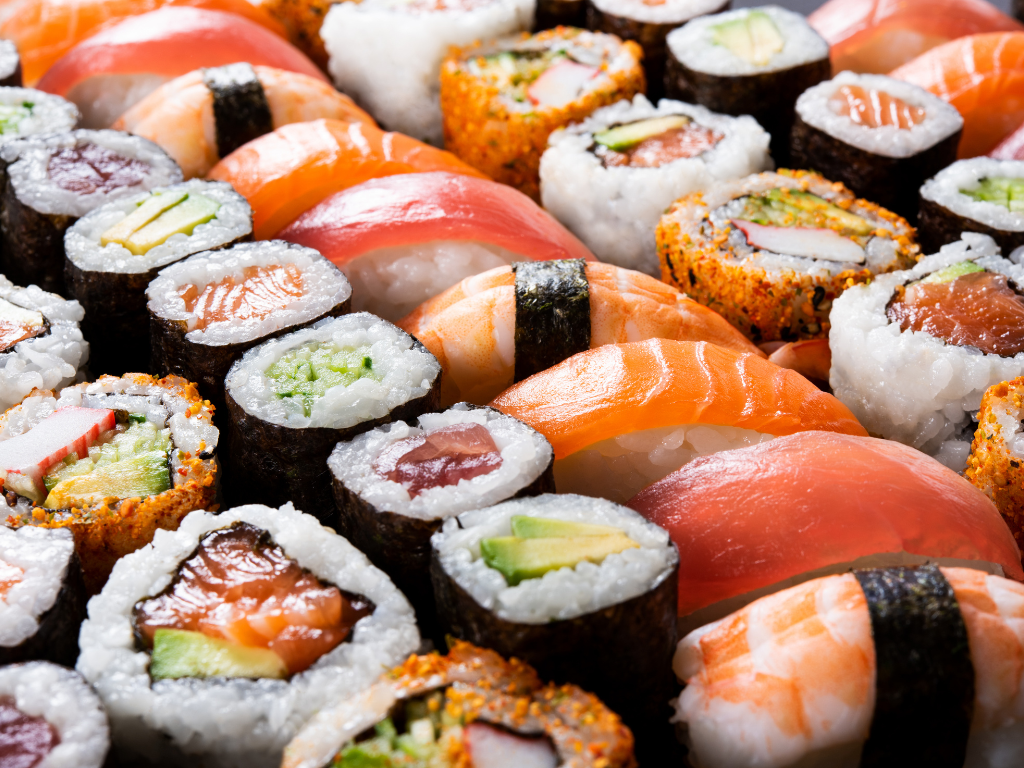
Which nori grade should a sushi bar order for each roll?
Order grade to visibility: high grade where the diner sees the nori, a lower grade where the roll hides it. A temaki cone, a gunkan wrap, and nigiri banded with a nori strip all show the sheet, so its color, sheen, and clean tear are on the plate and worth a gold or silver tier. A futomaki or an inside-out uramaki buries the nori under rice and filling, so a clean mid-grade full sheet performs the same structural job at a lower cost per roll.
Roll type also sets thickness. Hosomaki, the thin single-filling roll, rides on a half sheet and holds better with a denser gold-tier sheet because there is little rice to bind it. Uramaki, with rice on the outside, wants a medium-thickness sheet that gives structure without a chewy core. The stance most buying guides skip: a sushi bar that runs gold-grade nori on every roll overspends on the ones nobody sees. Harris Salat, writing in Saveur, calls nori “the workhorse of the sushi bar,” and a workhorse is bought to a spec, not to a label. Match the tier to what the roll shows, and the same case of nori stretches further.
How many rolls does a sheet of nori make, and what does it cost per roll?
One full sheet makes one futomaki or uramaki roll, and a half sheet makes one hosomaki, so a sushi bar counts nori in sheets per roll before it counts dollars. A full 21 by 19 cm sheet wraps a standard maki roll that a chef then cuts into six to eight pieces. Yield is that direct, which is why cost per roll, not cost per sheet, is the number a sushi line runs on.
Cost per roll follows pack size. Yoroshii’s 50-sheet foodservice pack lands near S$0.25 a sheet, which puts the nori cost of a full-sheet maki roll at roughly S$0.25 before rice and filling. A bar turning 200 rolls a service works through about 200 full sheets, or four 50-sheet packs a day, so a few cents of grade premium per sheet compounds fast across a week. Buy the grade the visible rolls need, then let hidden rolls run on a cleaner mid-grade, and the per-roll nori cost drops without a diner noticing. For the full-size sheet a maki roll is built on, our full-cut sheets for maki ship pre-sized so a line skips hand-trimming.
Is gold grade nori worth the premium for a sushi bar?
Gold grade is worth it only for the rolls that show the sheet, and it is a poor buy for the rolls that hide it. Here is the fact most listings leave out: there is no standardized international definition of gold grade nori. The word is producer-defined marketing layered on top of the underlying auction grades, so one supplier’s gold can sit a tier below another’s. Order on the measurable attributes, thickness, uniform color, and no holes, rather than the medal printed on the case.
The premium is real where it earns its place. A temaki cone or a nigiri band built on a thick, glossy top-tier sheet reads as quality on the plate and holds its snap longer against warm rice. On a hidden inside roll, that same premium buys nothing a diner can see or taste through the rice. The half sheet a bar reaches for on hosomaki is the other place a denser tier pays off, since a thin sheet tears around a small rice core; our half-cut sheets for hosomaki come sized for that roll.
How should a sushi bar store and order nori to keep the grade it paid for?
Store nori dry and sealed, because moisture, not age, is what strips a paid-for grade back to limp stock. A gold-tier sheet left open on a humid line softens within minutes and loses the crisp tear it was bought for, so a busy bar keeps sheets in a sealed case with silica desiccant and pulls only what a service needs. Order in sealed foodservice packs rather than opened bulk left standing.
Ordering is where a sushi bar protects both grade and supply. Farmed seaweed output has more than tripled since 2000, so holding a consistent grade is a sourcing decision, not a scarcity one. Yoroshii manufactures its nori cuts through its Malaysian subsidiary Front Option under ISO 22000, HACCP, and GMP food-safety systems, and holds ISO 22000 food safety management certification across the line. A bar buying to a consistent grade wants a supplier that ships the same spec case after case, sized to the roll, with the storage and bulk detail covered in our guide to storing nori for a busy line. Yoroshii has supplied roasted seaweed and nori cuts to foodservice and wholesale buyers across Singapore and export markets since 1993.
Conclusion
Grade is a spec a sushi bar buys to, not a medal it collects. Gold earns its premium on the rolls a diner sees, a temaki cone or a nigiri band; a clean mid-grade sheet does the same structural work on the maki that hide the nori under rice. Read thickness, color, and holes, and cost the nori per roll rather than per sheet, and the grade budget lands where it shows.
Setting a nori spec for your sushi line? Browse Yoroshii’s sushi nori cut range or contact the team for a foodservice quote matched to your roll mix and volume.
FAQs About Sushi Seaweed Sheets
Is darker nori always better for sushi?
Darker nori grades higher because deep color signals dense, evenly grown blades with more umami and strength. A jet-black sheet rolls tighter and tastes richer than a pale green one. Japan’s grading scale runs from jet-black at the top down to light green, so for sushi, darker is the reliable signal.
What grade of nori is best for hand rolls?
Use a gold or silver tier for temaki, because the cone shows the sheet and the nori must stay crisp against warm rice. A thin, low-grade sheet softens within minutes and tears at the fold. Roll temaki to order, since even a top-grade sheet goes limp once it sits.
Does nori grade affect how the sheet tears when rolling?
Yes. Thickness and integrity decide tear resistance, and higher grades are thicker and hole-free. A thin, spotted green-tier sheet splits under a tight maki roll, while a gold-tier sheet holds. A sheet with holes fails at the weak point regardless of its grade label, so reject holed batches outright.
Is gold grade nori a standardized quality?
No. There is no standardized international definition of gold grade nori; it is producer-defined marketing on top of Japan’s underlying auction grades. One supplier’s gold can sit a tier below another’s, so a sushi bar orders on thickness, uniform color, and absence of holes rather than the label.
How do you keep nori crisp on a busy sushi line?
Keep it sealed and dry. Moisture ruins nori faster than age, so store sheets in a sealed case with silica desiccant and pull only what a service needs. An opened sheet absorbs humidity and goes limp within minutes, which is why foodservice packs stay moisture-sealed until service.
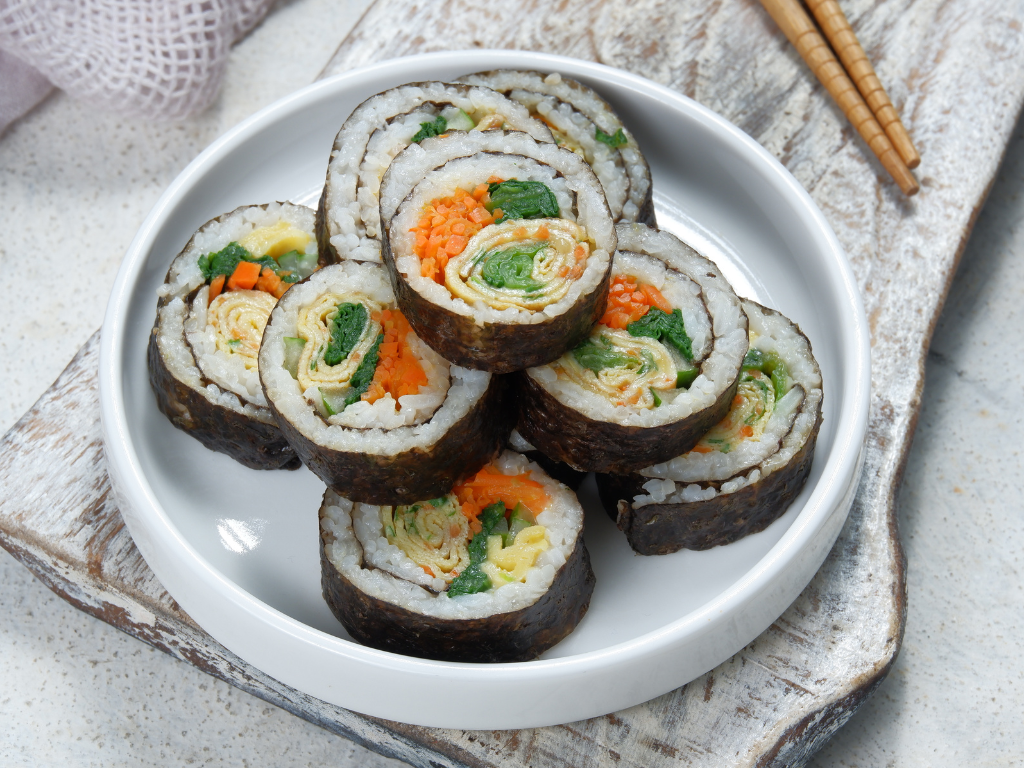
Seaweed for gimbap is gimbap gim, an unseasoned, thicker sheet
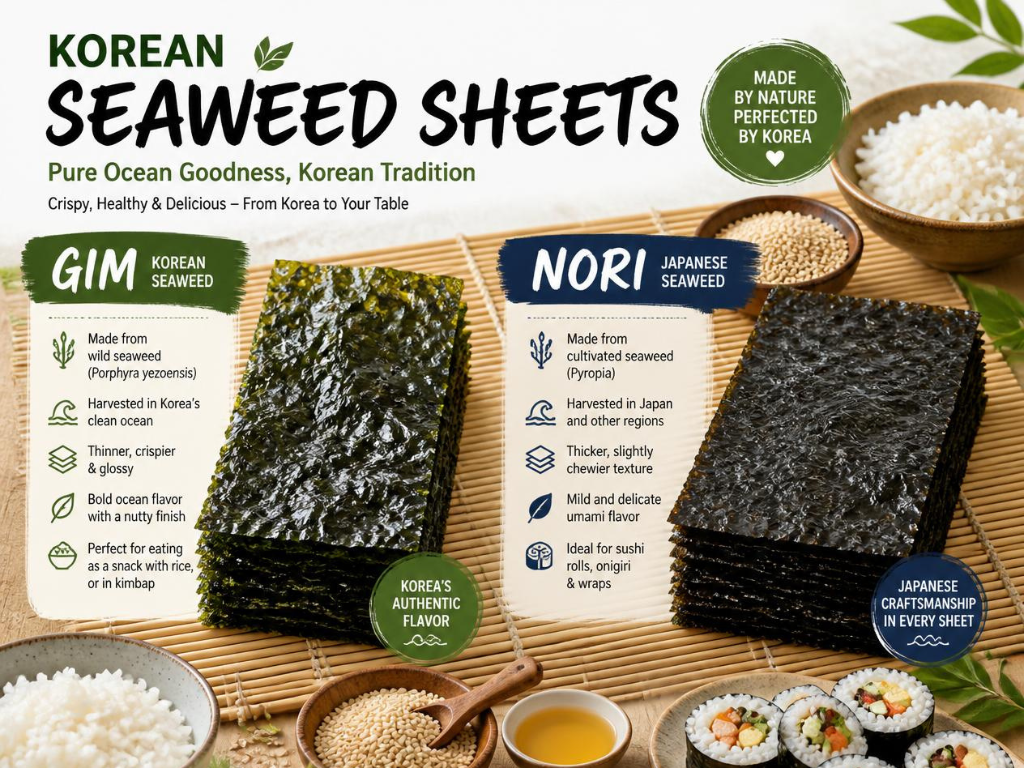
Korean seaweed sheets are gim, dried sheets of red algae