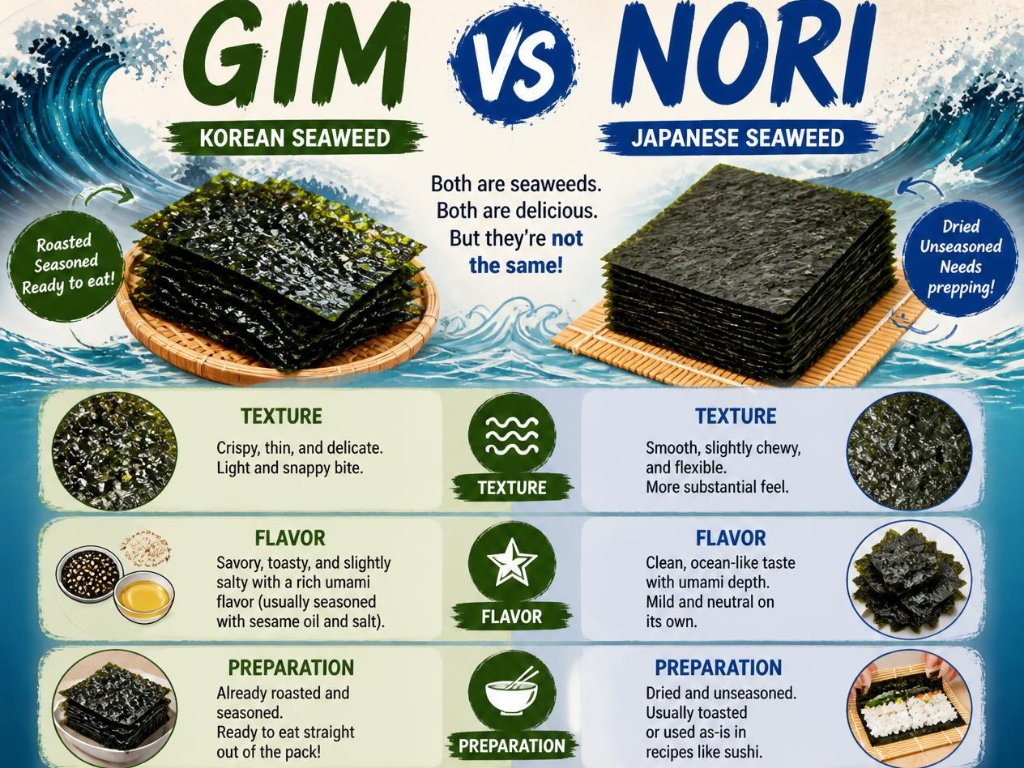
Gim vs nori is one seaweed: dried sheets of the
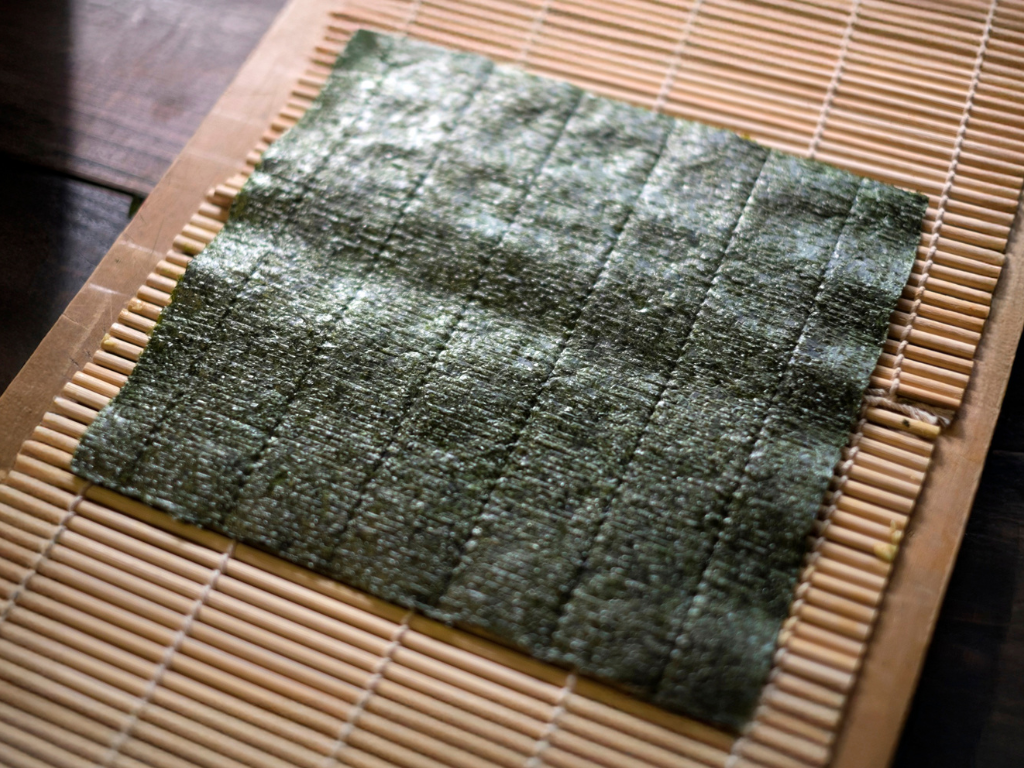
Seaweed paper is the everyday English name for nori, the dried, roasted sheet of red algae (genus Pyropia) pressed like paper and wrapped around sushi. The two words point to the same sheet, with one catch: soy paper is not seaweed at all. This blog walks you through what seaweed paper is, when it means nori, and when it does not. For the sheets, see our range of seaweed products.
Is seaweed paper the same as nori?
Seaweed paper and nori are the same product under two names. Nori is the Japanese term for the dried, roasted sheet of red algae, and seaweed paper is the plain English description shoppers reach for when they do not know the word nori. Both terms describe a food wrap, and both sit on the same grocery shelf, so for a shopper the overlap is near total. The sheet is identical: a pressed, dried, toasted blade of Pyropia sold to wrap sushi, onigiri, and hand rolls. The edible species belong to the red-algae genus Pyropia, reclassified from Porphyra in a 2011 revision of the Bangiales.
The difference is vocabulary, not manufacturing. A pack labelled seaweed paper, seaweed wrap, sushi wrap, or nori holds the same roasted laver sheet, roughly 21 by 19 cm in its full size. Harris Salat, writing in Saveur, calls nori “the workhorse of the sushi bar,” and the workhorse answers to several names. The one term that carries real precision for a buyer is nori, because it names the specific roasted, Pyropia-based sheet rather than a whole category of dried sea plants.
Why is nori called seaweed paper?
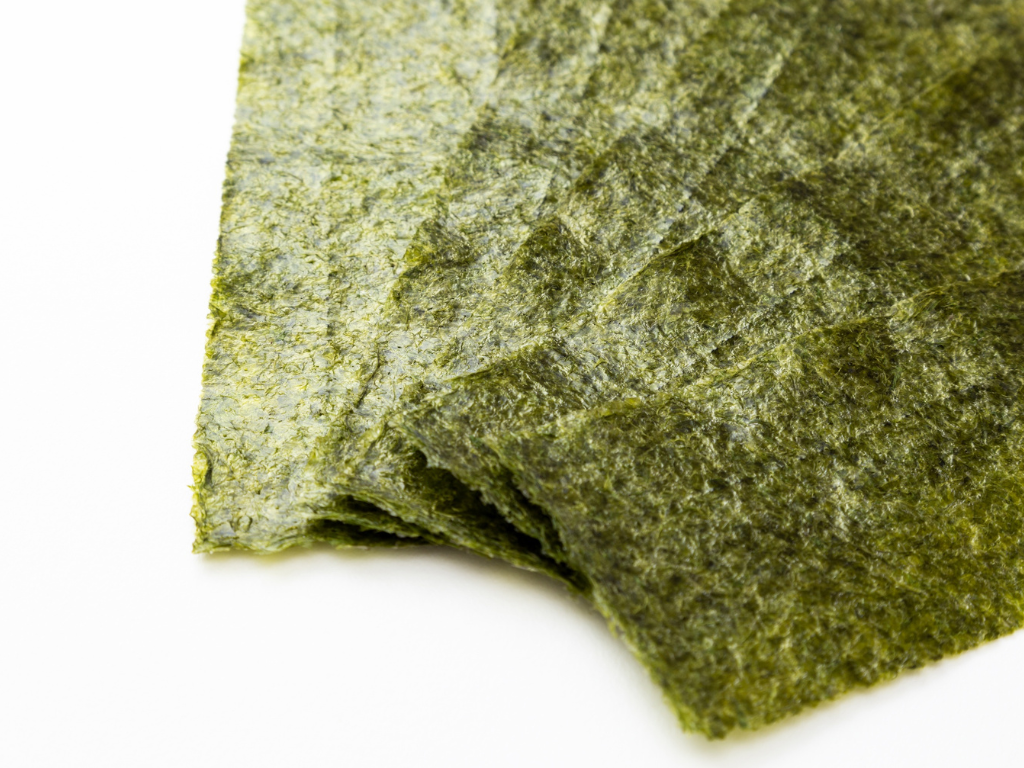
Nori earns the paper name from how it is made, not from any relation to wood pulp. The raw seaweed is washed, minced into a slurry, spread across frames, and drained and dried into thin sheets, a process that mirrors traditional papermaking almost step for step. The result is a flat, dry, flexible sheet that looks and handles like dark green paper.
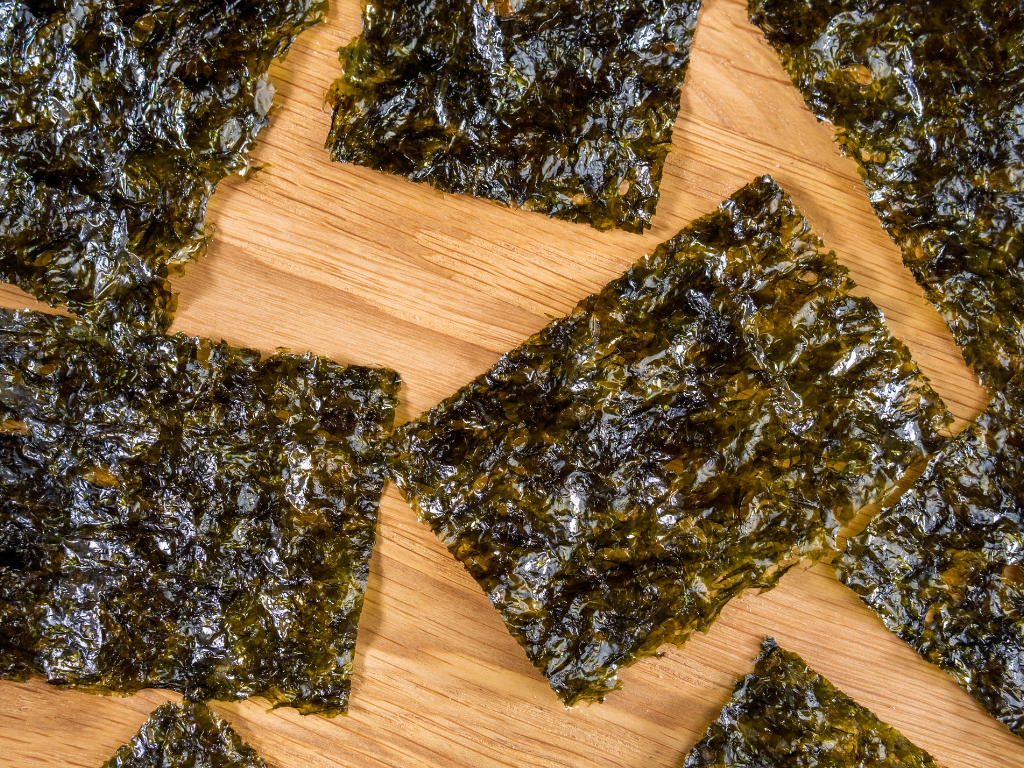
That production route is centuries old. Nori appears in Japan’s Taihō Code of 701, listed as a form of taxation, long before the pressed-sheet form existed. The sheet method that gives us modern seaweed paper took hold later, and the “paper” nickname followed the look of the finished product. A single sheet is one cell layer thick once pressed, which is why it dissolves on the tongue rather than sitting like a leaf, and why quality is judged on evenness, sheen, and the absence of holes. The finished sheet has a glossy side and a rough side, and the roast that follows drying concentrates the free glutamate behind its umami. That roast is why a seaweed paper sheet tastes of the sea while a sheet of writing paper tastes of nothing.
When is seaweed paper not nori?
Seaweed paper stops meaning nori when the term is stretched to cover other pressed seaweed sheets or unroasted forms. Korean gim is also a laver sheet pressed from the same Pyropia family, but it is brushed with sesame oil and salt and toasted differently, so a pack of “seaweed paper” sourced from Korea is gim, not Japanese nori. Unroasted sheets (hoshi nori) are seaweed paper too, yet they need toasting before use and behave differently on a roll. The looseness in the term is old. The word nori once referred to seaweeds in general before it settled on the pressed Pyropia sheet, so the English seaweed paper inherits some of that vagueness.
The distinction matters at the point of order. A buyer who asks a supplier for “seaweed paper” can receive Japanese yaki nori, Korean gim, or a raw sheet, depending on the supplier’s catalogue. The cleaner approach is to name the exact product: roasted nori in a stated cut, or Korean seasoned sheets. For the full set of sheets and flakes we stock, see the seaweed types we supply, and for the Korean side of the family, how Korean gim compares.
What is the difference between seaweed paper and soy paper?
Soy paper is not seaweed paper. Soy paper, known as mamenori, is a sushi wrapper made from soybeans, soy flour, starch, and water, with no seaweed content at all. It is often dyed green, pink, or yellow with turmeric, paprika, or spinach, and “Mamenori-san” is a registered trademark of J-OIL MILLS. The two sheets look similar on a roll and get confused constantly, which is a real problem for anyone sourcing to a spec.
The gap runs deeper than flavour. Soy paper is soft and neutral, closer to a rice-paper wrapper, and carries roughly 15 to 20 calories per sheet with a soy allergen a seaweed sheet does not have. Seaweed paper is roasted laver with a marine, umami flavour and a crisp tear. Treating them as interchangeable is a sourcing and allergen error, not a style choice, because a menu labelled seaweed wrap that arrives on soy paper misstates both the ingredient and the allergen. For a kitchen buying to an allergen-controlled spec, the word on the order form has to be exact. Soy paper also does jobs nori never takes on. Its neutral sheet wraps spring rolls and dessert rolls of fruit or pudding, and kitchens reach for it when they want the filling, not the wrapper, to lead. Seaweed paper is chosen for the opposite reason, when the marine flavour is part of the dish.
Should you order seaweed paper or nori?
Order by the product name, nori, not the search term, seaweed paper. Seaweed paper is how a consumer describes the sheet; nori, in a stated cut and grade, is how a buyer specifies it. A restaurant ordering full-sheet roasted nori gets a defined product; a vague request for seaweed paper leaves the format open to interpretation. Specify the cut and the grade alongside the name. A full sheet for maki, a strip for onigiri, and a stated grade tier turn seaweed paper from a search word into a purchase order a supplier can fill the same way twice. The precise name protects the allergen and halal claim as well, since a seasoned nori sheet and a soy wrapper carry different declarations, and Yoroshii documents both on its JAKIM-certified lines. Naming the product is the difference between a repeatable order and a quiet substitution.
Yoroshii supplies roasted nori and cut sheets to retail, foodservice, and wholesale buyers, manufactured through its Malaysian subsidiary Front Option under ISO 22000, HACCP, GMP, and JAKIM halal certification. Farmed seaweed output has more than tripled since 2000, so the constraint is never supply; it is specifying the right sheet. Naming the cut is the practical step, whether that is a full sheet for maki or a strip for onigiri, which is why our guide to nori cut formats exists. Yoroshii has supplied roasted seaweed across Singapore and export markets since 1993.
Conclusion
Seaweed paper and nori name the same roasted laver sheet, and the “paper” comes from a production process that mirrors papermaking, not from any second product. The trap is soy paper, a soybean wrapper with no seaweed and a different allergen. For a kitchen or a buyer, the precise word is nori, ordered in a stated cut and grade.
Sourcing sheets for a menu or a shelf? Browse Yoroshii’s seaweed range or contact the team for a quote on roasted nori cuts matched to your dishes and volume.
FAQs About Seaweed Paper
Is seaweed paper healthy?
Seaweed paper is roasted nori, a single-ingredient dried red algae (Pyropia) that supplies iodine, vitamin B12, and minerals in a low-calorie sheet. A standard sheet adds only a few calories. Seasoned and soy-paper versions differ, so a plain roasted nori sheet is the cleanest option nutritionally.
Is seaweed paper the same as a seaweed wrap?
Yes. Seaweed paper, seaweed wrap, and sushi wrap all describe nori, the roasted Pyropia sheet used to wrap sushi and onigiri. The one wrapper that is not seaweed is soy paper (mamenori), which is soybean-based and sold as a nori substitute rather than a seaweed sheet.
Is seaweed paper vegan and gluten-free?
Plain roasted nori is vegan and naturally gluten-free, since it is only dried seaweed. Seasoned sheets can carry wheat-based soy sauce, so check the label. Yoroshii manufactures under ISO 22000 and JAKIM halal certification, which documents the ingredients on seasoned lines.
Can you eat seaweed paper on its own?
Yes. Roasted yaki nori is eaten straight as a snack, crumbled over rice, or cut into strips, beyond its use as a sushi wrap. Unroasted sheets need toasting first. Yoroshii’s roasted seaweed line is sold both as snack sheets and as sushi-grade nori cuts.
How long does seaweed paper last?
Unopened nori keeps 1 to 2 years in a cool, dry place. Once opened, it stays crisp for about three weeks if sealed with a silica desiccant, because the sheet absorbs moisture from the air within minutes. Foodservice packs stay nitrogen-sealed until service to hold that shelf life.
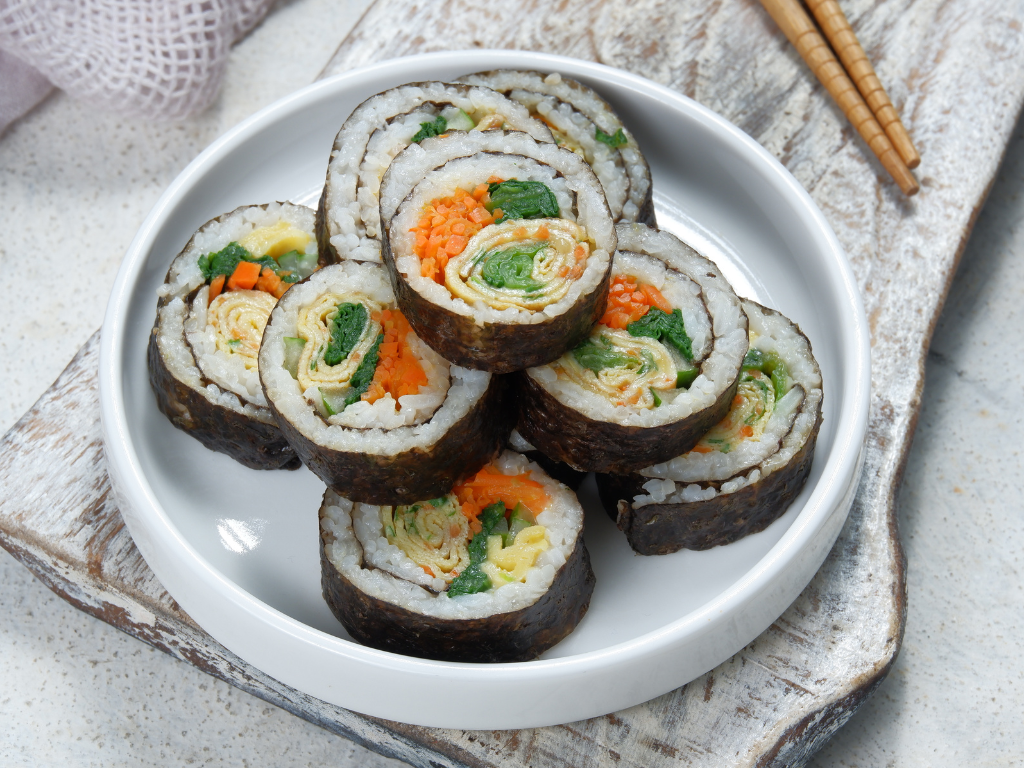
Seaweed for gimbap is gimbap gim, an unseasoned, thicker sheet
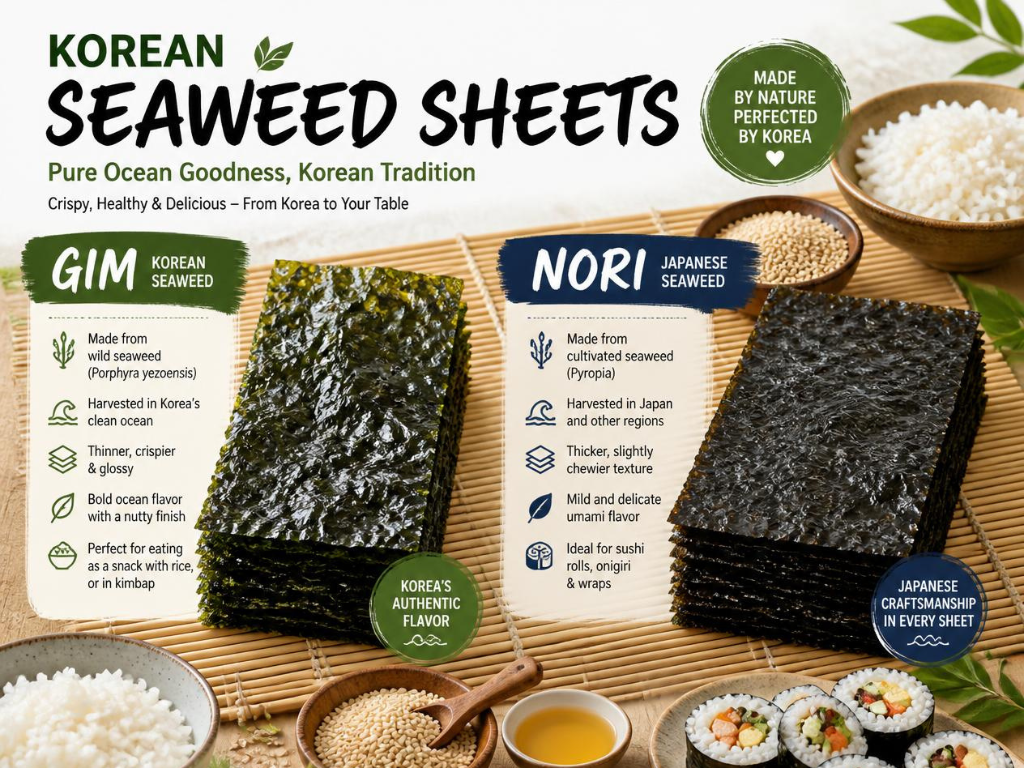
Korean seaweed sheets are gim, dried sheets of red algae